

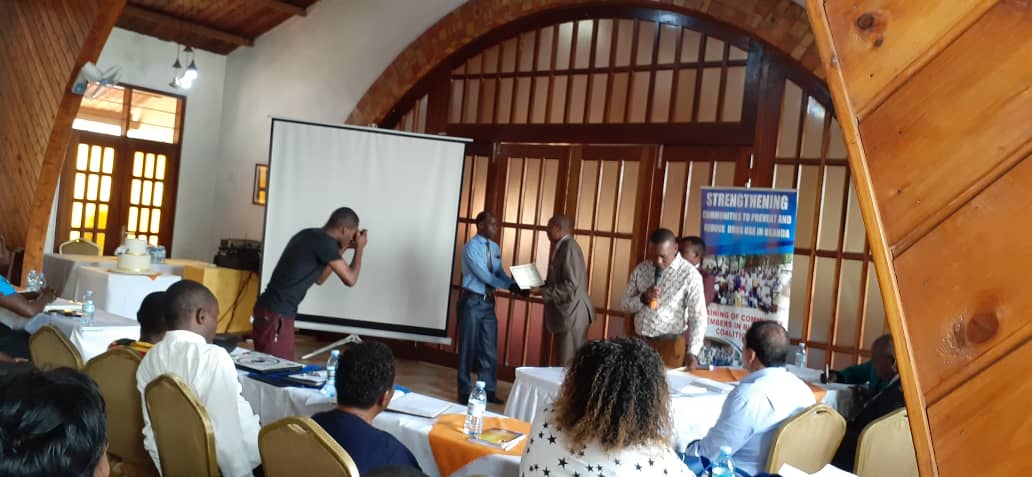
Uganda Youth Development Link (UYDEL) in collaboration with Community Anti-Drug Coalitions of America (CADCA) have trained and established coalitions that bring together a wide range of community sectors to solve local alcohol, drug and substance abuse problems at the community level.
Dr David Basangwa, the director Butabika Hospital, highlighted that out of the 900 patients received at the facility, between 450-500 suffer substance and alcohol related issues that sometimes result in mental break down.
“Mental illness is on the increase and currently we have admitted about 900 patients in a facility that can take only 550 patients comfortably. Unfortunately 40 per cent of these are due to the use of alcohol and substance abuse. These numbers can be kept low if a law is passed,” he said.
Basangwa added that as much as there are other causes of mental illness, people’s lifestyles especially alcohol and substance abuse are the leading causes.
Rogers Mutaawe, the programme manager UYDEL added that, “Coalitions have deep connections to the local community and serve as catalysts for reducing local substance abuse rates.”
Local coalitions continue to change the way that communities respond to the threats of illegal drugs, alcohol abuse and tobacco use.
Mutaawe believes that, "By mobilizing the entire community— parents, teachers, youth, police, health care providers, faith communities, business and civic leaders and others— communities can transform themselves.”
At least 75 community coalition members have undergone training for the last three years.
CADCA’S training of communities is designed to equip local community and stakeholders with knowledge and skills required to collectively develop an effective multi sector coalition capable of reducing substance misuse rates at the community level.
The coalition brings together a wide range of 12 community sectors to solve local alcohol, drug and substance abuse problems at the community level by including, the sectors. They are: 1. Youth 2. Parents 3. Business community 4. Media 5. Schools 6. Youth-serving organizations 7. Law enforcement agencies 8. Religious or fraternal organizations 9. Civic and volunteer groups 10. Healthcare professionals 11.
