

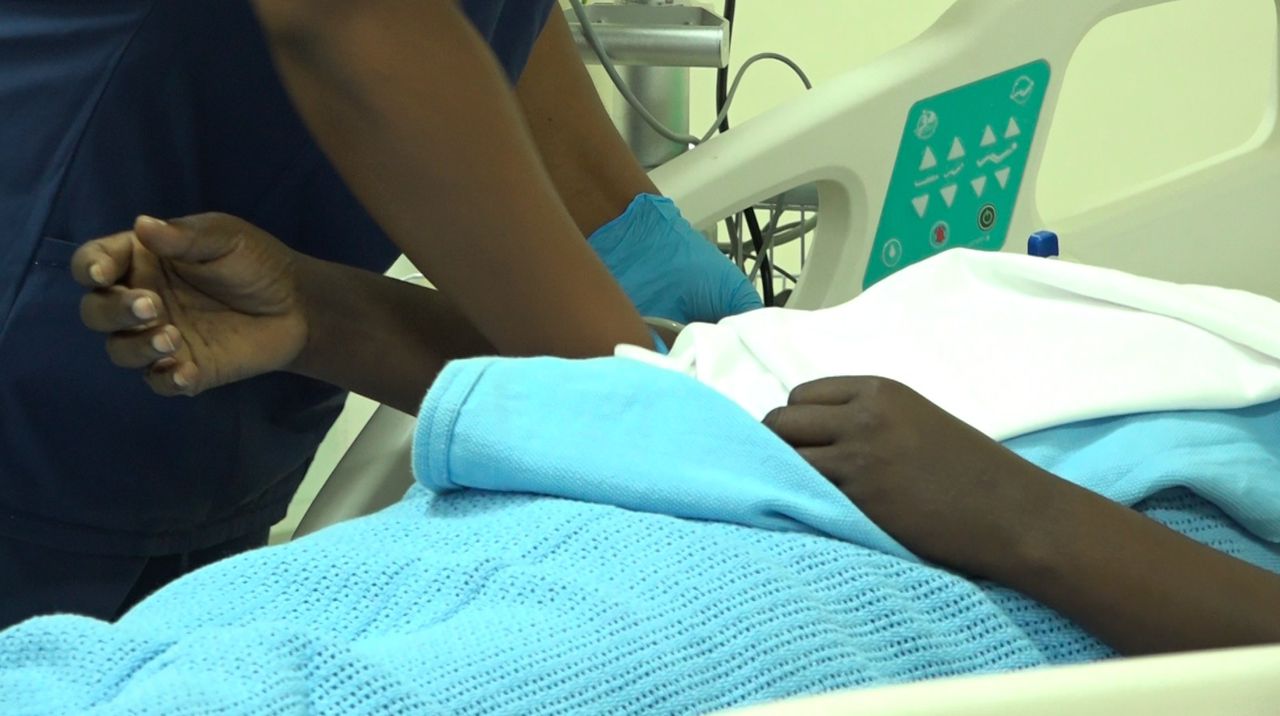
Sande Stephen, a 45-year-old resident of Ntinda, has made medical history as the first Ugandan patient to successfully undergo a bone marrow transplant within the country.
His recovery is being closely monitored, with doctors reporting that his condition remains stable and his progress encouraging.
Stephen was diagnosed with Multiple Myeloma, a type of blood cancer that affects plasma cells in the bone marrow, disrupting the body’s ability to produce healthy blood cells.
The disease often requires advanced treatment, including chemotherapy and in severe cases, bone marrow transplantation, a procedure previously unavailable locally.
His successful treatment marks a milestone for Uganda’s health system, which has long referred patients abroad for such complex procedures due to limited specialised infrastructure and expertise.
The transplant was carried out by a multidisciplinary team of Ugandan specialists, representing a growing capacity in the country’s cancer care services.
Medical officials involved in the procedure say the outcome demonstrates that highly specialised treatments, once considered out of reach in Uganda, can now be safely conducted within local facilities.
They describe Stephen’s recovery as a breakthrough moment for both the patient and the national health system.
The Uganda Cancer Institute, which led the procedure, has been central to the development of advanced oncology services in the country.
Uganda Cancer Institute officials say the success of the transplant is a strong indication that Uganda is gradually building the expertise and infrastructure needed to manage complex cancers domestically.
Bone marrow transplantation is a medical procedure that replaces damaged or diseased bone marrow with healthy stem cells.
It is often used to treat blood cancers such as leukaemia, lymphoma, and multiple myeloma, as well as other disorders affecting blood cell production.
The procedure requires highly specialised equipment, strict infection control, and a trained multidisciplinary medical team.
For many years, Ugandan patients requiring such treatment had to seek care abroad, often in India, South Africa, or Europe, at significant financial cost.
Families frequently faced overwhelming expenses, logistical challenges, and delays in accessing care, which in some cases affected treatment outcomes.
Health experts note that Uganda continues to face a rising burden of cancer, with tens of thousands of new cases recorded annually.
Many patients present late, and access to advanced treatment options remains a major challenge, particularly for those outside urban centres or without financial means.
Against this backdrop, the successful local transplant is being viewed as a turning point. It suggests that more patients may soon access life-saving procedures within Uganda, reducing dependency on overseas referrals and easing the financial strain on families and the national health system.
Doctors monitoring Stephen’s recovery say his response to treatment has been steady. While bone marrow transplant recovery typically requires close observation due to risks such as infection or graft complications, his condition has so far remained stable, offering reassurance to the medical team.
The procedure also reflects broader investments in Uganda’s specialised healthcare services, particularly in oncology.
Over the years, the Uganda Cancer Institute has expanded its capacity, including improvements in diagnostic services, radiotherapy, and chemotherapy treatment.
The introduction of bone marrow transplantation adds a new and highly specialised layer to this growing capability.
Health officials say the achievement is not only significant for cancer treatment but also for medical training in Uganda.
The successful procedure is expected to strengthen local expertise, enabling more doctors, nurses, and laboratory specialists to acquire skills in advanced transplant medicine.
Plans are already underway to expand bone marrow transplant services so that more patients can benefit.
According to health officials, the goal is to gradually scale up the number of procedures while strengthening supporting systems such as laboratory capacity, donor registries, and post-transplant care services.
They also emphasise that continued investment will be necessary to sustain and expand the programme, including funding for equipment, training, and specialised drugs required for transplant patients.
For patients like Sande Stephen, however, the impact is already tangible. His successful treatment represents not only a personal medical victory but also a symbol of what Uganda’s health sector can achieve with sustained investment and expertise.
As he continues to recover under medical supervision, Stephen’s case is being closely followed by specialists and policymakers alike.
It is seen as a reference point for the future of cancer care in Uganda, where the focus is increasingly shifting toward building local capacity for advanced treatment.
The development is being widely viewed as a landmark moment in Uganda’s medical history, signalling a shift from dependence on external healthcare systems to growing self-reliance in specialised medicine.
For many patients and families affected by cancer, it offers renewed hope that life-saving treatment may now be available closer to home.
