

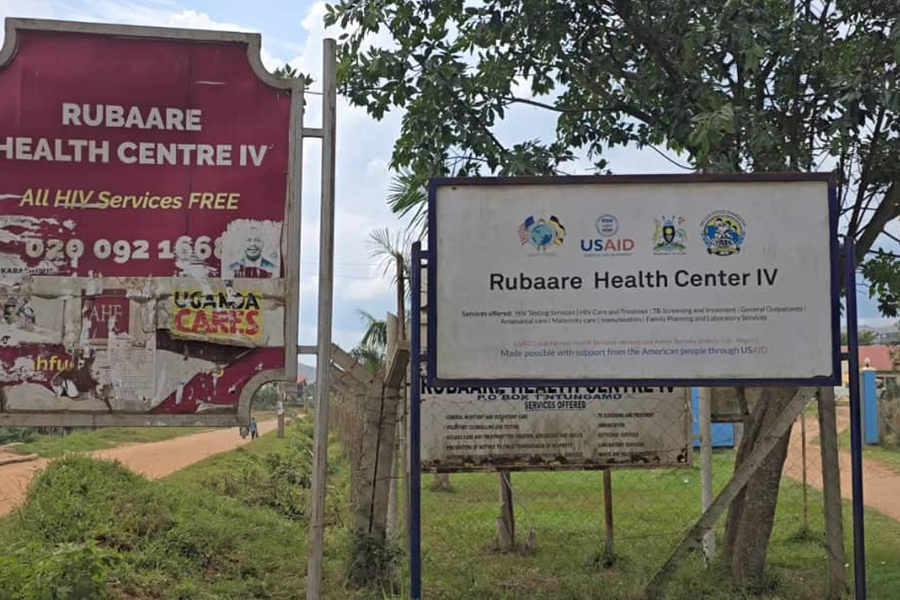
Rubaare Health Centre IV in Ntungamo District is grappling with severe operational challenges as it struggles to serve a growing patient population amid aging infrastructure and critical gaps in emergency services.
Established in the 1950s, the facility serves as a key referral centre for residents in Rushenyi County and surrounding areas, including parts of Rukiga District.
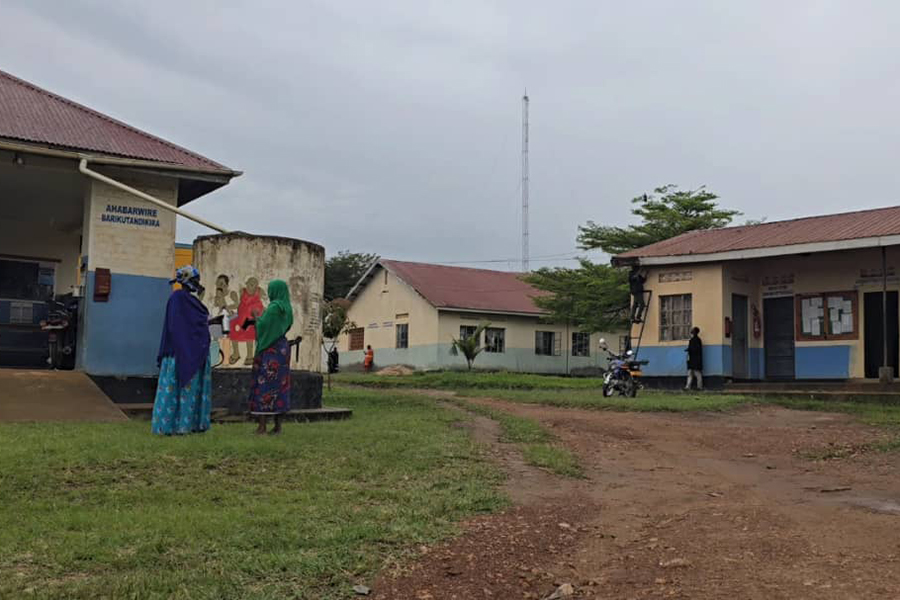
The largely blue and white-painted structures, however, reflect decades of wear and are increasingly unable to meet current demand.
The health centre now handles more than 2,500 patients each month, alongside over 150 deliveries. Common cases include HIV, tuberculosis, respiratory infections, hypertension, and diabetes.
Despite this demand, the facility operates without a fully equipped ambulance. A vehicle donated by the Rushenyi Member of Parliament is currently used for emergency referrals, but it lacks essential life-saving equipment such as oxygen support.
Dr John Wicklif Barinda, the in-charge of the facility, said the situation has forced them to rely on costly alternatives.
“We don’t have an ambulance but we were supported by our MP for Rushenyi with a vehicle that we use as an ambulance; however, it’s not to the required standard like other ambulances that are fully equipped," he said.
"For example, if one needs to be on oxygen, he can’t be supported by this ambulance. So we have to hire another one from Itojo Hospital or Ntungamo Red Cross or Rushooka, but it’s costly because we have to meet the costs.
“We ask the government to give us a standard ambulance that is fully equipped to take patients.”
As a result, critically ill patients must often be transferred using hired ambulances from neighbouring facilities, a process that delays urgent care and increases costs.
The absence of a mortuary has compounded the crisis. All bodies must be transported to Itojo General Hospital, placing an additional financial burden on the Rubaare Town Council, which covers fuel and transport costs.
“Our hospital has no mortuary; in case there is need of such services, we take the body to Itojo General Hospital. The Town Council supports us in transportation,” Dr Barinda said.
Emanuel Byamukama, the Town Clerk of Rubaare Town Council, said transport costs have become a major strain on local resources.
“Every quarter we have a very big budget on fuel costs, transporting the bodies and pregnant mothers and referrals to Itojo. We have a lot of challenges. We had one ambulance offered by Hornerable Naome Kabasharira but it’s shared by the whole of Rushenyi. Any dead body is taken to Itojo and as we speak, Itojo, the land is almost exhausted,” he said.
Beyond emergency services, the facility’s infrastructure is also under pressure. Many of the buildings date back to its establishment and are no longer adequate for the current patient load.
“This hospital started in the 1950s, and buildings built then are getting old. Government is constructing new ones and renovating, but the old buildings don’t have the capacity to accommodate the numbers of patients today. There is more need for construction of new buildings to accommodate the growing numbers,” Dr. Barinda added.
Residents say the situation is affecting access to healthcare services.
“Patients try to get services but it’s not sustainable. There is a limited number of health facilitators. We don’t have an ambulance and a standardised mortuary,” said Ambrose Kyenjooga, a resident.
Health officials and local leaders are now calling for urgent government intervention to upgrade infrastructure, provide a fully equipped ambulance, and construct a mortuary to improve service delivery at the facility.
