

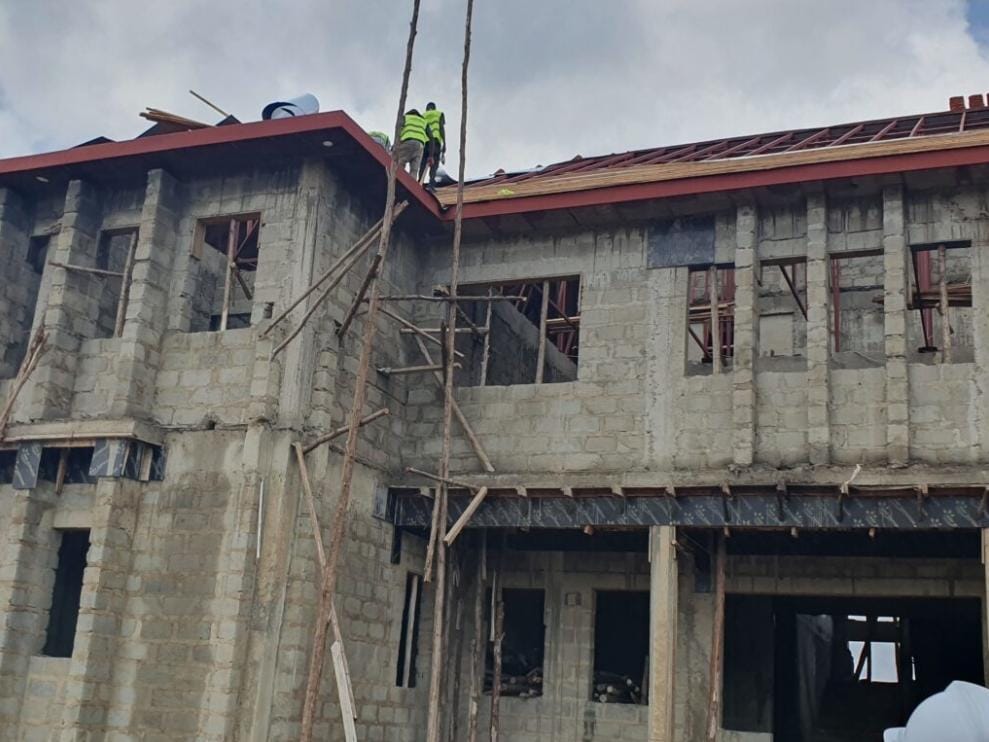
Construction of a regional blood bank intended to serve Lira Regional Referral Hospital has reached 98 percent completion, bringing the Lango sub-region closer to improved access to safe and timely blood transfusion services.
The facility, located at Lira University, is part of a nationwide government effort to expand regional blood storage and distribution capacity to address persistent shortages in health facilities.
Second Lieutenant Fahad Kisosonkole, the project coordinator from the Uganda People’s Defence Forces engineering brigade, said construction works commenced in April 2025 and are progressing as planned.
“The structural work is largely complete, and the project is now at 98 percent. We are confident that the remaining works will be finalized by July this year,” Kisosonkole said.
He explained that Shs1 billion has already been spent in the first phase to cover major construction works. An additional Shs1 billion is expected to be released to complete finishing activities such as plastering, roofing, installation of doors, and other final fittings.
According to Alex Tumwesigye, the project manager from the Ministry of Health, the construction of regional blood banks is aimed at strengthening the country’s blood transfusion system and improving emergency response.
“The government is establishing regional blood banks to ensure timely availability of safe blood and to reduce delays in critical medical situations,” Tumwesigye said.
He added that the ministry plans to allocate additional funding in the next financial year to construct staff quarters and procure specialized equipment so that the facility can operate at full capacity.
The Director of Lira Regional Referral Hospital, Dr Andrew Odur, welcomed the progress, noting that the new blood bank will address the high demand for transfusion services in the region.
“There is a growing need for blood due to maternal complications, accidents, and other serious medical conditions. This facility will significantly improve access and help save lives across the Lango sub-region,” Dr Odur said.
He, however, urged the ministry to prioritize early funding for staff accommodation to ensure that personnel are in place and operations begin immediately once construction is completed.
Stakeholders have also emphasized the need for close coordination as the project approaches completion. Polycarp Ojok from the Uganda Blood Transfusion Services called for regular planning meetings to ensure proper design and functionality.
“Continuous coordination is important because some construction or layout mistakes are difficult and costly to correct once the building is completed,” Ojok noted.
Meanwhile, Sam Opito, the Estates Manager at Lira University, commended the government for investing in critical health infrastructure and praised the UPDF for engaging local communities during construction.
“This project has not only improved health infrastructure but has also provided employment opportunities for local residents,” Opito said.
The Ministry of Health launched the project last year at a total cost of Shs9.6 billion. Of this amount, Shs5.6 billion was allocated for construction works, while Shs4 billion was earmarked for the procurement of equipment.
Once operational, the regional blood bank is expected to strengthen emergency care, reduce reliance on distant facilities, and improve health outcomes for communities across northern Uganda.
