

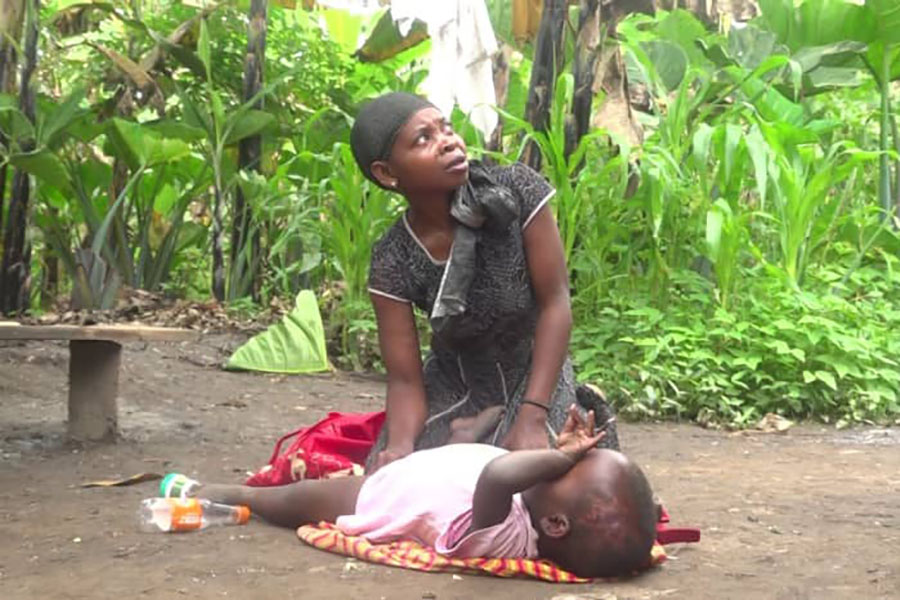
At a small village called Kabare in Kaberebere Sub-county, Isingiro District, lives 29-year-old Afuswa Nakafeero, whose life revolves around caring for her five-year-old daughter, Philomela Kirabo.
Born with a serious spinal defect known as Spina Bifida, Philomela underwent surgery shortly after birth, but complications left her with a lifelong disability.
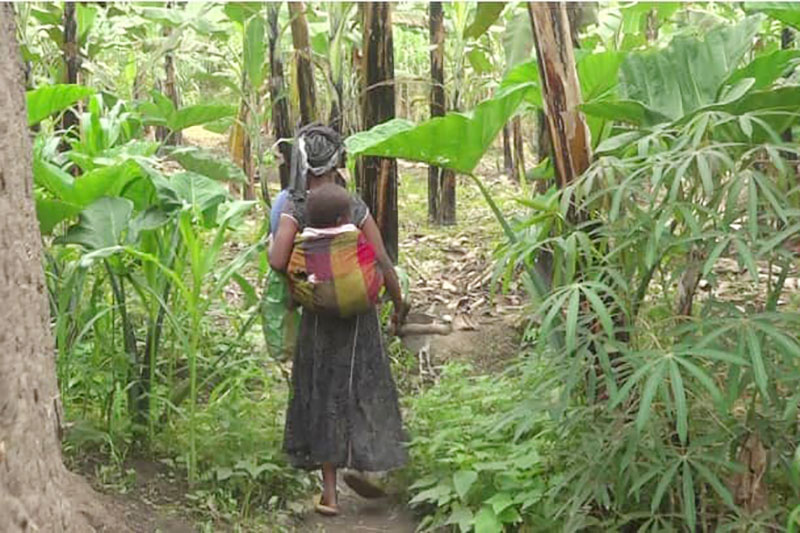
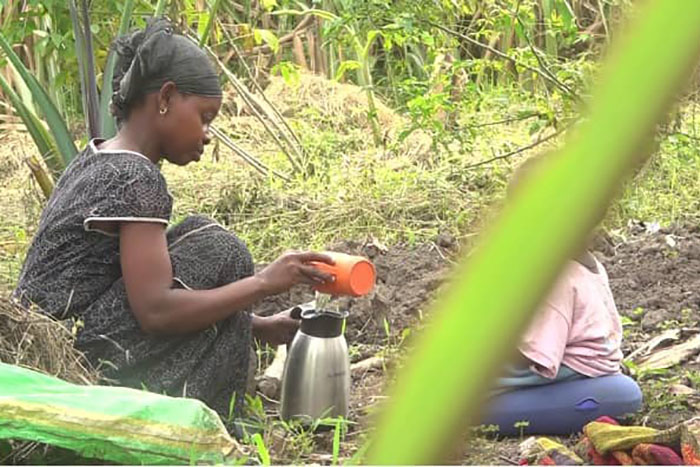
Nakafeero’s days are long and demanding. She earns a living by digging for other people in her community but never leaves home without her daughter.
“I take her everywhere I go because I don’t have anyone I can trust to look after her,” she says softly, her eyes filled with both love and exhaustion.
Spina Bifida is a congenital condition that occurs when a baby’s spine and spinal cord do not develop properly, often resulting in mobility difficulties, frequent infections, and lifelong care needs—even after surgery.
Every day, Nakafeero spends hours ensuring her daughter stays clean and comfortable. Since her operation, Philomela struggles with waste control and must rely on disposable diapers and catheters.
“It’s hard,” Nakafeero admits. “I have to bathe her several times a day and make sure she doesn’t get infections.”
She regularly visits Organised Useful Rehabilitation Services (OURS) at Ruharo Mission Hospital in Mbarara, the only specialized center in western Uganda offering care for children with Spina Bifida and Hydrocephalus.
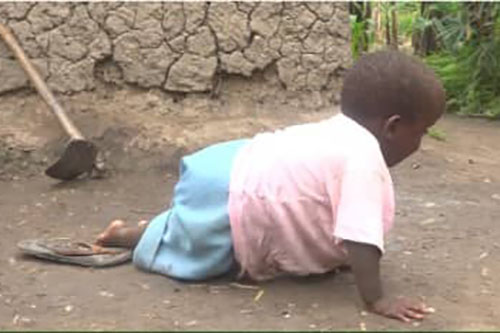
“Looking after my child is a full-time job,” she says. “Sometimes I wish I could go far to work, but I can’t. I have to be here for her.”
Despite her physical challenges, Philomela is bright, playful, and curious. She loves playing with other children and dreams of joining school.
“She learns very fast,” Nakafeero says proudly. “If only she could go to school, she would do well. Her mind is sharp.”
According to Dr Aaron Ndyowawe, head of operations at OURS, the center receives children from across Uganda and neighbouring countries like Rwanda and the Democratic Republic of Congo.
“We are the only specialized rehabilitation facility in western Uganda that offers surgery, therapy, and counseling for children with Spina Bifida and Hydrocephalus,” he explains.
Dr Ndyowawe says early detection and consistent medical care are critical. “We work with Village Health Teams (VHTs) to identify children with these conditions in rural areas. Once identified, we refer them to facilities where they can receive proper medical attention.”
However, he notes that stigma and family conflicts often lead to neglect. “We have had cases where parents fail to return for their children after surgery, leaving them under hospital care,” he reveals.
Folic Acid: The Key to Prevention
At CURE Children’s Hospital in Mbale, another major facility that treats over 300 children with spinal defects annually, Dr Timothy Wambi, a neurosurgeon, emphasizes the importance of prevention.
“Most cases of Spina Bifida are preventable if expectant mothers take folic acid before and during early pregnancy,” he explains.
He adds that even with successful surgery, many children continue to live with long-term complications.
“Our goal during surgery is to protect the brain and spinal cord from further damage. But after that, lifelong rehabilitation and family support are essential.”
Dr Wambi expresses concern about the shortage of specialized doctors and rehabilitation facilities across Uganda.
“We need more trained personnel and government support to reach the growing number of children born with these conditions,” he urges.
A 2023 Uganda Bureau of Statistics (UBOS) report revealed that for every 100 children born, about seven are diagnosed with spinal defects such as Spina Bifida or Hydrocephalus.
Research by the Spina Bifida and Hydrocephalus Association of Uganda shows that western Uganda has the highest prevalence of Spina Bifida (28%), followed by eastern (17%) and central (8%) regions.
Hydrocephalus, another neurological condition that often co-occurs with Spina Bifida, is most common in eastern Uganda (10%), central (8%), and western (5%) regions.
A Call for Greater Support
Experts and health workers continue to advocate for stronger public awareness, better prenatal care, and increased government investment in maternal health.
“Preventing these conditions starts with education,” says Dr Wambi. “If mothers take folic acid and attend regular antenatal visits, we can save many children from lifelong disability.”
Back in Isingiro, Nakafeero dreams of a future where children like her daughter are seen not as burdens, but as children with potential.
“I just want my child to live a full life,” she says with a tired smile. “She may be different, but she is precious just like any other child.”
