

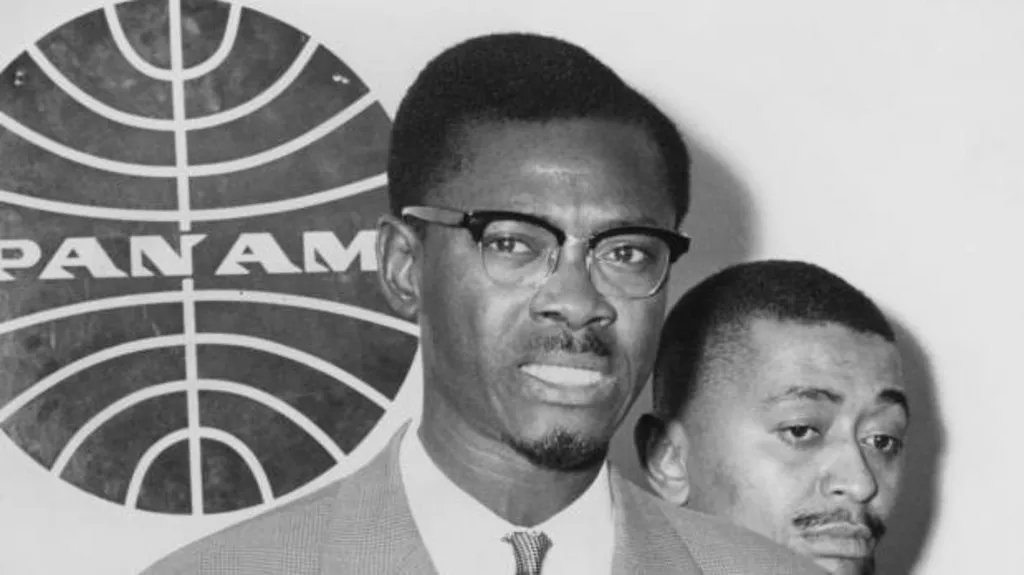
A century after the birth of Patrice Lumumba, the Democratic Republic of Congo’s first prime minister and a symbol of anti-colonial resistance, Belgium’s capital hosts commemorations that reflect on his enduring legacy and Belgium’s colonial past.
The events come amid ongoing efforts to seek justice for his assassination and to build a new chapter in Congo-Belgium relations.
On July 2, 2025, Brussels pauses to remember Patrice Émery Lumumba, a man whose name resonates far beyond the borders of the Democratic Republic of Congo.
Born a hundred years ago, Lumumba emerged as a fearless leader of Congo’s independence movement and its first democratically elected prime minister.
His impassioned vision for an Africa free from colonial domination made him an enduring symbol of emancipation and Pan-African unity.
Yet, his promise was violently cut short when he was assassinated in 1961 under circumstances implicating both Belgian and American agents.
Belgium’s reckoning with this dark chapter has been slow and often painful. It was only in 2002 that the Belgian government first acknowledged a “moral responsibility” for the circumstances leading to Lumumba’s death, with then-Prime Minister Guy Verhofstadt issuing an official apology.
Two decades later, Prime Minister Alexander De Croo took a further step.
In June 2022, standing before Lumumba’s family at Brussels’ Egmont Palace, De Croo solemnly returned a single tooth—the only known physical remnant of the leader—confiscated decades earlier from a Belgian agent involved in the assassination.
“It is a painful and unpleasant truth,” De Croo said. “Belgian ministers, diplomats, officials or military… should have seen that the transfer to Katanga would endanger his life. They should have warned. They should have refused any help… They chose not to see it. They chose not to act.”
The return of Lumumba’s remains was not merely symbolic but also an acknowledgment of Belgium’s colonial legacy and a step toward reconciliation. De Croo emphasized that this moment was part of “a new partnership” between Belgium and Congo, one grounded in facing history honestly.
He admitted, “It is not something to be proud of” that it took more than sixty years to bring Lumumba’s remains home, but stressed the importance of turning a painful page to start anew.

This centenary is marked in Brussels by a rich programme of cultural and intellectual events that reflect on Lumumba’s enduring resonance.
The Congolese Cultural Center hosts the exhibition “Lumumba: 100 Years,” featuring five young artists from Kinshasa’s Academy of Fine Arts.
Their works confront contemporary challenges in Congolese society through the lens of Lumumba’s ideals.
The exhibition also includes a children’s workshop aimed at passing on his legacy to new generations.
A conference scheduled for July 5 delves into the theme of legacies, exploring not only Lumumba’s role in Congo’s independence but also the wider implications for African liberation and justice.
Earlier, on June 29, Brussels screened Soundtrack to a Coup d’Etat, an Oscar-nominated documentary examining the geopolitical forces behind Congo’s postcolonial turmoil and Lumumba’s assassination.
For the Congolese diaspora in Belgium and activists advocating for decolonization, these commemorations hold deep significance. Lumumba is seen as more than a historic figure: he is a symbol of ongoing struggles for social justice and dignity.
As one community leader said during the exhibition’s opening, “Lumumba’s fight was not only for Congo’s freedom but for the liberation of all African peoples from oppression.”
Yet, Lumumba’s story remains entwined with unfinished business. The 1961 execution, ordered by Katangan separatists with backing from Belgian officers and covert support from the CIA, stands as a stark reminder of colonial interference and betrayal.
His body was brutally dissolved in acid, leaving only that tooth, which resurfaced decades later to ignite renewed calls for justice.
In June 2025, Belgian prosecutors announced plans to bring to trial Etienne Davignon, a 92-year-old former diplomat and the last Belgian named in investigations into Lumumba’s murder.
This potential trial highlights Belgium’s slow but ongoing pursuit of accountability, a pursuit echoed by many Congolese who continue to demand truth and reparations.
The path to reconciliation has not been easy. Belgium’s King Philip expressed deep regret for colonial atrocities in a letter to Congolese President Félix Tshisekedi and during a recent visit to the country. Prime Minister De Croo reflected on these gestures as part of a broader reckoning: “We must face up to our history and put it into words so we can turn the page and start a new chapter.”
Lumumba’s legacy also carries a profound message about the resilience of African unity and sovereignty. Despite the violent end to his leadership, his ideals inspired Pan-African movements across the continent and continue to inspire leaders and activists today.
As the exhibition and events unfold in Brussels, Lumumba’s story is a powerful reminder that the wounds of colonialism remain open but that memory and justice can forge a path forward.
A community organizer remarked, “Honouring Lumumba is honouring the ongoing fight for dignity and equality. His vision guides us still.”
The return of Lumumba’s tooth was followed by plans for a national tour in Congo, with the coffin visiting key sites including Lumumba’s birthplace in Onalua, his political stronghold Kisangani, and Shilatembo, the site of his murder in Katanga.
His remains are to be laid to rest in a mausoleum in Kinshasa on June 30, 2025, marking a solemn closure to decades of absence.
Brussels’ commemoration of Lumumba’s centenary is not only a tribute to one man’s life but a critical moment for Belgium and Congo to confront shared histories. ]
It is a reminder that remembrance carries with it responsibility—and that true partnership requires reckoning with the past.
