

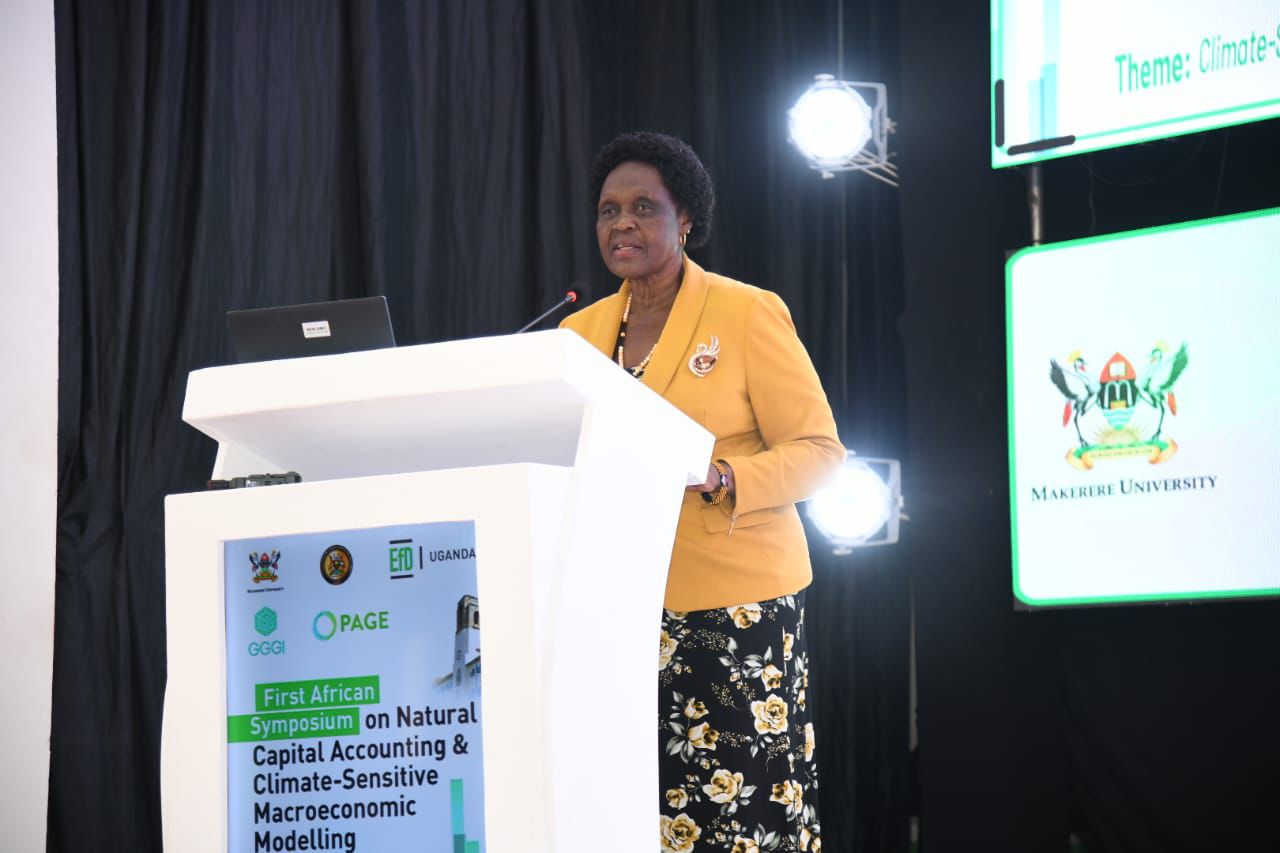
Makerere University Vice Chancellor, Prof. Barnabas Nawangwe, has reaffirmed the institution’s commitment to shaping Africa’s sustainable development trajectory, stating that the university has strategically positioned itself as a key contributor to the continent’s evolving economic agenda.
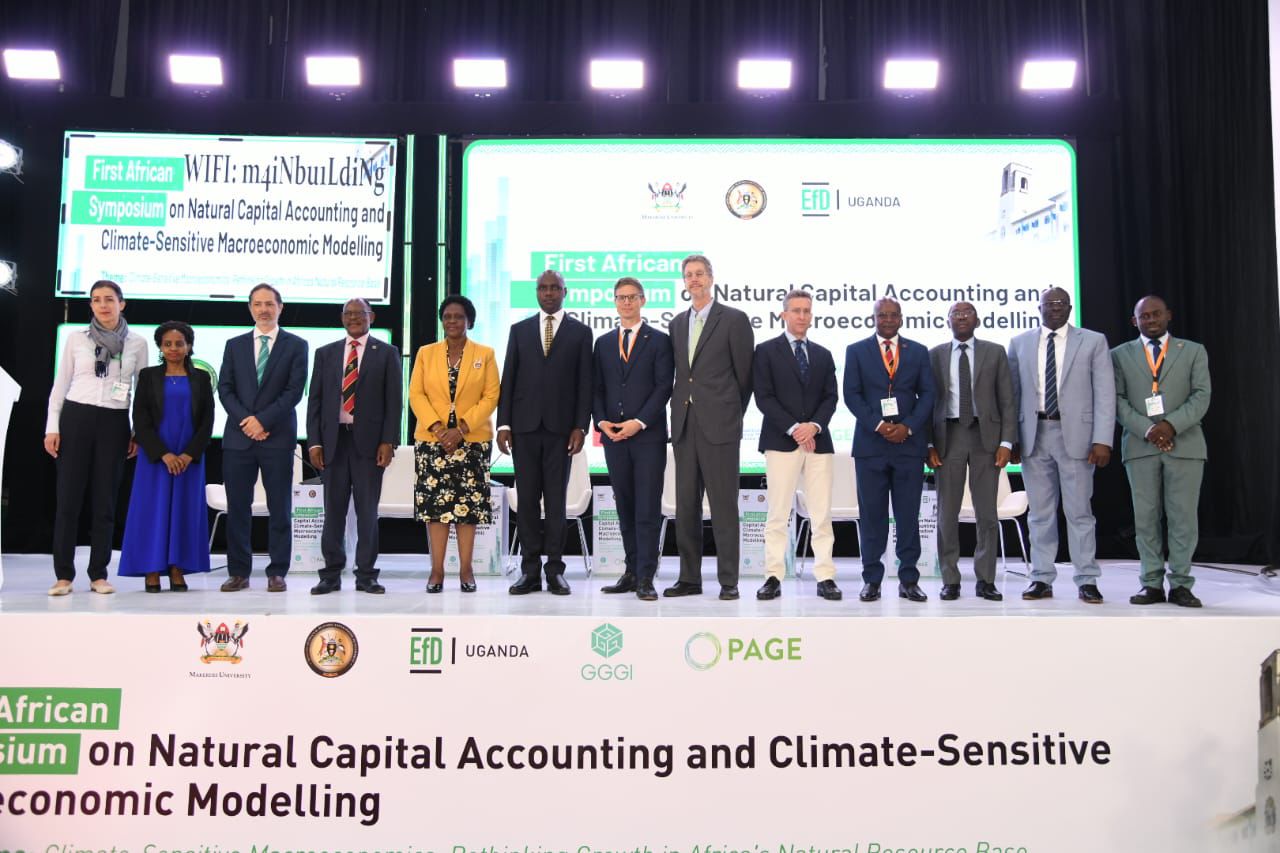
Prof. Nawangwe made the remarks during the first-ever African Symposium on Natural Capital Accounting and Climate-Sensitive Macroeconomic Modelling held in Kampala—a gathering that brought together policymakers, academics, and technical experts to rethink Africa’s growth models in the face of climate change and environmental pressures.
As Africa faces recurrent climate shocks, biodiversity loss, and increasing fiscal vulnerabilities linked to environmental change, it is becoming evident that economic transformation cannot be pursued in isolation from climate and environmental realities.
The symposium, convening key institutions including the Ministry of Finance and the Ministry of Water and Environment, underscored the growing consensus that Africa’s economic transformation must be firmly anchored in environmental sustainability and climate resilience.
Makerere University Vice Chancellor Prof. Nawangwe highlighted the importance of strong partnerships between academia and government in developing the analytical tools and technical capacity required to integrate natural capital accounting and climate considerations into macroeconomic planning.
He emphasized that universities must go beyond research production to actively inform public policy and support evidence-based decision-making.
As climate shocks intensify and natural resources face increasing strain, policymakers at the symposium stressed that traditional economic models can no longer operate independently of environmental realities.
Africa’s economies remain heavily dependent on natural capital—including forests, water systems, minerals, and agricultural land—making the sustainable management of these assets critical to long-term growth and stability.
