

Uganda's presidential elections have consistently sparked controversy, with candidates frequently claiming that the electoral process lacked transparency and fairness.
Despite numerous challengers vying for the presidency, incumbent leader Yoweri Museveni typically secures over 50% of the vote, leaving the remaining percentage to be split between the other candidates.
However, these contenders have never conceded defeat, insisting unequivocally that the elections were rigged in favour of Museveni.
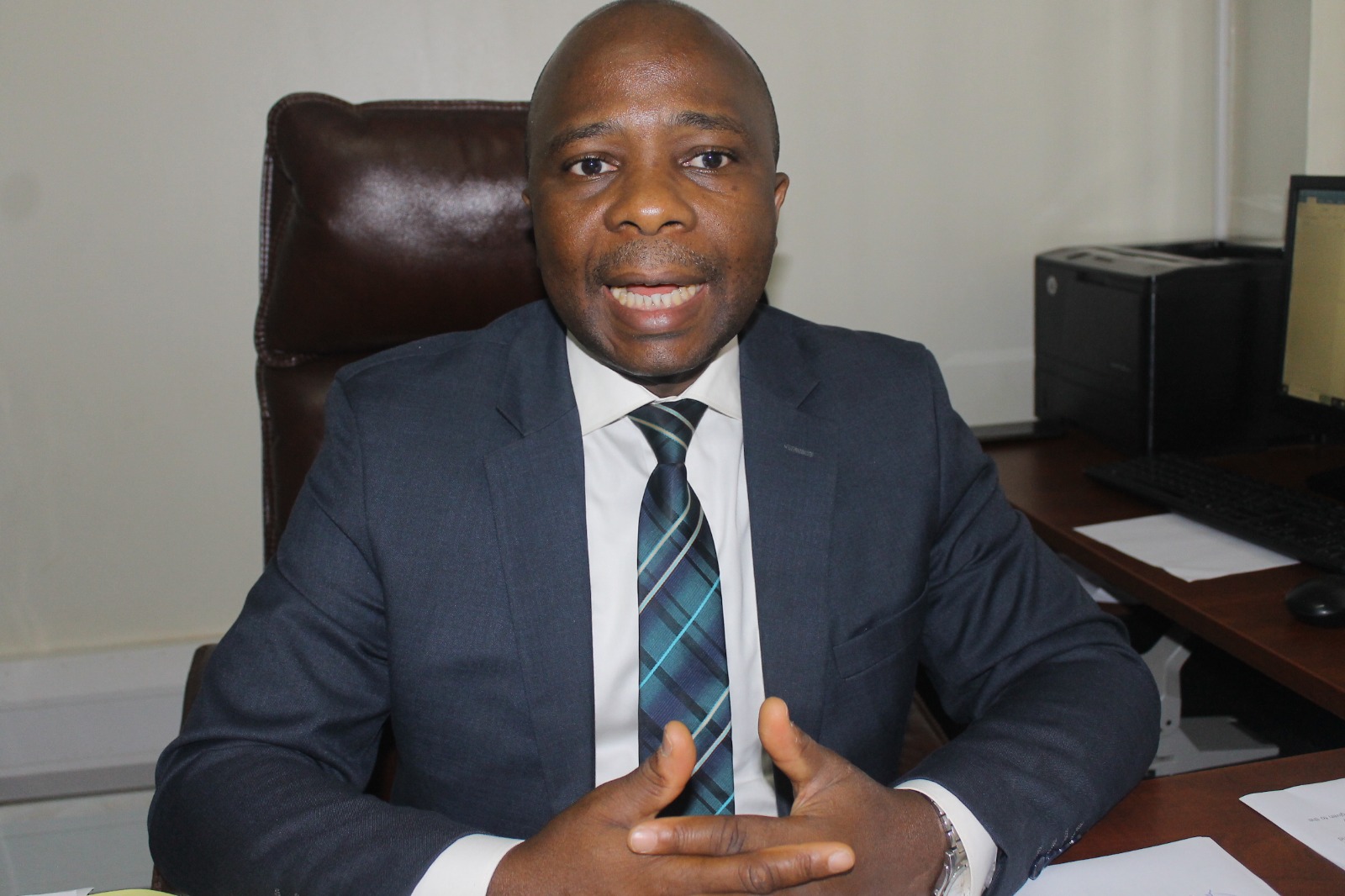
Our reporter, Muhamadi Matovu, interviewed the spokesperson of the Electoral Commission (EC), Paul Bukenya, who dismissed these claims, emphasizing that the commission operates independently and carries out its responsibilities in accordance with the laws of Uganda.
Below are some excerpts from our interview with Bukenya.
:
*******************************
Can you share the number of by-elections that have taken place since the 2021 general elections?
We conducted several by-elections to fill vacancies that have occurred since the conclusion of 2021 general elections. The first by-election held was the by-election of district chairperson in Kayunga which was held in December 2021.
In the same month, the 16th of December 2021, we conducted elections to fill various positions that were vacant in local government councils countrywide. This affected several districts across the country. We were able to fill them so that the councils are complete and can serve people.
In total, we had 11 by elections, including that local government council by elections where there were more than 50 districts. That was followed by a Member of Parliament for Omoro County. That was May 26, 2022.
We had a by-election to fill the Member of Parliament for Soroti City East Division July 28, 2022, then directly elected member of parliament for Gogonya county which is in Pallisa district that was conducted August 11.
On the same day we also (conducted a by-election to fill the vacancy) of a member of parliament for Bukimbiri county in Kisoro district. Then we filled the position of directly elected Member of Parliament for Busongora county North in Kasese district on 18 August 2022 which was followed by a by-election for the member of Parliament for Serere County in Serere district on 23 February 2023.
Recently, we had June 14, 2023 by-elections of district chairperson and counsellor in Bukedea district and then the most recent being the by-election of Member of Parliament for Oyam County North in Oyam district. Right now we are in Hoima district where we are conducting the by-election for the district councilors. So, it gives us a total 11 by elections that we have held so far.
There have been reports of violations and bribery allegations during the by-elections. What is your perspective on these incidents?
First of all, by-elections are held to fill the position that has fallen vacant by-elections and in some cases we had death. In the case of Soroti East we had a court notifying the result of the election of 2021. Those are some of the incidents we have handled. Generally, by-election can occur when there is a resignation or something like that. We have been able to successfully organize and conduct by-elections but not without challenges. Of course, we know that we had several challenges which are almost common. (Some of the challenges include) voter apathy. One of the things we have noticed is that the by-elections are always characterized by voter low turn up. We need to work at raising the level of participation. That is something we brought to share with stakeholders.
In some by-elections we have seen violent conduct. By-elections tend to bring in stakeholders, players, there is a high concentration of stakeholders in a by-election environment and stakes go high and tensions go high and sometimes we have seen local issues escalate into violent scenarios, which is a very undesirable scenario. We don’t organize violence. So we have engaged stakeholders to ensure that we root out violence and chaotic conduct.
So besides that, I think all these by-elections have been successful wherever we have had challenges, we have still been able to address them. So, all the by-elections we have set out to conduct have been held and concluded and the leaders have been elected. And we have not had any by-election result overturned by court.
The public has lost trust in the Electoral Commission. What is the Commission doing to regain that trust?
We were mindful and we want to get credibility as an institution that organizes and conducts elections in Uganda. And so we have deliberate strategies to engage stakeholders so that they understand our role.
I think sometimes people have raised those issues, really not seeing the bigger picture. There is a question that we need to ask: what has the Electoral Commission done? What is the mandate of the Electoral Commission? If we have started an electoral program, we have involved everyone who is supposed to be involved. I think now you are talking about by-elections. We have popularised the program. We have created a fair playing ground for everyone. We updated the register publicly and displayed it.
We open the nominations to all candidates from all political sheds and they have been successfully nominated and we put them on ballot papers and hold campaigns which are harmonized. Everything has been done. We recruited polling officials in a transparent manner, including displaying their names so that objections are raised. I think that already shows you that we built the foundation for a fair process. You have done what you are supposed to do to achieve a fair process. I think questions have come up because of some of the instances that have happened especially at the tail end, where some stakeholders, some persons have violated electoral processes, conducting themselves in a manner that contradicts our guidelines. Does that mean the electoral commission is unfair, impartial? I think that is not what it means, we need to address and target individuals who are attempting to break the law. I think recently you have seen that actions have been taken against some suspects in this case.
If there is misconduct or chaotic conduct by stakeholders because chaotic conduct and violent behavior comes from very many samples, voters themselves become chaotic, political party agents.
You have seen where candidates have come and kicked our ballot boxes. So, how do we address these things? Does that mean that the Electoral Commission has not done what it is supposed to do? I think we need to isolate the conduct of biased stakeholders and then address each one in relation to what they have done.
The Electoral Commission has done what it's supposed to do according to the law and I am sure that that is a good basis for us to keep confidence in the process. That is why people continue to participate in elections because that is the only way they can elect their leaders.
Has the Electoral Commission ensured a fair process for the upcoming 2026 general elections?
We have released the roadmap for 2025/26 general elections, strategic plan, the broader document. We have indicated our goals, our strategic actions that we are going to take, and they have identified and noted outstanding areas where stakeholders need to get involved so that we have a fair process because getting credible elections involve all of us, not just the electoral commission. There are people who are supposed to support the process and we are the people all us as Ugandans
So we will have highlighted our strength. We have also acknowledged areas that remain weak that need to be strengthened and safeguarded if we are to have credible processes. So, this is going to be an effort of everyone, each one of us.
We issued this road map in time so that everyone takes their position and takes necessary actions to build a credible journey towards 2026. There is space for everyone to participate including proposing reforms to electoral laws, and addressing areas that are vulnerable.
If electoral reforms are introduced, how will they benefit the Commission?
There are concerns by various stakeholders and areas where they want to propose amendments to electoral laws. It is open, elections and electoral laws cannot be static. Every election that we go in faces new issues and we also learn from those elections. So, if there is any stakeholder who thinks a particular aspect of the law needs to be strengthened or a particular provision of the law needs to straighten out, I think they remain within their rights to present such for discussion, consideration and necessary actions by Parliament.
The electoral reforms are part of the electoral process. We have issued the roadmap which provides an opportunity for everyone to participate and propose.
So, we need to be mindful that we have a law in place but where we need to reform or where we need to improve, it is open. EC as an institution is also preparing to present areas of consideration of electoral reforms and I am not about to talk about that now because of finalizing our presentation but certainly it is coming.
Could you share the details on the plan to enable prisoners and diaspora participation, including how the Commission plans to handle complicated cases?
In 2019, the court ruled that the Electoral Commission should facilitate citizens in diaspora and prisons to vote in a general election. We started a process of consulting necessary stakeholders. And we did a joint task force from different government agencies to help us understand and appreciate the challenge which is before us and some reports have been generated.
This forms one of the areas that we want to present for consideration for reform because as I speak, we don't have a law that allows us to set up a polling station outside the boundaries of Uganda.
So we are doing benchmarking. We have been doing studies. We have been looking at how other countries are doing and it is one of the areas that is going to be presented for consideration for reforms so that we can register the citizens who are in diaspora and create polling stations. So, this is something that will be updating Ugandans.
Has the Commission sufficiently prepared logistically for the 2026 elections in terms of resources?
It is the duty of the government to provide the funds to commission in order to organize the election that is a constitutional provision. What we do is to plan and present our budget as well as our program. What the law tells us to do is what we plan and when we plan to do that we cost it. This explains why we released the program and shows what we are going to do for the next three financial years.
The reason we released the roadmap and strategic plan in time is to enable the government to provide funding over a three-year period.
But again, there are preparatory processes that are done before coming to the final year where we have elections. So, there are some procurements which take a long time. We are talking about printing, we are talking about technologies, we are talking about manpower, we are talking about recruiting staff at various stages of the electoral process and giving them allowances. So as an institution that has managers we have done the planning and we have provided the timelines. All that is based on the law, it is also based on the management practices, so that we have an effective electoral process.
How have stakeholders responded to the electoral roadmap?
Of course there has been appreciation. There has been expression of reservation in some areas, because they have not been understood. We just launched the plan. And it's not internalized. So some areas, concerns have come up but we realize that everyone has not yet understood this and this is why we are engaging in a briefing and demystifying the entire processes because they look technical, and sometimes someone will wonder why you are planning for such huge amounts of money. We have done projections.
What is the role that technology is expected to play in the upcoming electoral processes?
Our practices and systems are going to continue driven by technology because that is the era where we are. So, we are going to use technology in processes and systems, including some of the activities that we do in the field, mapping out polling areas and re-organizing them, the registration of voters uses a lot of technology in a collaborative manner because we are working with other agencies as well, the preparation of the registers, the printing itself, high speed processing and high speed printing.
Improving that area of nomination of candidates and preparation of ballot papers, the processes of polling dates, the counting of results and the transmission, the tallying of election results is heavily reliant on technology and new technology, identification of voters on polling day, but also communication, increasing use of digital and online communications, social media, as well as other interventions that technology has provided us so we are progressive institution we have embraced technology in our systems and processes and we are going to take it to another level in the next elections.
Can you comment on the allegations that the regime of President Museveni interferes with the results?
I think the Electoral Commission is established by the laws of Uganda. There is a constitution and the electoral commission Act that establishes that. Our mandate is to organize, conduct and supervise elections and referendums in Uganda.
In the course of organizing elections, we work with the government and we don't work alone. We don't have a Minister of Finance. We don't have an army; we don't have the police. We don't have local government. We are a government institution. We want people to acknowledge that we are established by the law. We even have a line ministry. I think it is unfair to use our association which is by law with the government to say that the Electoral Commission is not independent. That is failure to understand our work and our establishment.
We are an independent institution established by the Constitution and we organize and conduct elections in Uganda.
The chairperson of the Electoral Commission is not the president of Uganda. The Electoral Commission has a commission that plans and takes decisions and guides every process and other institutions and agencies, but I wanted to highlight that it is wrong and uninformed for someone to (think that the commission is not independent)
We work with the media, work with civil societies and work with government agencies. We work with international communities’; we work with academia. We don't want our association with those agencies to be (misunderstood).
