

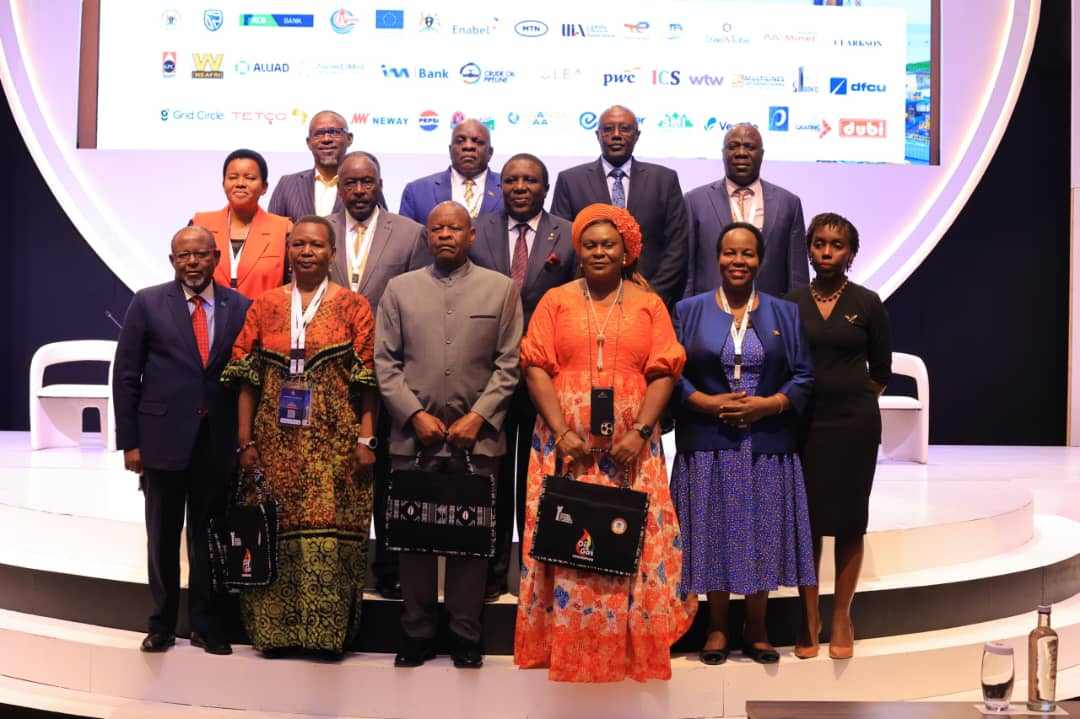
Ambassador Col. (Rtd.) Fred Mwesigye, Uganda’s High Commissioner to Tanzania, has called for urgent policy alignment among East African nations to strengthen the regional energy corridor and ensure that First Oil acts as a catalyst for industrialization.
Speaking on Wednesday during the 11th Oil and Gas Convention in Kampala, Mwesigye said that while geography positions Uganda and Tanzania as natural partners, deliberate collaboration is required to translate potential into tangible progress and shared prosperity through projects such as the East African Crude Oil Pipeline.
He warned that the window for participation is narrowing as Uganda approaches its production phase, describing the current period as a critical inflection point. He added that for regional cooperation to move beyond rhetoric, member states must harmonize institutional frameworks—an essential requirement for the success of key developments like the Tilenga Project and Kingfisher Project.
“The demands of industrialization now require us to become intentional collaborators—aligning our policies, strengthening our institutions, and enabling our private sectors to participate meaningfully,” Mwesigye said.
He described the oil and gas sector as a foundation for broader economic transformation, with the potential to support manufacturing and logistics across the East African Community. He cautioned that failure to accelerate investment could leave regional players sidelined in a transformation taking place within their own region.
Addressing the private sector, Mwesigye said participation will depend on preparedness rather than proximity. While demand is increasing in engineering, logistics, and environmental management, he emphasized the need for local firms to invest in technology and adhere to international standards to remain competitive.
To support this, the Uganda High Commission in Dar es Salaam, in partnership with the Uganda Chamber of Energy and Minerals, has initiated technical site visits aimed at improving sector understanding and facilitating joint ventures between Tanzanian and Ugandan companies.
Wilson Mbadi, Minister of State for Trade, Industry and Cooperatives, said the transition to production will position Uganda as a regional hub for petrochemical industries. He noted that local production could reduce dependence on imports of plastics, fertilizers, and industrial chemicals, contributing to GDP growth and job creation.
“We must ensure that Uganda’s petroleum wealth becomes industrial and productive wealth,” Mbadi said, adding that coordinated action between government and the private sector is essential.
Meanwhile, Richard Kabonero, head of regional economic cooperation at the Ministry of Foreign Affairs, reaffirmed the government’s commitment to commercial diplomacy. He said Uganda’s 36 foreign missions are being repositioned under a 2026–2030 strategy to prioritize minerals, oil, and gas.
“Our diplomatic missions are no longer ceremonial posts; they are platforms for economic engagement, investment facilitation, and strategic partnerships,” Kabonero said.
He added that outreach in global capitals such as Beijing, New Delhi, Riyadh, and Paris is already yielding positive results through sector-focused diplomacy.
Kabonero emphasized that structured coordination between diplomatic missions and domestic institutions will be critical in addressing logistical and infrastructure challenges associated with large-scale energy projects.
