

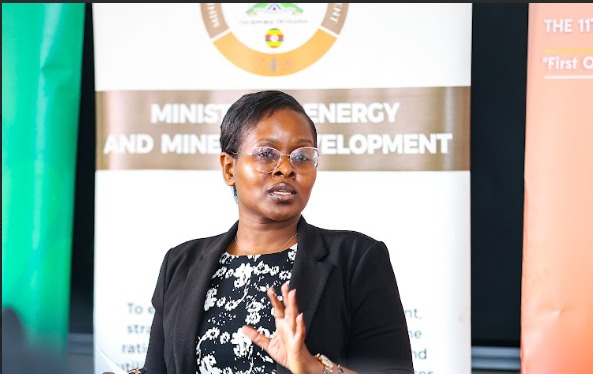
Ugandan companies have secured more than $2.3 billion (Shs8.7 trillion) in oil and gas contracts, highlighting the growing impact of local content policies and Uganda’s steady progress toward becoming a fully operational petroleum producer.
According to Gloria Sebikari, Manager of Corporate Affairs and Public Relations at the Petroleum Authority of Uganda, the national conversation has shifted from whether Uganda can produce oil to how it will sustain production at a world-class level.
With wells drilled, development targets surpassed, and contractors working across project sites, the country is transitioning from infrastructure development to full-scale operations.
Sebikari said the authority is focused on ensuring that the National Content Strategy delivers long-term value beyond the development phase.
“This phase has already generated over $2.3 billion in contracts and more than 21,000 direct jobs, alongside significant technology transfer valued in the hundreds of millions of dollars. It has also strengthened the capabilities of young professionals, training institutions, and small and medium enterprises,” she said.
She made the remarks during a media briefing in Kampala as part of the 30 Days of Oil and Gas Media Campaign 2026, a lead-up to the 11th Oil and Gas Convention 2026 under the theme “Fulfilling Uganda’s First Oil Promise: The Final Countdown.”
Looking ahead, Sebikari said the National Content Strategy for the operations phase will focus on deepening local participation through structured partnerships.
This includes promoting joint ventures between international companies and Ugandan firms to ensure expertise is embedded locally while accelerating technology transfer.
She noted that while Original Equipment Manufacturers and global service providers will remain essential, such partnerships are expected to strengthen Ugandan capacity in long-term operational services.
Another priority is improving access to financing through the Local Content Development Fund, which is expected to support Ugandan firms in acquiring equipment, meeting certification requirements, and securing working capital to compete for contracts.
The strategy also aims to strengthen the national content framework by expanding the list of services reserved for Ugandan companies, ensuring predictable participation during the production phase and safeguarding opportunities for local enterprises.
Sebikari added that the Petroleum Authority will maintain strict compliance monitoring and reporting to ensure national content obligations, skills development targets, and local participation commitments are fully implemented.
Uganda’s readiness for first oil is now firmly established, with all three major projects exceeding minimum development thresholds.
The Tilenga project has completed 198 wells against a target of 170, while the Kingfisher development has drilled 21 wells against a target of 19 and reached 77 percent overall progress.
The East African Crude Oil Pipeline (EACOP) is more than 83 percent complete, with 98 percent compensation for project-affected persons along the corridor finalised.
These milestones reinforce confidence that Uganda is on track to achieve first oil in the second half of 2026.
According to Humphrey Asiimwe, Chief Executive Officer of the Uganda Chamber of Energy and Minerals, progress across project sites reflects coordinated national effort.
“The government has maintained a clear and consistent position we will achieve first oil in the second half of 2026. What we are seeing across project sites reflects coordinated national effort, political will, and institutional discipline,” he said.
Uganda now stands at a critical point in its energy journey, with the upcoming 11th Annual Oil and Gas Convention set to bring together key stakeholders.
The event, organised by the Uganda Chamber of Energy and Minerals in partnership with the Ministry of Energy and Mineral Development, the Uganda National Oil Company, and the Petroleum Authority of Uganda, will take place on April 28 and 29, 2026 at Speke Resort Munyonyo.
The convention will mark the culmination of the 30 Days of Oil and Gas Media Campaign 2026, a nationwide initiative aimed at increasing public awareness, strengthening transparency, and documenting verified progress across Uganda’s petroleum value chain.
