

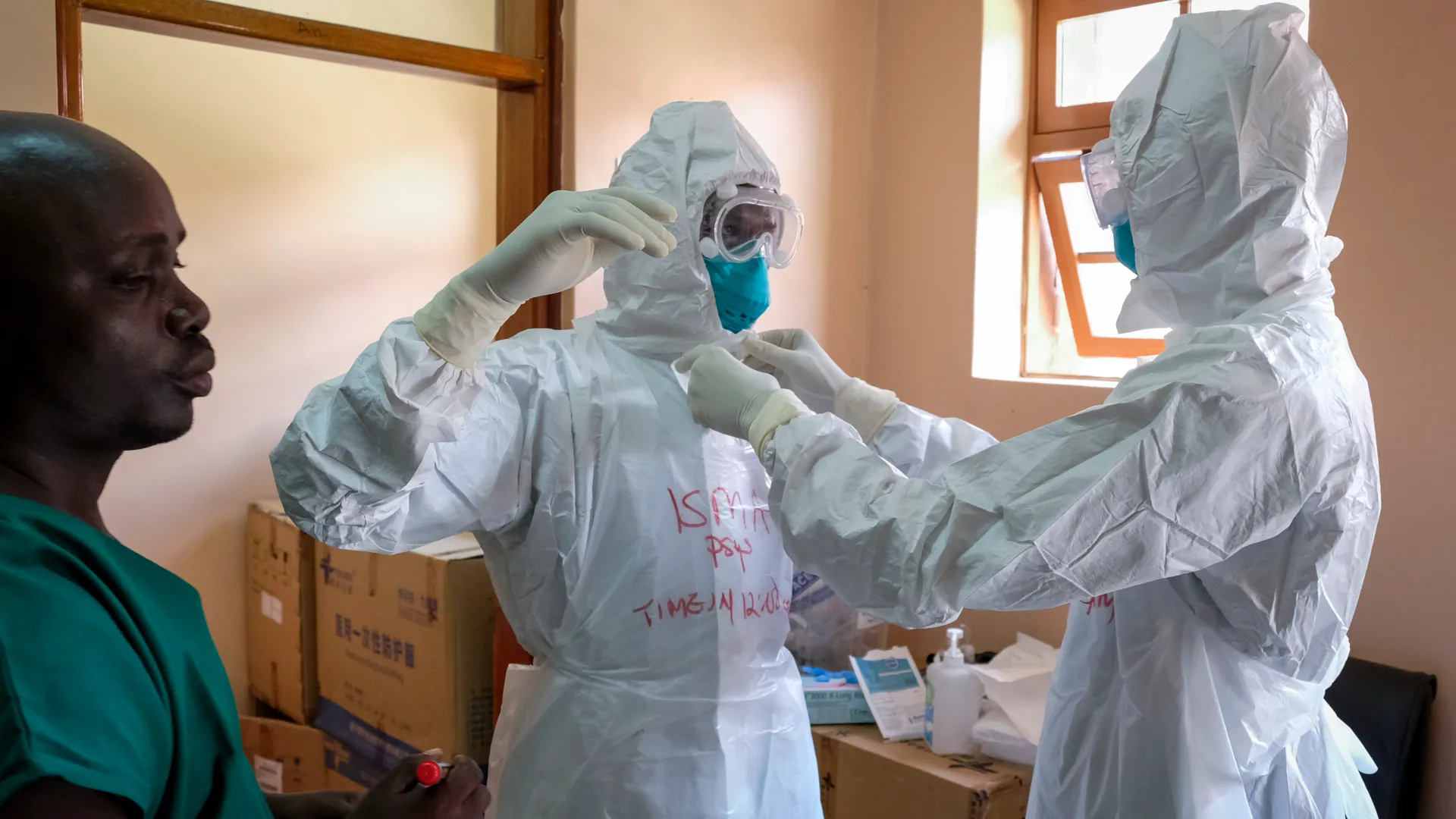
Health ministers from member states of the East African Community (EAC) are set to convene an extraordinary virtual meeting to discuss urgent measures aimed at containing the spread of Ebola following outbreaks reported in the Democratic Republic of Congo (DRC) and Uganda.
According to a communiqué issued by the EAC Secretariat in Arusha on May 29, the emergency Sectoral Council of Ministers meeting will provide strategic guidance and coordinate a regional response to the outbreak, which was officially declared on May 15, 2026.
The meeting will review and consider proposed regional interventions to contain the outbreak caused by the Bundibugyo strain of the Ebola virus.
"The convening of this high-level meeting is part of a series of urgent actions the EAC Secretariat has initiated, having already intensified regional coordination and preparedness measures following the Ebola outbreak caused by the Bundibugyo virus strain in the Democratic Republic of Congo and Uganda," the communiqué states.
The Secretariat noted that several emergency measures have already been undertaken, including an EAC Crisis Meeting, consultations by the EAC Technical Working Group (TWG) on Communicable and Non-Communicable Diseases, and meetings of the TWG on the Harmonization of Regulations for potential Ebola vaccines, therapeutics and diagnostics.
The current outbreak is linked to the Bundibugyo strain of the Ebola virus, a relatively rare strain for which there is currently no licensed vaccine or specific treatment.
As of May 26, 2026, the DRC had recorded 121 confirmed Ebola cases, including 17 deaths among confirmed cases. Authorities had also registered 1,077 suspected cases and 246 deaths among suspected cases.
Uganda, meanwhile, had reported nine confirmed cases and one death as of May 29, 2026. According to health authorities, the first two confirmed cases involved patients who had travelled from the DRC and sought medical care in Uganda.
The outbreak has primarily affected eastern DRC, particularly the provinces of Ituri, North Kivu and South Kivu. Ituri Province remains the epicentre, especially the area of Mongbwalu, which is characterised by high population mobility and significant cross-border movement.
Health experts have warned that the movement of people across borders increases the risk of further regional transmission, prompting the EAC to strengthen surveillance, preparedness and coordination efforts among partner states.
The forthcoming ministerial meeting is expected to agree on a coordinated regional strategy to enhance disease surveillance, cross-border screening, information sharing and emergency response measures aimed at preventing further spread of the virus across East Africa.
