

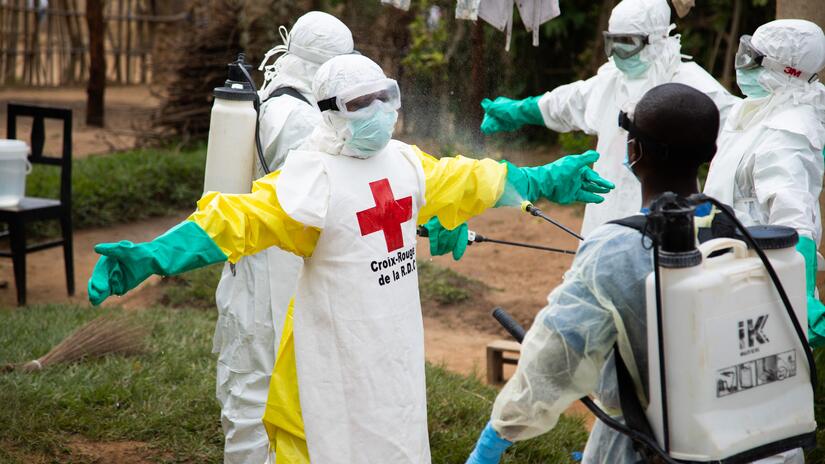
The East African Community (EAC) has urged member states to strengthen surveillance and emergency preparedness following the confirmation of a new Ebola outbreak in the eastern Democratic Republic of Congo (DRC).
The outbreak of Ebola Bundibugyo Virus Disease was confirmed on May 15 by the DRC Ministry of Public Health and is centred in Ituri Province, an area bordering Uganda and South Sudan.
According to preliminary reports, the outbreak is mainly affecting the Mongwalu and Rwampara health zones, while suspected cases have also been reported in Bunia, the provincial capital and a major transport hub in the region.
As of May 15, authorities had registered about 246 suspected cases and 65 deaths. Laboratory testing confirmed at least 13 Ebola-positive samples out of 20 tested, including four confirmed deaths.
It has also been revealed that Uganda had already confirmed two Ebola Bundibugyo Virus cases linked to travellers from the DRC, with one death recorded in Kampala.
The EAC Deputy Secretary General in charge of Infrastructure, Productive, Social and Political Sectors, Andrea Aguer Ariik Malueth, said the outbreak highlights the continued danger posed by epidemic-prone diseases in the region.
“The EAC remains vigilant and fully committed to supporting Partner States in strengthening surveillance, laboratory diagnosis, infection prevention and control, risk communication and community engagement, particularly in border areas,” he said.
He added, “Given the high level of movement of people and goods across our region, coordinated preparedness and rapid information sharing are essential to preventing cross-border transmission and protecting the health and livelihoods of East Africans.”
The regional bloc called on partner states to activate national and cross-border preparedness plans, intensify screening at points of entry and ensure that health workers and rapid response teams are adequately equipped and trained to detect and respond to suspected Ebola cases.
The EAC said it is working with national ministries of health, regional institutions, the Africa Centres for Disease Control and Prevention and the World Health Organization, among other partners, to strengthen pandemic preparedness and response across the region.
Part of the response measures includes activating the EAC mobile laboratory network to support cross-border surveillance along the DRC border, with the Uganda Virus Research Institute serving as the EAC Regional Centre of Excellence for laboratory diagnostics.
Ebola Virus Disease is a severe and often fatal illness transmitted through direct contact with infected body fluids, contaminated materials or infected animals such as bats and non-human primates.
Health experts say infected persons only become contagious after symptoms appear, with early signs including fever, weakness, headache, muscle pain and sore throat. More severe symptoms may include vomiting, diarrhoea, abdominal pain and unexplained bleeding.
The EAC encouraged the public to remain calm, follow guidance from health authorities and observe preventive measures such as regular handwashing, avoiding contact with sick persons and promptly reporting suspected symptoms to health officials.
