

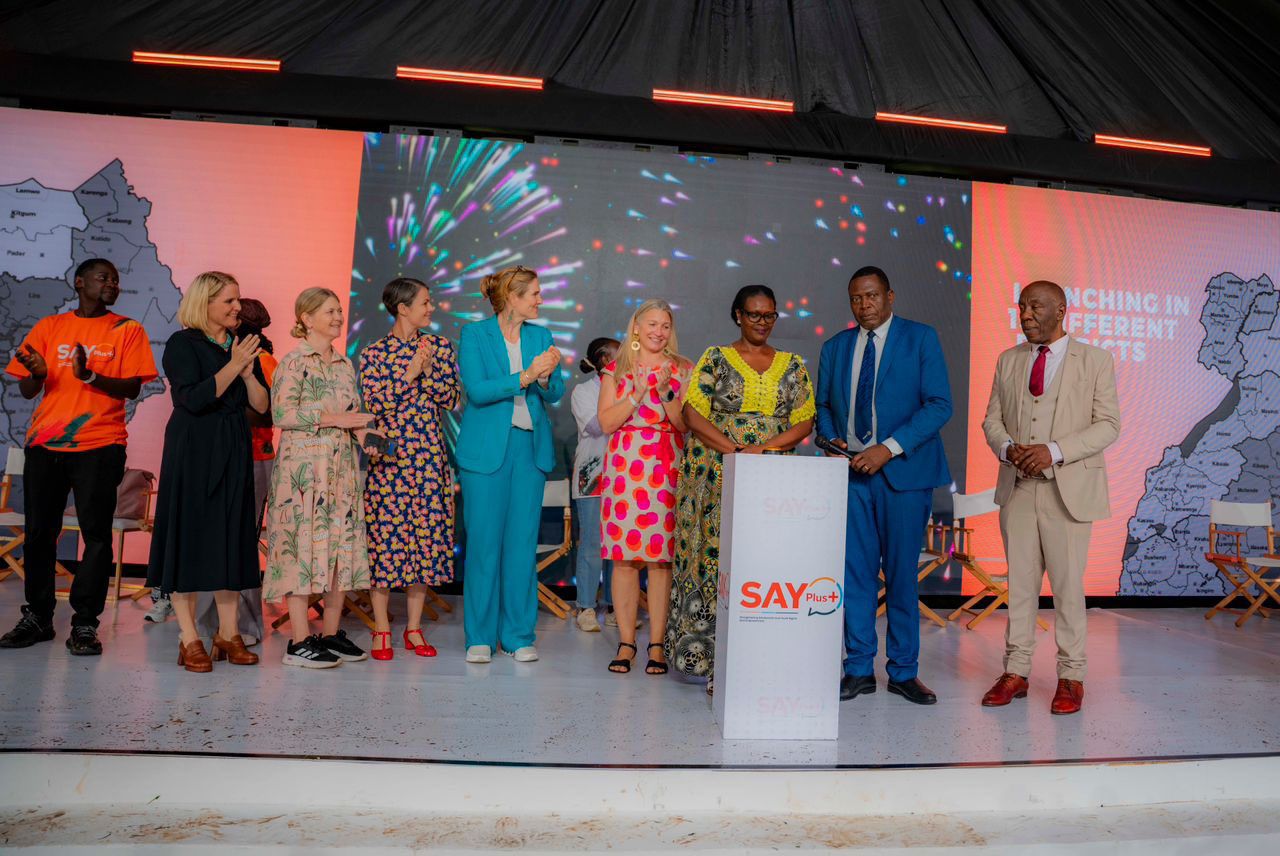
The government and a consortium of development partners have launched a new Shs185 billion programme aimed at improving sexual and reproductive health services for adolescents and young people in some of the country’s most underserved regions.
The six-year initiative, dubbed SAY Plus+, was launched on Thursday in Kampala by State Minister for Health Margaret Muhanga under the theme “My Voice Matters: Youth Voices for SAY Plus+.”
Funded by Iceland, Denmark, the Netherlands and Sweden, the programme carries a budget of $50 million (about Shs185 billion) and will run from 2024 to 2030 across 13 districts in five sub-regions.
The programme, formerly known as Strengthening Adolescents and Youth Rights and Empowerment: Scaling Impact, is being implemented by the Ministry of Health in partnership with other government agencies, while the United Nations Population Fund (UNFPA) Uganda serves as the managing and technical agency.
Speaking at the launch, Muhanga described SAY Plus+ as a timely intervention aimed at equipping young people with life skills, knowledge and access to essential health services.
She urged schools, community leaders, institutions and development partners to support the programme’s implementation, saying investment in young people was critical to Uganda’s future development.
“Investing in young people today is an investment in Uganda’s future,” Muhanga said.
The programme will support regional referral hospitals in Jinja, Mbale, Moroto, Yumbe, Arua and Gulu, while contributing to Uganda’s Human Capital Development agenda under the National Development Plan IV.
Officials said the initiative targets adolescents and young people aged 10 to 24 years, with particular focus on adolescent girls and young women, refugees and host-community youth, out-of-school adolescents, youth not in employment, education or training, and young people living with disabilities or in humanitarian and post-conflict settings.
Speaking at the event, Kristine Blokhus said SAY Plus+ marks a shift from fragmented youth interventions to a coordinated national response centred on young people.
“SAY Plus+ represents a shift from fragmented interventions to a coordinated national effort that meaningfully places young people at the centre of both design and delivery,” Blokhus said.
She added that the programme will invest not only in health services but also in systems and communities that enable young people to thrive.
According to programme officials, SAY Plus+ will focus on three key pillars: empowering young people to make informed decisions about their health and rights, mobilising communities to challenge harmful social norms, and strengthening youth-friendly reproductive health, HIV and gender-based violence services.
The programme is expected to directly and indirectly benefit more than 2.3 million people by 2030.
Youth representative Jovia Dranzoa welcomed the initiative, saying it was one of the few programmes that meaningfully involves young people in decision-making.
“For many of us, things like this are designed without listening to what we go through every day. SAY Plus+ feels different because it starts with our voices and gives us a real role in shaping solutions,” Dranzoa said.
Officials said the initiative will strengthen HIV prevention, reproductive health and gender-based violence response services in vulnerable communities across the country.
