

On the eve of International Labour Day, a powerful message is emerging from Matugga: Uganda’s industrial future is not a distant dream—it is already taking shape.
At the centre of this transformation stands Dei BioPharma, led by its founder, Dr Matthias Magoola, who is positioning the company as a cornerstone of the country’s economic expansion.
Magoola’s vision goes beyond science. It is about national prosperity. Dei BioPharma is rapidly becoming a key contributor to Uganda’s GDP, while already employing more than 1,000 people and setting the stage to create thousands more jobs as its operations scale.
In a country with a youthful population, this level of job creation is not just significant—it is essential.
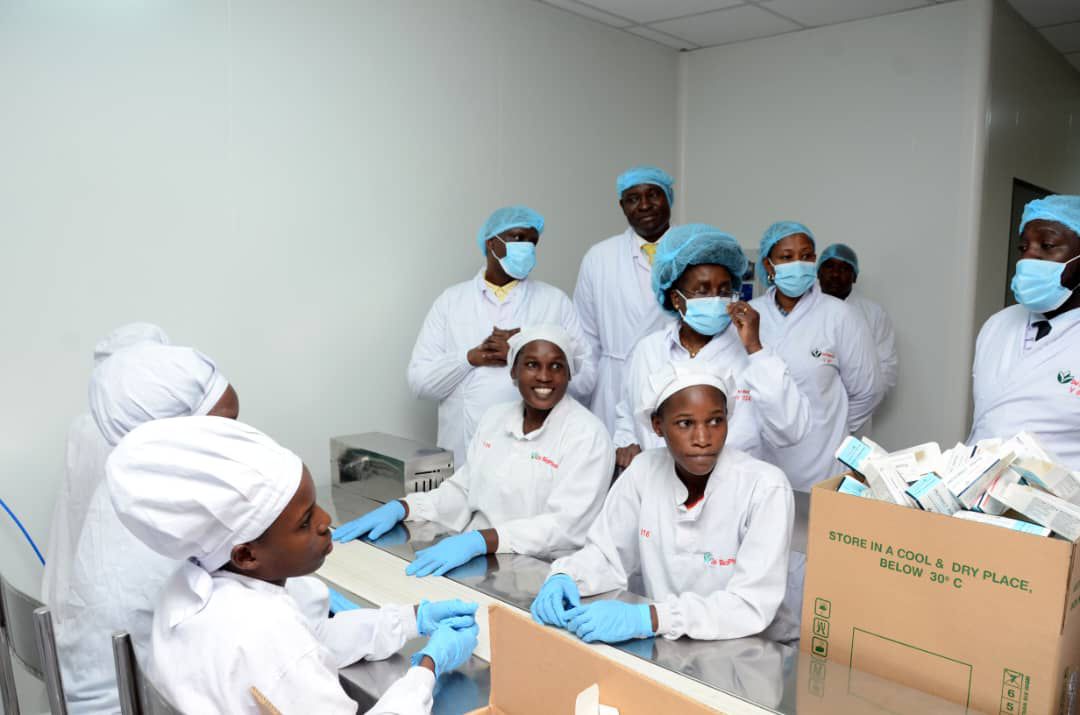
During a recent tour of the facility, leaders commended the remarkable progress at the Dei BioPharma plant.
The visit, conducted alongside Dr Monica Musenero, revealed a fast-rising pharmaceutical hub equipped with advanced manufacturing technologies.
The delegation also reaffirmed support for the industrialization agenda championed by President Museveni, whose leadership has prioritized local medicine production as a strategic sector.
The numbers speak for themselves. Already, 10 drugs produced by Dei BioPharma are on the market, having successfully passed National Drug Authority certification.
Beyond that, the company holds over 100 patented formulations ready for production once the facility is fully completed.
These include treatments for cancer, malaria, sickle cell disease, hypertension, and diabetes, as well as more than 10 approved vaccines—placing Uganda firmly on the path toward pharmaceutical self-reliance.
But the real story lies in what this means for the country. Dei BioPharma is not just manufacturing medicine; it is manufacturing opportunity.
From scientists and engineers to technicians and support staff, the company is building a workforce that reflects the future of a modern industrial economy.
Magoola’s work aligns with a broader global pattern: nations that invest in industry, innovation, and self-reliance rise faster and more sustainably.
History offers clear examples—from Deng Xiaoping’s transformation of China, to Lee Kuan Yew’s industrial strategy in Singapore, to reform-driven growth in India, and development-focused leadership in Rwanda and Ethiopia. Uganda is now charting a similar course.
The message is clear: industrialization requires bold vision, long-term commitment, and collective support. Dei BioPharma embodies all three.
As Uganda marks International Labour Day, the spotlight rightly falls on the workers driving this transformation.
Yet it also highlights the importance of institutions like Dei BioPharma—where innovation meets employment, and where science fuels economic growth.
If sustained, this momentum could redefine Uganda’s economic trajectory—turning it into a regional leader in pharmaceutical production while uplifting thousands of livelihoods along the way.
