

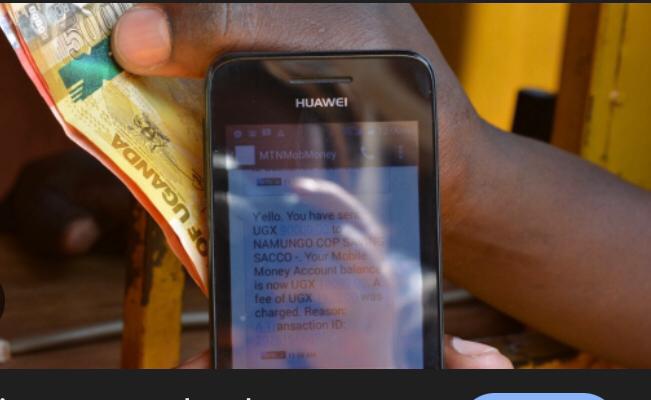
Uganda’s remittance market is undergoing a major transformation toward digital financial services, with the Bank of Uganda reporting that 73% of all inbound remittances are now processed electronically.
This shift highlights the increasing role of technology in facilitating cross-border financial flows and enhancing financial inclusion.
Mobile money platforms have emerged as the dominant channel, handling 61% of total remittance inflows, making them the single largest avenue for diaspora transfers.
In contrast, cash pickups have declined sharply to 27%, reflecting the rapid displacement of traditional channels by faster and more cost-effective digital alternatives. The remaining transactions are processed through formal banking systems and other digital transfer platforms.
The data shows that remittances to Uganda are largely low-value, high-frequency transactions, primarily supporting day-to-day household consumption. Approximately 93% of all transfers fall within the $0–$499 range (roughly Shs 0–1.9 million), with an average transaction size of $152 (about Shs 580,000). Recipients predominantly use these funds for essentials such as education, healthcare, rent, and food, reinforcing remittances’ role as a vital social safety net.
In value terms, Uganda recorded $2.5 billion (Shs 9.6 trillion) in remittance inflows over the past year, up from $1.5 billion (Shs 5.7 trillion) in 2024—a 66% year-on-year increase. Remittances now account for an estimated 5%–6% of Uganda’s GDP, positioning them alongside coffee exports and foreign direct investment as key sources of foreign exchange.
Cost efficiency is a key driver of the digital shift. Receiving $200 (about Shs 760,000) through mobile money incurs withdrawal fees of Shs 12,000–13,000, compared to roughly Shs 30,000 via traditional banks—a saving of over 50%. However, the average cost of sending remittances to Uganda remains around 8%, well above the 3% global target under the Sustainable Development Goals, indicating room for improvement.
Remittances are concentrated in a few major source countries. The United States remains the largest contributor with $702 million (Shs 2.7 trillion), followed by Saudi Arabia ($380 million / Shs 1.5 trillion), the United Kingdom ($331 million / Shs 1.3 trillion), the UAE ($257 million / Shs 990 billion), and Canada ($110 million / Shs 424 billion). Together, these five countries account for more than 70% of total inflows.
On the outbound side, Ugandans sent about $402 million (Shs 1.5 trillion) abroad during the same period. Unlike inbound flows, outbound remittances are still dominated by traditional banking channels, which process 57% of transactions. Top destinations include India, Kenya, and the United States, primarily for education, medical services, and international trade.
Demographic trends reveal that outbound transfers are largely initiated by older individuals engaged in business and investment, while inbound remittances mostly support working-age adults and household consumption. This highlights remittances’ dual role as both a consumption support mechanism and a facilitator of investment and human capital development.
The digitisation of remittances presents opportunities for financial product innovation. With over 30 million registered mobile money accounts in Uganda and transaction volumes exceeding Shs 190 trillion annually, integrating remittance services into digital wallets can expand access to savings, credit, and insurance products, further deepening financial inclusion.
Improved data collection and reporting are expected to enhance transparency, reduce reliance on informal channels, and potentially unlock additional foreign exchange inflows, bolstering macroeconomic stability.
As mobile money platforms consolidate their dominance, Uganda’s remittance market is poised to become more efficient, inclusive, and integral to the country’s long-term economic growth.
