

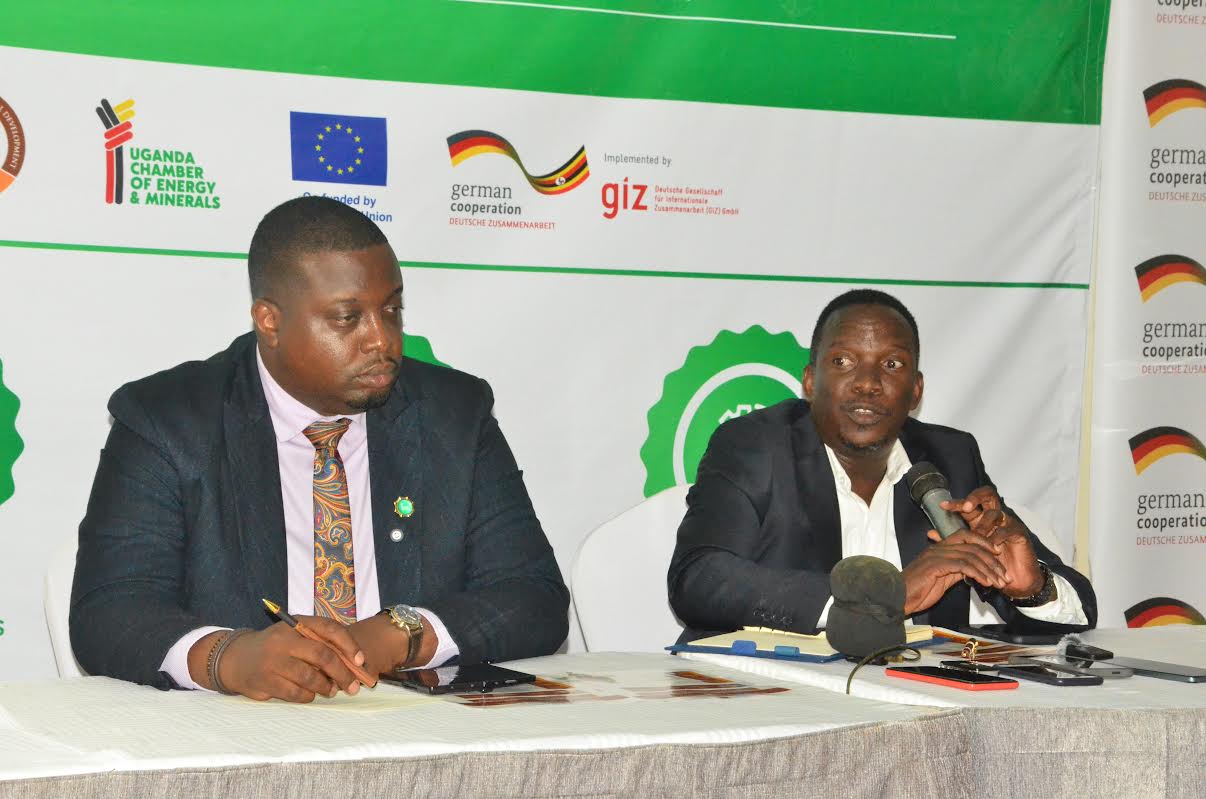
The Uganda Chamber of Energy and Minerals (UCEM), in partnership with GIZ Uganda, has unveiled the Training, Equipping, and Nurturing to Thrive (TENT) Grant Initiative, a project aimed at formalising the country’s artisanal and small-scale mining (ASM) sector.
The initiative, guided by the Ministry of Energy and Mineral Development, is designed to turn informal mining operations into professional, sustainable enterprises that contribute directly to Uganda’s GDP.
"The TENT project provides critical training and equipment to transition artisanal miners into structured enterprises. Our goal is not only to increase productivity but also to ensure these enterprises operate sustainably and contribute meaningfully to the economy,” said Humphrey Asiimwe, CEO of UCEM.
The 12-month grant runs from November 2025 to October 2026 and forms part of the broader “Sustainable Development of the Mining Industry in Uganda” program, jointly funded by the European Union and the German Government and implemented by GIZ.
It will cover five regions and ten strategic districts, including Mubende, Kassanda, Terego, Moroto, Kisoro, Ntungamo, Buhweju, Rubanda, Busia, and Namayingo.
The initiative will focus on high-value mineral value chains such as gold, tin, tungsten, and iron ore, with the aim of supporting 20 cooperatives of Artisanal Miners to formalise their operations. These cooperatives will gain access to financial services, credit facilities, and structured markets.
"Financial institutions have already committed to supporting these cooperatives by de-risking the sector and offering banking and credit services," Asiimwe added.
"Beyond finance, we are linking miners directly to off-takers, including private sector companies and government entities like the Uganda National Mining Company, ensuring their minerals—gold, tin, iron ore, marble—find ready markets."
The project also promotes gender inclusivity, with 20 percent of the cooperatives set to be women-led, in partnership with the Women in Energy and Extractives Network. "Ensuring women have equal opportunity in mining is a priority," Asiimwe noted.
David Ssebaggala, Senior Inspector of Mines at the Ministry of Energy and the ministry’s focal person for the project, highlighted the regulatory context .
"Formalisation of artisanal and small-scale miners is a crucial aspect of Uganda’s mining sector. This journey began in 2018 with the Mining and Mineral Policy, followed by the Mining and Minerals Act of 2022, which introduced licences for artisanal and small-scale miners. These provisions were not included in the 2003 law and allow miners to progressively scale from artisanal to medium- or large-scale operations."
"To operationalise this, the Mining and Minerals (Artisanal Mining) Regulations of 2025 were developed, designating specific areas exclusively for Ugandan artisanal miners. Additionally, biometric registration is ongoing to improve oversight and organisation, while cooperatives are encouraged to formalise operations and gain legal recognition under the Ministry of Trade, Industry and Cooperatives."
According to officials, the TENT initiative also aims to influence policy through multi-stakeholder dialogue.
"Academia, industry, and government will come together to develop well-researched policy papers that will guide the sector’s growth," UCEM’s Asiimwe said.
The Shs 800 million project is expected to lead to the registration of 20 artisanal mining cooperatives with legal, tax, and environmental compliance, improved access to financial services, and participation in three trade fairs.
Cooperatives will also benefit from market linkages and feasibility studies for a potential national umbrella cooperative union for ASMs.
"Each cooperative will have at least 30 members.We are keeping the door open to all artisanal miners in these districts, ensuring broad participation and support for formalisation."
