

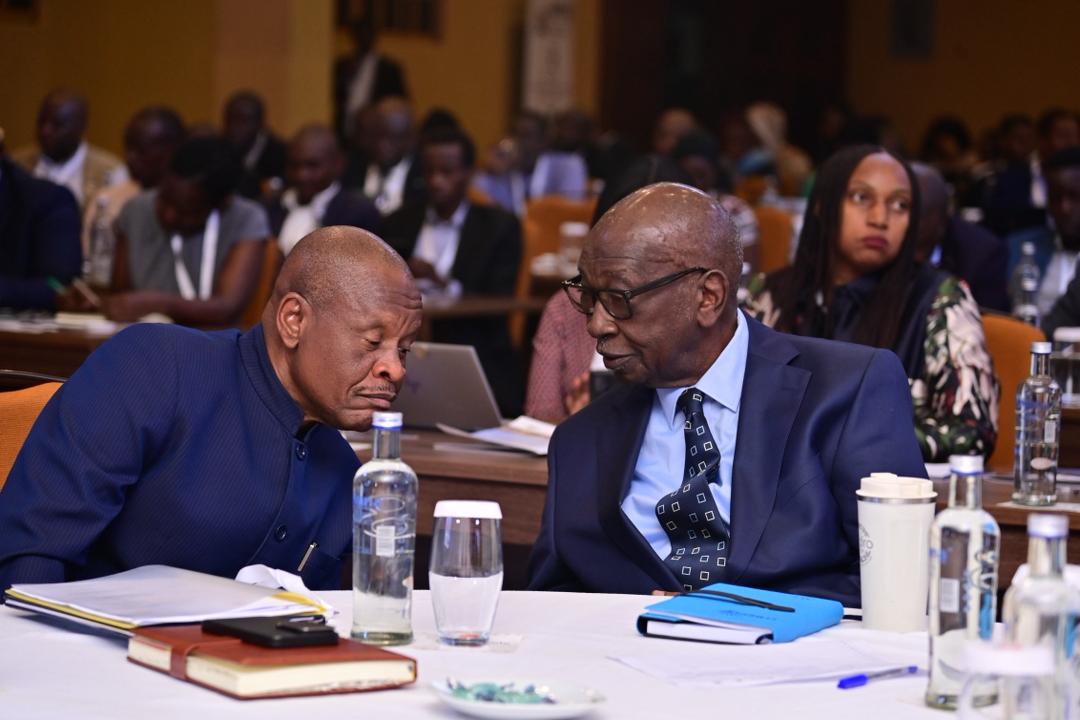
Ugandans have been urged to diversify export markets and explore alternative trade routes amid escalating conflicts in the Middle East, which risk disrupting global commerce and destabilizing foreign exchange markets.
The warning came from Wilson Mbadi during the opening of the National Trade Review Conference at Speke Resort Munyonyo, held under the theme: “Trade-Driven Transformation: Propelling Uganda to a Shs 500 Billion Economy by 2040.”
Gen Mbadi cautioned that while Uganda has registered notable export growth in recent years, continued instability in the Middle East could distort established trade routes and trigger imbalances in the country’s import-export dynamics.
“Ugandans must begin looking for alternative trade routes and strengthen partnerships with other friendly states as the situation in the Middle East normalises,” he said.
He explained that heavy reliance on specific corridors exposes Uganda to external shocks, particularly during geopolitical tensions.
Prolonged conflicts could affect export logistics, increase transport costs, and weaken local currencies due to rising global exchange rates.
“As global tensions rise, African countries must seek alternative trade partners within the continent to manage shocks arising from these conflicts,” he added.
“If we diversify our markets, we shall not be heavily affected by conflicts in one region. We must trade more within Africa and with other friendly countries.”
Gen Mbadi also noted that Uganda is dealing with a trade imbalance driven by the importation of high-value oil exploration equipment, which consumes significant foreign exchange.
“The importation of costly oil exploration equipment affects our trade balance,” he said.
Echoing the call for adaptability, Anna Nambooze from Trademark emphasized that global uncertainties demand resilience and innovation among African traders.
“The current global uncertainties call for resilience and innovation among African traders to remain competitive,” she said.
Officiating at the same conference, Francis Mwebesa, Minister of Trade, Industry and Cooperatives, highlighted Uganda’s export performance as a sign of economic resilience.
“Uganda has consolidated its position as Africa’s leading coffee exporter, earning over Shs 2.2 billion,” he said. Mwebesa also noted that gold exports now generate about Shs 64 billion annually, bolstering foreign exchange reserves.
“Our export earnings have grown steadily, showing that Uganda’s economy is resilient despite global shocks,” the minister added.
The conference coincides with a broader push for African economies to deepen intra-continental trade, offering a buffer against external volatility.
Policymakers emphasized recalibrating Uganda’s trade strategy to focus on market diversification, regional integration, and sustainable export growth, key pillars for achieving the Shs500 billion economy target by 2040.
