

Uganda is on the cusp of a new energy era, with its long-awaited oil refinery in Kabaale, Hoima district, scheduled to begin operations in the fourth quarter of 2029 or early 2030.
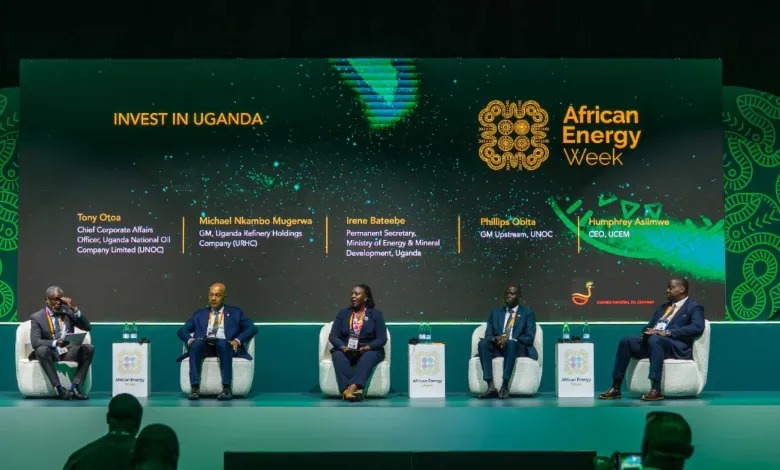
The timeline was confirmed by Michael Nkambo Mugerwa, General Manager of the Uganda Refinery Holding Company, during the Invest in Uganda panel at African Energy Week (AEW) 2025 in Cape Town, South Africa.
The $4 billion (Shs15.2 trillion) project, a joint venture between the Uganda National Oil Company (UNOC) and UAE-based Alpha MBM Investments, will have a refining capacity of 60,000 barrels per day.
UNOC holds a 40% stake while Alpha MBM funds the remaining 60%.
“This project goes beyond fuel production,” Mugerwa said. “We are looking at petrochemicals, kerosene, fertilizers, and gas processing. The refinery is designed to capture the full value chain, turning crude into a diversified range of industrial inputs.”
Alongside the refinery, an industrial park is under development, attracting $3–4 billion in current investment, with expectations of an additional $1–2 billion.
Fifteen investors have already committed to projects within the park, which will benefit from roads, a 200MW high-voltage power supply, and water systems.
The infrastructure is designed to support not only domestic energy needs but also regional exports to Tanzania and the Democratic Republic of the Congo, positioning Uganda as a regional energy hub.
Humphrey Asiimwe, CEO of the Uganda Chamber of Energy and Minerals, highlighted the country’s investment appeal.
“There is peace, security, a young population, and a stable currency. If you bring in equipment, import tax is 0%. Plus, Uganda offers direct access to markets in Tanzania, Kenya, and DR Congo. If not Uganda, where else would you invest?” he said.
From government, Irene Bateebe, Permanent Secretary at the Ministry of Energy and Mineral Development, emphasized infrastructure as a key driver for industrial growth.
“We are expanding our energy portfolio to 10,000MW, including hydro, solar, and nuclear power. Already, $5 billion has been committed to upgrading and expanding power infrastructure to support these developments,” she said.
Upstream operations are also advancing. Philips Obita, General Manager for Upstream at UNOC, noted ongoing oil field activity and strategic initiatives.
“We hold commercial interests of up to 150,000 barrels and are actively participating in the East African Crude Oil Pipeline (EACOP),” he said.
“Oil and gas are finite resources. That’s why we’re focused on local content development, technology transfer, and building domestic capacity.”
Obita added that five exploration projects are underway and seismic studies for new reserves are expected to be completed by November 2025.
UNOC is expanding geophysical services to ensure homegrown expertise in managing Uganda’s energy future.
With funding secured, timelines confirmed, and infrastructure development underway, the Kabaale refinery is set to be a strategic engine for Uganda’s industrialization and energy independence, strengthening its role in the East African energy landscape.
