

The looming deadline for the European Union Deforestation Regulation (EUDR) is intensifying pressure on governments, private sector actors, and small-scale farmers across Africa, with concerns that vulnerable groups could be shut out of global trade if they fail to meet the new requirements in time.
The remarks were done during the Africa-wide Virtual Press Conference on Promoting Equitable, Transformative & Mutually Beneficial EU–Africa Trade Relations in the Era of Emerging Sustainability Directives.
Ms. Jane Nalunga, Executive Director of the Southern and Eastern Africa Trade Information and Negotiations Institute (SEATINI), said while the EU Green Deal seeks to address the climate crisis a cause of global importance its implementation should not be punitive.
She called for urgent technical, financial, and informational support to enable compliance, warning that without it, many African producers could face exclusion from lucrative EU markets.
“The EU Green Deal is a noble initiative, but its application must be fair. Without adequate support, smallholder farmers and SMEs may be unable to comply and will be the first casualties,” Nalunga said during an Africa-wide virtual press conference.
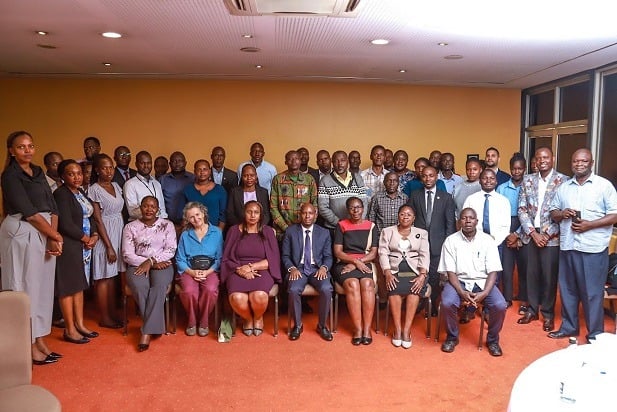
The event brought together voices from academia, civil society, the private sector, and both African and European institutions for a comprehensive discussion on the impact of emerging EU sustainability directives.
Among the measures under scrutiny is the EUDR, which requires proof that commodities entering the EU market are not linked to deforestation.
Another is the Carbon Border Adjustment Mechanism (CBAM), designed to reduce carbon leakage. Critics argue that while these regulations are framed as tools for environmental sustainability and accountability, they risk becoming non-tariff barriers.
Dr. Christian Häberli, Fellow at the World Trade Institute, noted that many EU sustainability rules are “self-defined without input from third countries,” placing disproportionate burdens on African SMEs while granting exemptions to EU-based companies.
Mr. Rangarirai Machemedze, SEATINI Southern Coordinator, added that limited institutional capacity across African nations makes compliance a steep challenge.
“Without strong institutional frameworks, these regulations will disadvantage exporters, smallholder farmers, and SMEs,” he said.
Speakers urged African countries to approach implementation from their own developmental realities, leveraging regional coordination to build green certification systems, digital traceability platforms, and carbon accounting frameworks.
Such initiatives, they argued, would not only aid compliance but also strengthen Africa’s competitiveness in a rapidly greening global market.
The consensus from the forum was clear: environmental sustainability is vital, but without equity, partnership, and adequate capacity building, Africa risks being sidelined in the name of green trade.
