

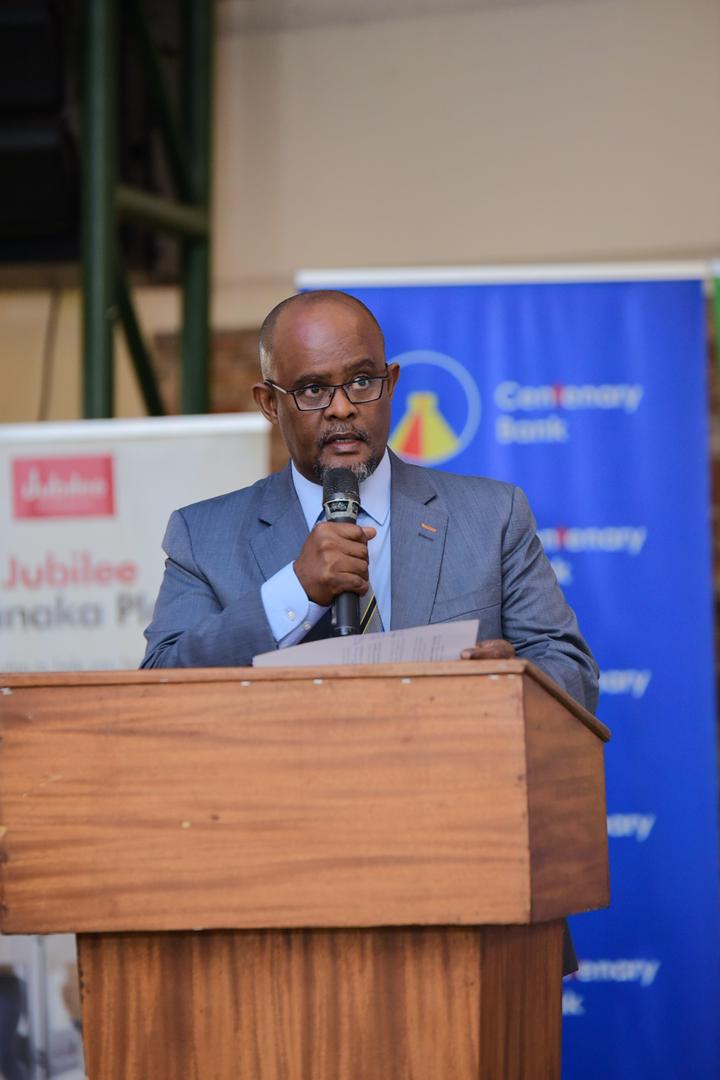
At least 100 Ugandan entrepreneurs have made a case for funding during a business-financier meet aimed at bringing together promoters of viable projects and different classes of financiers, both bank and non-bank financiers in Kampala.
Organised by Sustainable Business for Uganda Platform(SB4U),a partnership between the European Union, government of Uganda and the Private Sector Foundation Uganda, the business-financier Meet platform allows project promoters to familiarize themselves with Uganda’s different financing options and meet one-on-one with the key players in this space to showcase their investment projects while understanding how best to work with financiers.
Speaking during the meeting, Francis Kisirinya, the Chief Membership Officer for PSFU said that it is prudent that financers align their offerings with business needs.
“One of the challenges that Ugandan businesses face is access to finance as most of the financing comes from families. Whereas there are other forms of financing from commercial banks and equity among others, these are very limited to make any big change. One of the reasons we mostly have financing from families is lack of awareness. Many financers have failed to align their offerings with the business needs, leave alone making awareness,” Kisirinya said.
“Many times, the financiers use one coat fits all method. They have a product and whoever walks in is given that kind of financing. Some times products are mismatched with businesses and in the end businesses don’t succeed. This is a call to financers to understand customers and their business better and design the appropriate financing to them.”
The PSFU Chief Membership Officers also urged entrepreneurs to always honour contracts they sign with financers.
“There are contracts agreed between entrepreneurs and financers but one thing we had noticed is that some of the financed don’t comply with agreements they sign. That’s why in some cases you see companies failing to pay back their loans on the agreed dates when they could even afford it. It is very important for both the financer and the person being financed to negotiate and agree the terms of these contracts. This helps in how the relationship works,” Kisirinya said.
“In some cases, borrowers divert money into doing one thing not specified while getting the finances. It is therefore important that if agreements are signed, they are complied with.”
European Union’s Kenneth Kitariko said the problem in Uganda is not money but rather where it can be invested.
“We have a perennial problem in Uganda where we have not had a credible pipeline and it is important entrepreneurs have a good investment plan but more critically that they are able to pay back the money that they borrow to be able to grow and scale. For a long time in Uganda we have known that 20% of SMEs close in the first year, 30% in the second, 50% in the fifth year and by the 10th year, 70% of the companies have closed. This means there is a lot of work to do,” Kitariko said.
He said the Private Sector Foundation Uganda is committed to supporting Ugandan entrepreneurs through various initiatives to nurture the growth of Uganda's entrepreneurial ecosystem
During the meeting, project promoters familiarized themselves with Uganda’s different financing options and met one-on-one with the key players in this space to showcase their investment projects while understanding how best to work with financiers.
