

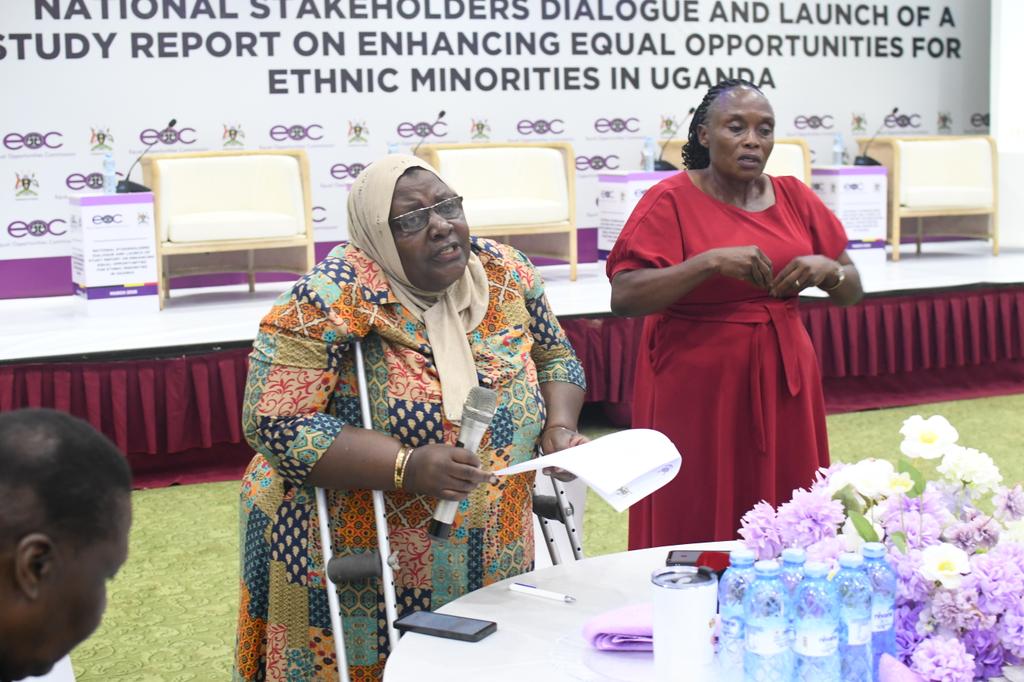
A report by the Equal Opportunities Commission (EOC) has raised concerns over persistent inequalities in access to education and healthcare among Uganda’s minority ethnic communities.
Limited access to these essential services continues to restrict opportunities and exacerbate marginalization.
The population of some minority groups has been steadily shrinking—from around 6,000 in 2014 to nearly 3,800 today—a trend reflected across several communities in the Rwenzori, Elgon, West Nile, and Karamoja regions.
The report highlights that access to education remains severely constrained. Children often walk long distances to overcrowded, under-resourced schools, with enrollment averaging just 60 percent.
Cultural barriers, such as early marriage and domestic responsibilities, further limit participation, especially among girls.
“What we are seeing is a combination of structural and social barriers that continue to keep children from minority communities out of school or limit their ability to complete their education,” said Petua Babirye Isabirye, Head of Research and Monitoring at the Commission.
Healthcare access is equally challenging. Many communities live far from health facilities, and those available are often understaffed, poorly equipped, and lack essential medicines.
As a result, residents frequently rely on traditional healers and untrained birth attendants, exposing them to preventable health risks and poor outcomes.
“Access to healthcare is still a major challenge. The distances are long, facilities are few, and where they exist, they are not adequately equipped to meet the needs of these communities,” Petua added.
While the Commission does not directly link population decline to these service gaps, it warns that continued marginalization and limited opportunities are heightening the vulnerability of these communities.
“If these inequalities are not addressed, we risk leaving entire communities behind, with long-term consequences on their survival and development,” noted Safia Nalule Kasule, Chairperson of the Commission.
The EOC is calling for urgent government intervention, including the establishment of inclusive and culturally responsive education systems, increased investment in health and education infrastructure, and recruitment of more teachers and healthcare workers.
Stronger collaboration with minority communities is also emphasized.
“Government must design targeted policies that respond to the unique needs of these communities, while increasing investment in human resources and infrastructure to ensure no one is left behind,” Petua stressed.
Uganda’s minority ethnic groups—such as the Basongora, Ik, and Benet—are smaller in number compared to dominant populations and often have distinct cultural, linguistic, or ancestral identities.
Found mainly in the Rwenzori, Karamoja, and Elgon sub-regions, these communities continue to face significant barriers to education and healthcare, limiting their development and opportunities.
