

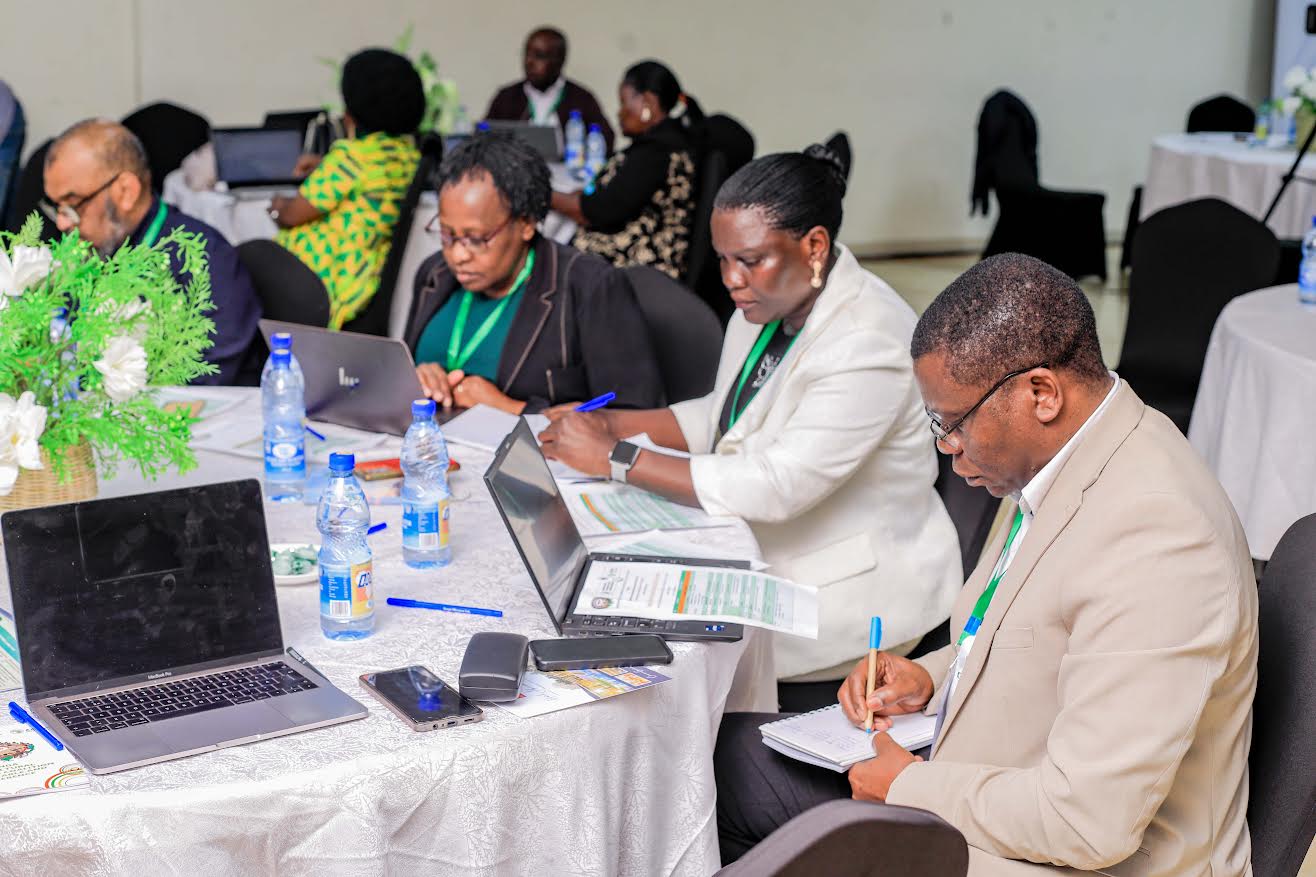
Government officials, development partners, researchers, civil society actors, and private sector players have called for urgent reforms to Uganda’s agricultural extension system, warning that poor coordination and fragmented interventions are undermining productivity and farmer incomes.
The call was made during a high-level Uganda Agricultural Extension Coalition Round Table and Conference held at Hotel Africana.
The meeting was organised by the Uganda Forum for Agricultural Advisory Services (UFAAS) and the Ministry of Agriculture, Animal Industry and Fisheries (MAAIF), with support from AGRA and the African Forum for Agricultural Advisory Services (AFAAS).
The dialogue comes at a time when Uganda’s extension services face declining public investment, overlapping donor-funded programmes, and a low extension worker-to-farmer ratio estimated at 1:1,800, raising serious concerns about effectiveness at farm level.
Speaking at the meeting, AGRA Uganda Country Director David Wozemba said that while many actors are active in the sector, lack of coordination continues to dilute impact.
“Within the agricultural sector, we are relatively few partners, yet many of us work in the same districts, targeting the same farmers with similar messages. Without coordination, we distort the system and fail to achieve behaviour change,” Wozemba said.
He challenged stakeholders to shift focus from activities to measurable outcomes.
“Government keeps asking a simple question: where is the impact? It is not about how many workshops we hold, but whether farmers are actually changing practices and seeing results,” he added.
AFAAS Executive Director Dr. Lillian Lihasi said Uganda’s dialogue is part of a broader continental push to dismantle silos in extension delivery.
“This conversation started at continental level, but we realised real change only happens when we bring it down to countries and communities. That is why we are here — to put boots on the ground and change how extension works,” Lihasi said.
She emphasised that agricultural extension is a shared responsibility.
“Anyone with an interest in how knowledge reaches farmers — researchers, educators, NGOs, and the private sector — is part of extension. If we bring all these efforts together, extension will no longer be underfunded or ineffective,” she noted.
Representing government, Jennifer Oyuru, Assistant Commissioner for Agricultural Extension and Skills Management at MAAIF, acknowledged that Uganda has strong policies but weak implementation.
“We have good strategies and frameworks, but the reality is that we are still operating in silos. We cannot transform agriculture if extension officers spend 80 per cent of their time in offices instead of the field,” Oyuru said.
She added that farmers require practical, value-chain-based skills rather than fragmented advice.
“A farmer growing macadamia or maize wants skills from production to markets. Extension must move beyond theory to practical, applied knowledge that delivers income,” she said.
UFAAS Chairperson Dr. Richard Miiro said the forum was intended to create a neutral platform where all actors can align their efforts.
“We recognise that we have worked in isolation for too long. UFAAS is offering itself as a space where government, academia, the private sector, and farmers can sit together, harmonise messages, and agree on better ways of working,” he said.
Participants also discussed the need to reform universities and TVET institutions to train a future-ready extension workforce, as well as the use of digital and AI-driven tools to improve outreach, attract youth, and modernise advisory services.
The conference concluded with agreement on priority actions to inform the ongoing review of the National Agricultural Extension Policy (2016), strengthen coordination and regulation of extension providers, and mobilise sustainable financing to ensure extension services translate into real productivity gains and improved livelihoods for farmers.
