

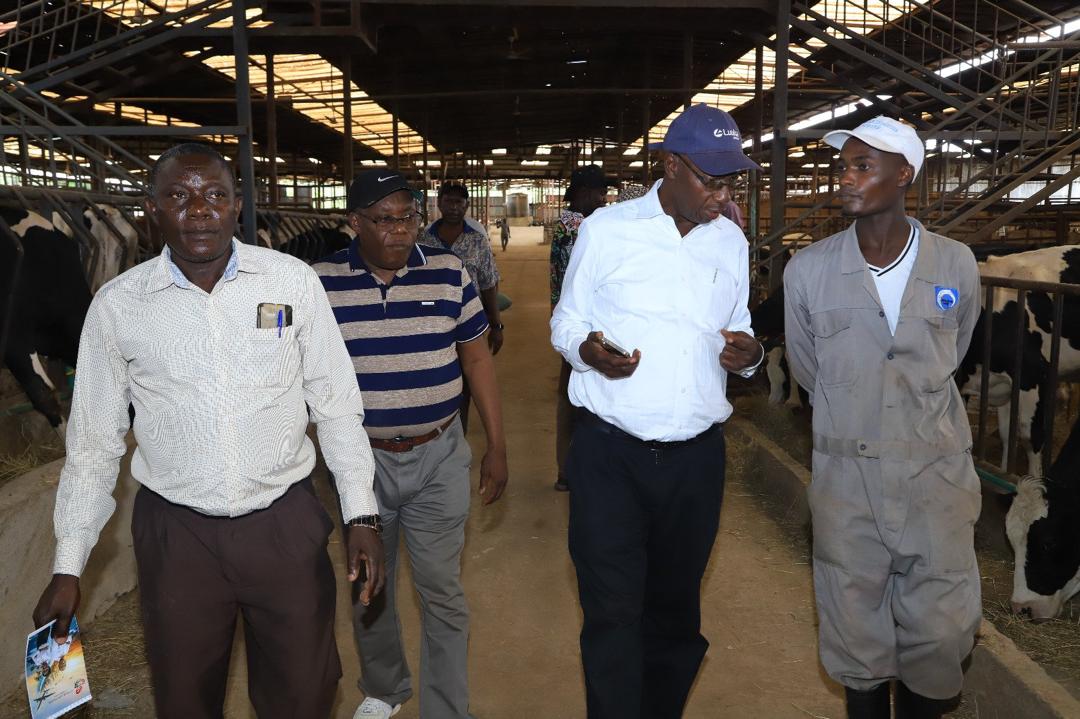
The Buganda Kingdom farmers’ and livestock keepers’ study tour in Kenya entered its second day today, with the delegation focusing on advanced livestock management techniques and sustainable farming practices designed to improve productivity back home in Uganda.
The tour, organized by the Buganda Kingdom’s Ministry of Agriculture, aims to expose farmers to innovative agricultural technologies that enhance profitability, food security, and environmental sustainability.
On Thursday, the group visited high-performing farms in Kenya’s Murang’a and Thika regions, beginning with Elite Livestock Dynasties Farm Ltd — a 450-acre model enterprise renowned across East Africa for its superior dairy production and comprehensive farmer training programs.
At the facility, farmers observed high-breed dairy cows weighing up to 900 kilograms, each yielding more than 20 liters of milk per milking session.
The farm’s success is attributed to its scientific feeding system, where cows are primarily fed on dry grass (hay) to encourage increased water intake and improve milk output.
The management also demonstrated a structured animal grouping model that separates calves, heifers, and expectant cows into clean, well-ventilated sheds to maintain hygiene and health standards.
In addition to dairy cows, the farm keeps goats, rabbits, poultry, ducks, and turkeys, all managed under strict biosecurity and environmental protocols.
A key highlight of the visit was the farm’s waste management system, which converts wastewater from animal housing into organic manure — a circular model promoting both sustainability and profitability.
The delegation later visited Kefa Gardens Farm in Murang’a County, which showcases intensive dairy farming on just one acre of land.
The farm maintains 89 dairy cows under a zero-grazing system, with each animal producing up to 34 liters of milk per milking session.
Automated milking machines ensure efficiency, hygiene, and reduced labor costs.
Farm experts at Kefa Gardens advised farmers to prioritize disease prevention, regular vaccination, and proper housing as the foundation for a productive livestock enterprise.
They also emphasized that consistent feeding and sanitation practices can transform even small-scale farms into commercially viable ventures.
The day concluded with a tour of Paly Chicks Farm in Malengeri along Thika Road, a modern poultry enterprise specializing in automated egg production.
The farm uses advanced feeding and watering systems that detect and refill feed and water levels automatically.
Managers encouraged visiting farmers to adopt waste recycling by converting chicken droppings into organic fertilizer and integrating fermented organic feed to lower production costs.
Officials from the Buganda Kingdom said the ongoing study tour demonstrates the Kingdom’s strategic investment in practical farmer training as a tool for economic transformation.
“We are focusing on empowering our farmers to adopt proven modern practices that can increase productivity and incomes at home,” one official noted.
By the end of the tour, farmers are expected to replicate lessons from Kenya — including efficient land utilization, sustainable waste management, and mechanized livestock systems — to boost production and profitability in their communities across Buganda.
