

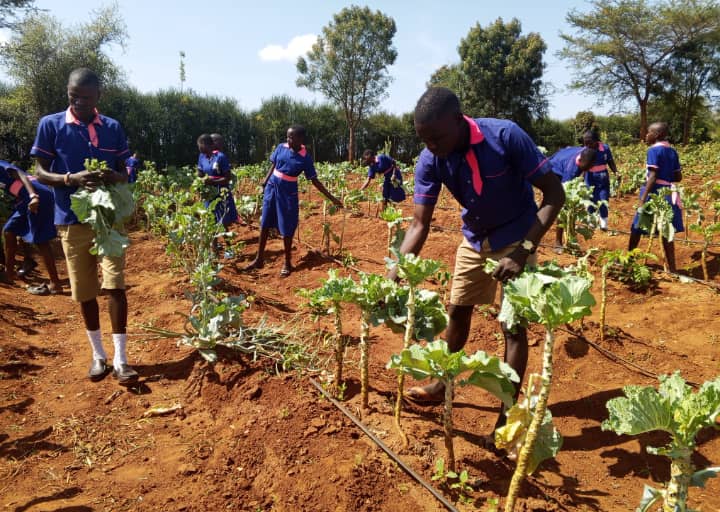
The Government of Uganda, in partnership with the World Food Program (WFP) and other development partners, is challenging outdated perceptions that the people of Karamoja cannot feed themselves by leveraging locally grown agricultural produce through a pioneering School Feeding Program.
Launched over 20 years ago, the initiative provides daily hot meals and mid-morning snacks to students across nine districts in Karamoja Sub-region and Katakwi in Teso Sub-region.
Beyond improving student nutrition, the program has strengthened the local economy by supporting smallholder farmers, increasing agricultural productivity, and raising household incomes.
James Kingore, Head of Karamoja Offices, explained the program’s evolution.
“Initially, WFP transported food into Karamoja from other regions. Over the past five years, we have shifted to empowering local farmers to grow food for the School Feeding Campaign. This has boosted food production, improved food security, and increased school enrollment, which has risen by 16 percent.”
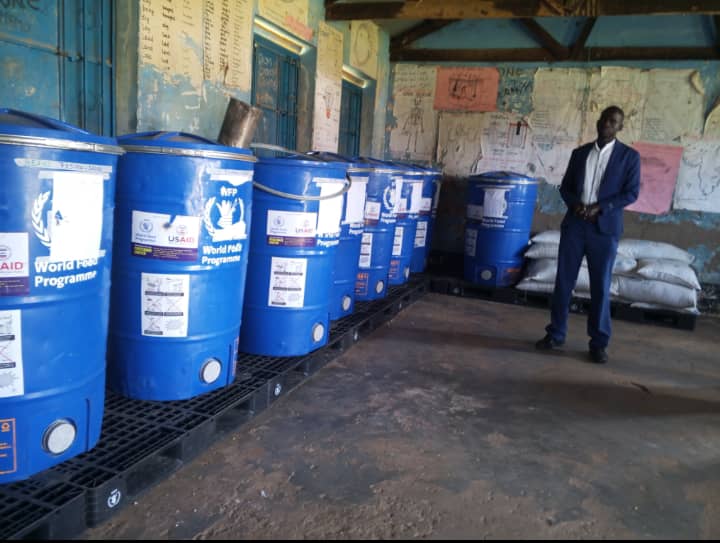
The program not only purchases maize, beans, and other staples from local farmers through a centralized procurement system but also supports them with high-quality seeds, ploughing equipment, transportation, and technical skills.
According to Everest Biko , Head of Programs at WFP Karamoja, 20 farmer organizations are registered farms, with 10 participating directly in WFP’s vendor system.
“We select produce based on quality, ensuring it is free from aflatoxins and contaminants, and pay farmers fair prices. This model strengthens both education and local agriculture,” he said.
The initiative also emphasizes environmental sustainability. Energy-saving stoves have been installed in schools, reducing reliance on firewood and charcoal and cutting costs by over Shs 1 million per term.
At Pajar Primary School, the program has transformed both learning and infrastructure. Headteacher Okello Kizito noted that enrollment has surged from 1,000 to 2,363 students, with more girls attending thanks to new dormitories and provision of sanitary pads.
Deputy Headmaster Willy Obochi Bosco added: “The feeding campaign has encouraged parents to send their children to school and has improved overall student performance.”
Learners benefit from nutritious meals prepared on-site, including porridge and snacks in the morning, and posho or rice with beans for lunch. Each child receives 120 grams of maize, 8 grams of cooking oil, and 12 grams of beans per meal. The program costs WFP approximately $2 million per term.
Agriculture and Market Support Program Officer Adochi Olivia emphasized the holistic approach.
“We build the capacity of smallholder farmers, provide the tools and equipment needed to process meals, and help schools supplement their food supply. It’s about creating a sustainable, locally driven system.”
Maxmillian Loktuno, Senior Education Officer in Kaabong District, highlighted the program’s impact on academic outcomes: “Performance has improved significantly. For instance, Kaabong Senior Secondary School registered 15 first-grade passes in the UNEB exams this year. The feeding program motivates students to attend school regularly and focus on their studies.”
The Karamoja School Feeding Program demonstrates how collaboration between government, development partners, and local communities can simultaneously enhance education, strengthen food security, and empower farmers—showing that with the right support, Karamoja can indeed feed its people and educate its future generations.
