

South Africa's state-owned Land Bank said on Monday a plan to allow the state to seize land without compensation could trigger defaults that could cost the government 41 billion rand ($2.8 billion) if the bank's rights as a creditor are not protected.
Land Bank is a specialist bank providing financial services to the commercial farming sector and other agricultural businesses.
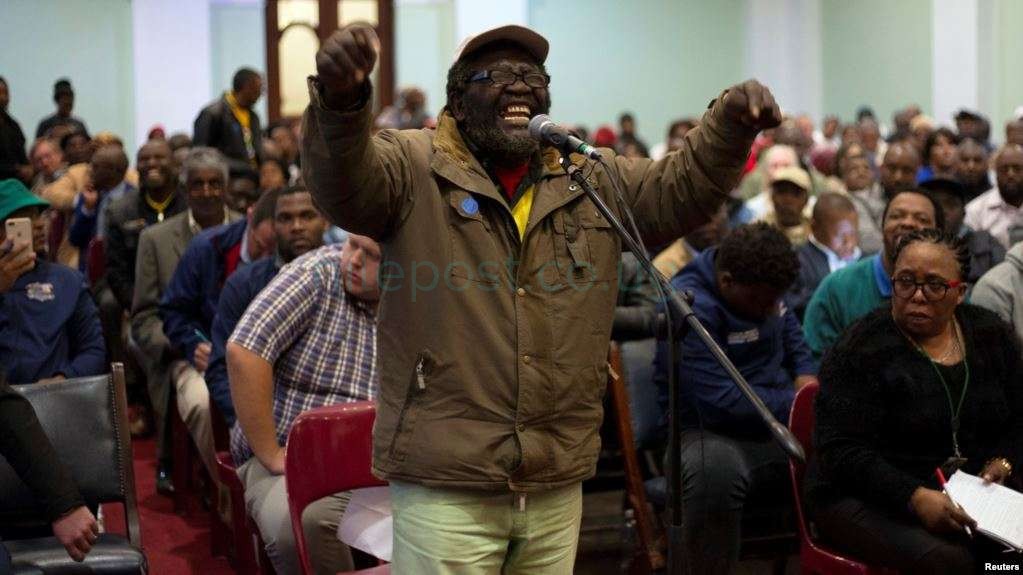
President Cyril Ramaphosa announced on Aug. 1 that the ruling African National Congress (ANC) is forging ahead with plans to change the constitution to allow the expropriation of land without compensation, as whites still own most of South Africa's land more than two decades after the end of apartheid.
Land Bank Chairman Arthur Moloto said in the company's 2018 annual report that the bank has approximately 9 billion rand of debt, which includes a standard market clause on "expropriation" as an event of default.
Moloto said if expropriation without compensation were to materialize without protection of the bank's rights as a creditor, it would be required to repay 9 billion rand immediately.
"A cross default clause would be triggered should we fail to pay when these debts fall due because of inadequate liquidity or lack of alternative sources of funding," Moloto said.
"This would make our entire 41 billion rand funding portfolio due and payable immediately, which we would not be able to settle. Consequently, government intervention would be required to settle our lenders."
Moloto said the bank was generally funded by the local debt and capital markets, and more recently international multilateral institutions such as the African Development Bank and World Bank.
"A poorly executed expropriation without compensation could result in the main sources of funding drying up as investors might not be willing to continue funding Land Bank in particular, or agriculture in general," he said.
Some investors are concerned that the ANC's reforms will result in white farmers being stripped of land to the detriment of the economy, as happened in Zimbabwe, although Ramaphosa has repeatedly said any changes will not compromise food security or economic growth.
Since the end of apartheid in 1994, the ANC has followed a "willing-seller, willing-buyer" model under which the government buys white-owned farms for redistribution to blacks. Progress has been slow.
