

As international attention shifts and United Nations peacekeeping draws down, regional powers are increasingly shaping security and political outcomes in eastern Democratic Republic of Congo.
Among them, Uganda is quietly emerging as one of the most influential and pragmatic actors in one of Africa’s most complex conflict environments.
Kampala’s expanding role reflects a calculated strategy built around three priorities: border security, economic expansion, and regional diplomatic influence.
Together, these pillars form a long-term approach aimed not only at containing instability but at shaping the future balance of power in the Great Lakes region.
For Uganda, the crisis in eastern Congo is first and foremost a national security issue. Armed groups operating in the region, particularly the Allied Democratic Forces (ADF), have carried out attacks inside Ugandan territory while maintaining operational bases across the border.
The limited reach of the Congolese state in parts of North Kivu and Ituri has enabled such groups to exploit porous borders and weak governance structures.
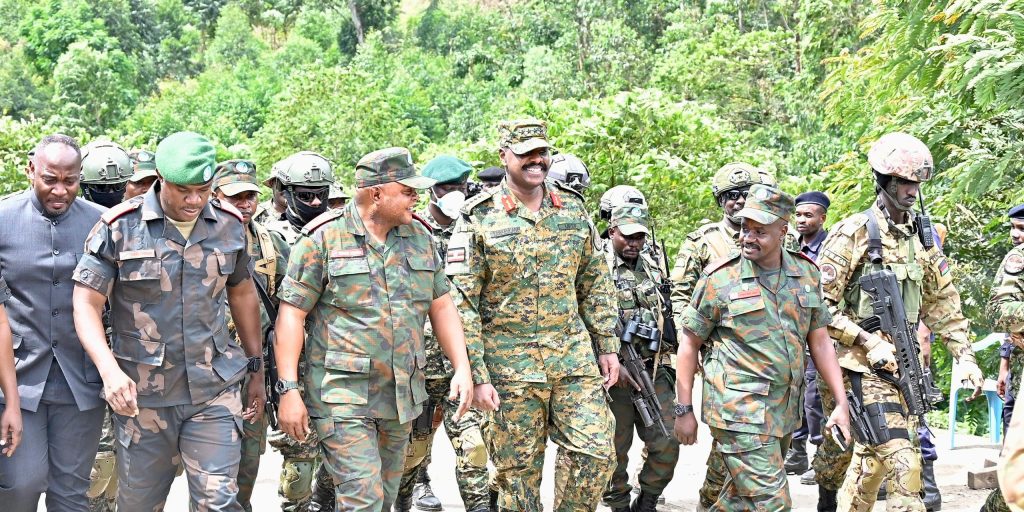
In response, Uganda has adopted a forward security posture. Joint military operations with the Congolese army are designed to disrupt insurgent networks and prevent conflict spillover.
Rather than waiting for threats to materialize at home, Kampala’s strategy seeks to stabilize key border zones and deny armed groups safe havens.
Yet Uganda’s engagement extends well beyond security.
Eastern DR Congo is one of the most important markets for Ugandan exports, ranging from agricultural produce to manufactured goods. Recognizing both the risks and the opportunities, Kampala has invested in cross-border infrastructure, including the rehabilitation and construction of strategic road networks linking border points to commercial hubs such as Beni and Butembo.
These projects reflect a broader use of geo-economic statecraft — leveraging infrastructure and trade to deepen economic interdependence and extend long-term influence.
By positioning itself as a primary gateway for eastern Congo’s regional commerce, Uganda is strengthening its economic leverage while contributing to the formalization of trade in a region long dominated by informal and illicit networks.
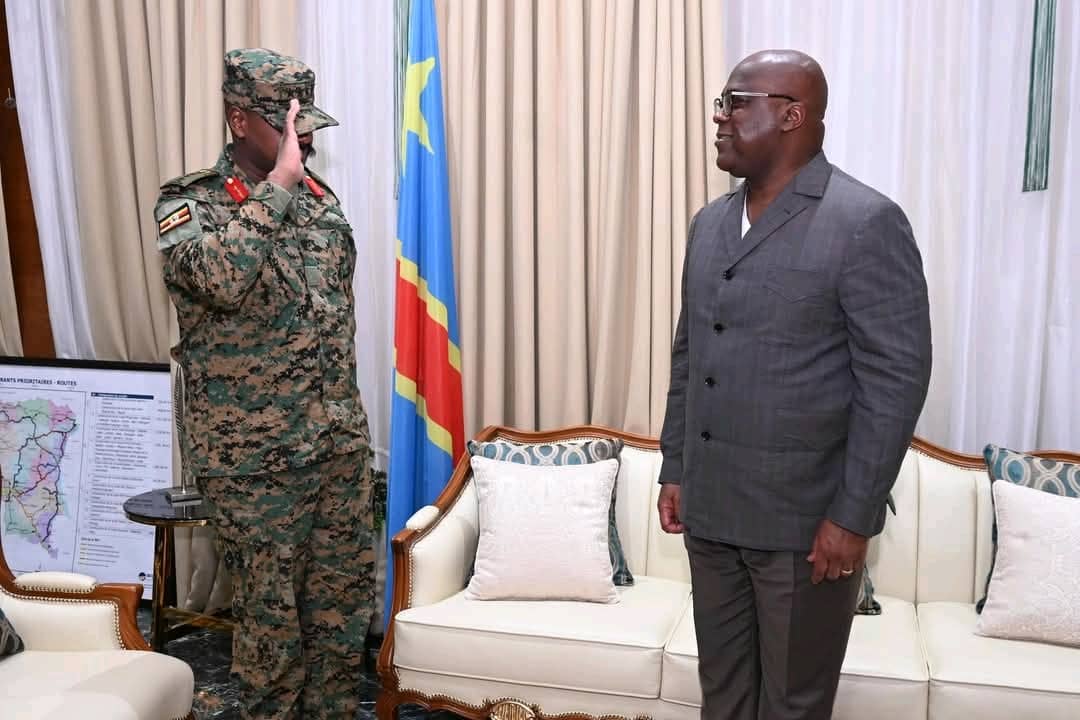
At the diplomatic level, Uganda is also expanding its role as a regional convener. By hosting high-level engagements and supporting African-led peace initiatives, Kampala is reinforcing its image as a stabilizing middle power.
This activism comes at a time when multiple mediation tracks — led by regional organizations, individual African states, and international partners — are attempting to address different dimensions of the conflict.
The shift toward regional leadership reflects a broader transition in the management of African conflicts. As the United Nations peacekeeping mission in the DR Congo (Monusco) gradually scales down after more than two decades, responsibility for stabilization is increasingly falling to neighboring states and regional institutions.
In this evolving landscape, countries with geographic proximity, direct security stakes, and strong economic linkages — such as Uganda — are becoming indispensable actors.
However, eastern Congo remains an exceptionally difficult environment in which to pursue stability.
The conflict is not a single war but a mosaic of overlapping crises. Dozens of armed groups operate across North Kivu, South Kivu, and Ituri, driven by a mix of local grievances, ethnic tensions, political ambitions, and economic incentives. Some are community-based militias; others are foreign insurgent movements. Many sustain themselves through illicit taxation, smuggling, and mineral exploitation.
Regional dynamics add further complexity. Uganda, Rwanda, and Burundi all face security concerns linked to armed groups operating near their borders. At the same time, historical mistrust and competing strategic interests have created a persistent regional security dilemma, in which security actions by one state are often viewed with suspicion by others. Managing these sensitivities requires careful diplomatic calibration.
The region’s vast mineral wealth compounds the challenge. Eastern Congo holds significant deposits of gold, coltan, and other critical minerals essential to global supply chains. These resources have entrenched conflict economies that provide armed groups with strong financial incentives to resist disarmament and prolong instability.
Diplomacy itself faces structural constraints. Multiple peace initiatives — including African Union efforts, regional political processes, and bilateral mediation tracks — often operate simultaneously. While this reflects the urgency of the crisis, fragmented diplomacy can produce coordination gaps, mixed signals, and weak enforcement mechanisms.
Perhaps the most fundamental obstacle remains the limited capacity of the Congolese state in the east. Weak administrative presence, under-resourced security institutions, and limited service delivery make it difficult to sustain ceasefires or extend state authority beyond major urban centres. Without stronger governance, military gains and political agreements risk proving temporary.
Within this complex environment, Uganda’s approach stands out for its layered and pragmatic character. By combining military cooperation, economic integration, and diplomatic engagement, Kampala is pursuing a strategy that addresses both immediate security concerns and longer-term structural dynamics.
The risks are significant. Regional competition, shifting alliances, and the resilience of armed groups mean that progress is likely to be uneven. There are also sensitivities surrounding sovereignty, regional perceptions, and the potential for security interventions to be misinterpreted.
Nevertheless, Uganda’s role is more likely to expand than diminish. Geography, trade interdependence, and shared security threats ensure that developments in eastern Congo remain closely tied to Uganda’s national interests. At the same time, the gradual transition from international to regional conflict management is creating new space for middle powers to shape outcomes.
Eastern Congo will remain one of Africa’s most challenging diplomatic theatres for the foreseeable future. But as the international system increasingly looks to regional actors to lead stabilization efforts, Uganda’s blend of security engagement, economic strategy, and diplomatic activism is positioning it as a key power broker in the search for a more stable Great Lakes region.
