

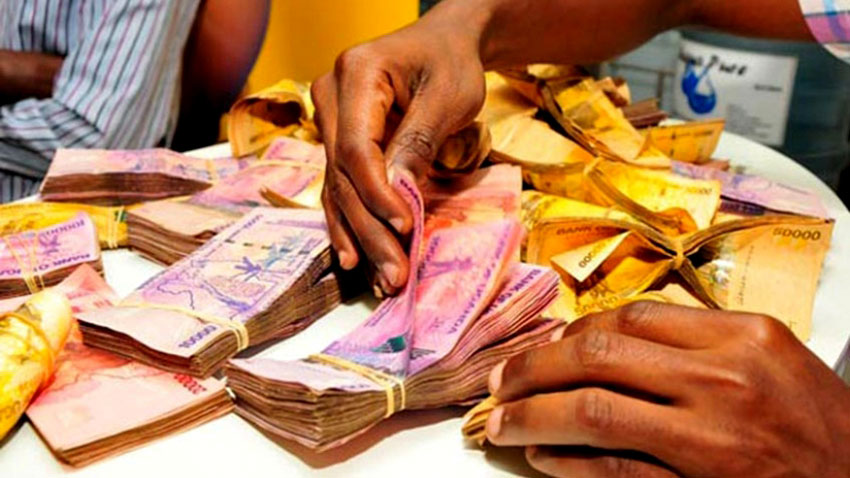
It was the campaign season of 2021, and in a dusty trading centre somewhere in eastern Uganda, democracy briefly turned into a running competition. A sitting Member of Parliament—name withheld because, frankly, the embarrassment was enough punishment—had parked his convoy to do what most politicians call “facilitating voters” and what the rest of us simply call “handing out small money.”
According to witnesses, the honourable gentleman had come armed with a fat bundle of Shs1,000 notes — the kind that make noise when you flip through them but disappear faster than a boda fuelled with fake petrol.
A legislator familiar with the incident insist he had first passed by a nearby bank to change a larger note — rumour has it a single million shilling — into one thousand shilling bills, ensuring maximum distribution with minimum generosity.
“Each of you take something small,” he reportedly said, waving the notes like Moses parting the Red Sea.
But the divine plan went south when one particularly honest villager, after receiving his share, was overheard telling a friend that he would “take the MP’s money but still vote the other man.”
The message reached the MP’s ear faster than mobile money confirmation.
Witnesses recall seeing the legislator, already seated in his car ready for the next rally, suddenly fling open the door and bolt out like a man chasing a chicken on Christmas Eve.
“Someone has told me you will not vote for me, and I value my money so much. Return it to me now!” the MP shouted, cornering the startled voter who clutched his Shs1,000 note like a national treasure.
The scene that followed was pure theatre: the voter dodging, the MP grabbing, and the crowd howling with laughter as the two wrestled for the wrinkled note. In the end, the politician triumphed — not in the polls, but in retrieving his beloved currency.
It is said he wiped it carefully, tucked it back into his pocket, and warned the crowd that “every vote must match every note.”
Fast forward to 2025, and as Uganda enters yet another season of campaign promises and mysteriously generous visitors, the story has found new life. Once again, Shs1,000 notes are changing hands across trading centres and taxi parks, and one can’t help but wonder if the ghost of that stingy MP is smiling somewhere, nodding in approval.
The only difference now is that the modern politician prefers “token of appreciation” to “handout,” and the voters have mastered the art of collecting without commitment. Some are even said to accept multiple “tokens” from rival camps — an economy thriving on electoral entrepreneurship.
In a way, that old MP was ahead of his time. He simply wanted a receipt for his investment — a guarantee that Shs1,000 would yield one vote. Unfortunately for him, democracy doesn’t offer refunds.
The tale has since entered local folklore as a symbol of the absurdity of cash-for-votes politics — proof that even in the age of mobile banking and digital campaigns, the humble Shs1,000 note remains the timeless unit of political affection.
And as candidates line up once again with folded envelopes, perhaps they should remember: you can buy a chapati with a thousand shillings, maybe even a soda — but never loyalty.4
