

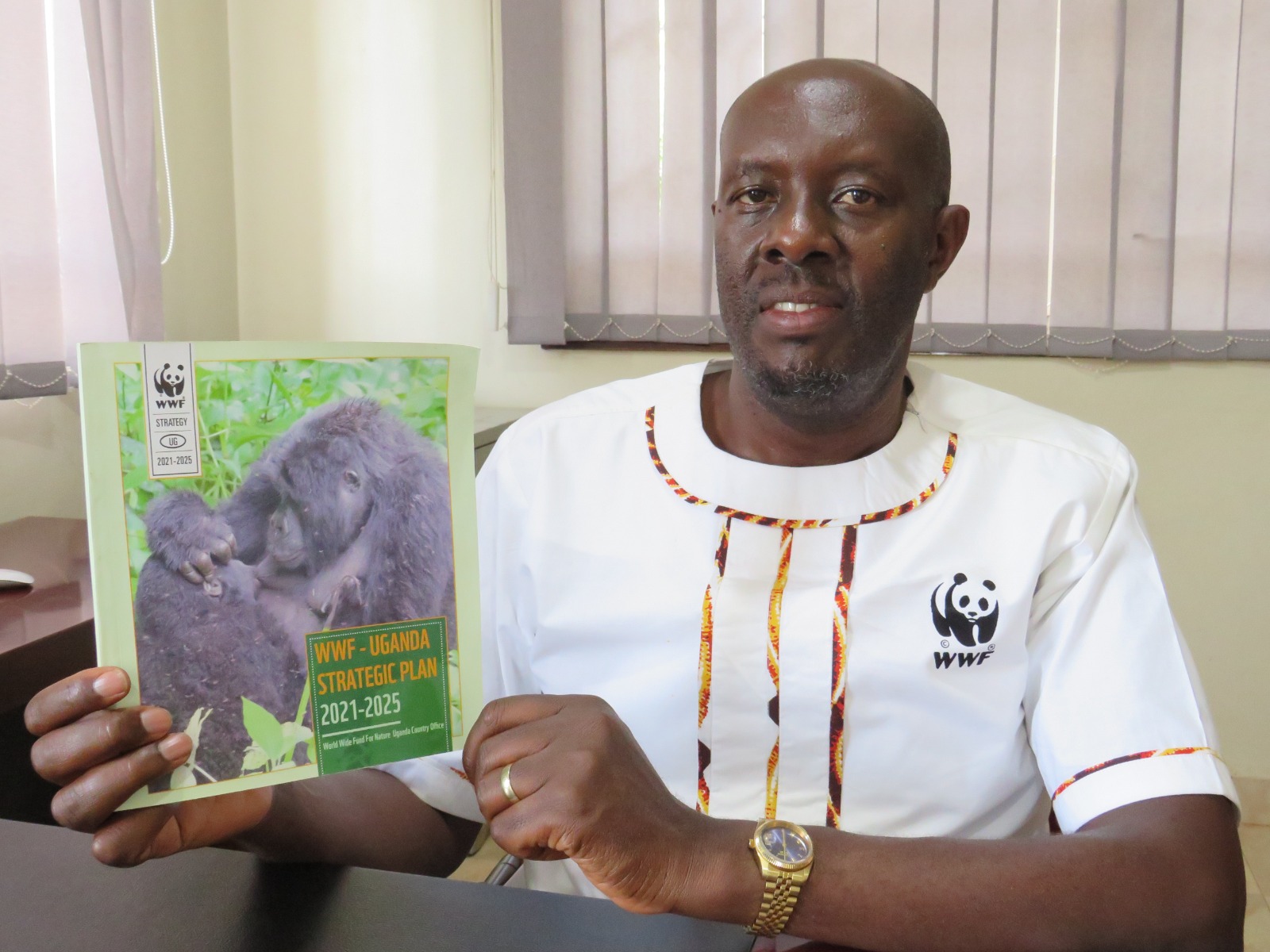
By Ivan Tumuhimbise
The debate to eliminate plastic pollution to a larger extent falls in the hands of businesses. These have a critical decision to take if we are to attain the no plastic in nature goals and targets.
However, effectively reducing plastic pollution by business is not a one day board of directors decision, no. This calls for strategic preparation and organization across all departments of any business.
Firstly, there is need for this decision to be grounded in the business or company’s strategic plan.
Unfortunately, there are significant data gaps that exist on this issue. Very few companies have documented this process so for those willing to trade into this very good direction, it is a learning curve all together.
However, we are not going to wait until everything is planned. If we are to address this plastic global dilemma, companies and businesses are going to be agile and move quickly.
The starting point therefore for any business is not to wait until the elimination of single use plastic is imbedded in the strategic plan.
Rather, we can start by having clear communication with leadership and critical implementation teams about the need to start moving now.
For clear guidance, companies and businesses also need to adopt clear statements alongside their brand.
McDonald’s, for example, adopted circular economy as a guiding strategic principle for packaging, so that end-of-life management was incorporated into the decision-making process before new packaging was brought to market .
In another instance, at Royal Caribbean Cruises Ltd . (RCL), the guiding principle is: “Waste on board is ours . We own it, and we need to deal with it .”
I know of companies that have adopted , “This is a plastic free zone” . All these phrases are meant to pave way for a sustainability culture. The statements need to be simple and easy to refer to by all customers and employees.
Secondly, businesses that are effectively dealing with the plastic issue have in place a very strong strategic focus.
At the start of the plastic reduction journey, businesses need to identify pivotal areas that they must impact. This means that companies must not try to address so many issues at a go but rather carefully assess and establish clear time bound goals that will create impact.
However, strategy alone is not enough. Internal alignment and governance are very critical in the journey to reduce plastic.
There is need to find the right ownership balance between the central sustainability function and the businesses.
To ensure an effective rollout, it is crucial, it is universally felt, that all relevant organizational divisions are involved in the project, and that roles, responsibilities, and governance structures are clearly articulated .
Company-level goals generate strong alignment . Likewise, role modeling and active and vocal support from leadership help businesses meet objectives .
The other critical area is making sustainability business as usual. For any business to register quick success in reducing plastic, there is need to integrated its environmental goals with its business goals .
This can be done by reshaping the organization and dedicating cross-functional teams (procurement, research and innovation, quality, legal, etc .) into the strategic thinking.
WWF, through its strategy of No Plastic in Nature, calls for a 100% reduction of plastic pollution into ecosystems . Earlier research has estimated that a reduction of plastic pollution by nearly half is an ambitious but achievable goal .
No Plastic in Nature is an aspirational goal that challenges us to realize a complete solution to this crisis, and recent analysis indicates it could be achieved by 2030 .
We therefore envision an economy and a society that has zero tolerance for plastic litter and all harm caused to the environment by plastic .
In addition to ensuring adequate waste management provisions in all geographies, three further strategies could contribute to this vision: 1) eliminate unnecessary plastics, 2) double global plastic recovery, and 3) shift to sustainable sources for the remaining plastic.
Furthermore, measuring and transparently reporting on progress and this particular time by companies and businesses is paramount if this challenge is to be met .
Without a method to track progress, it will not be possible to evaluate and make the necessary adjustments to strategies and action plans, and there will also be the danger of spending time and resources on ineffective approaches.
Currently, there is a lack of standardized, agreed-upon methods to measure success against . WWF believes that eliminating this gap is necessary for achieving the goal of No Plastic in Nature .
We therefore believe that for the Ugandan scenario, it is important to bring the Uganda Manufacturers Association on board.
It is this body that will effectively mobilize businesses, set targets and track progress. To be continued!
The author is the WWF Country Director
