

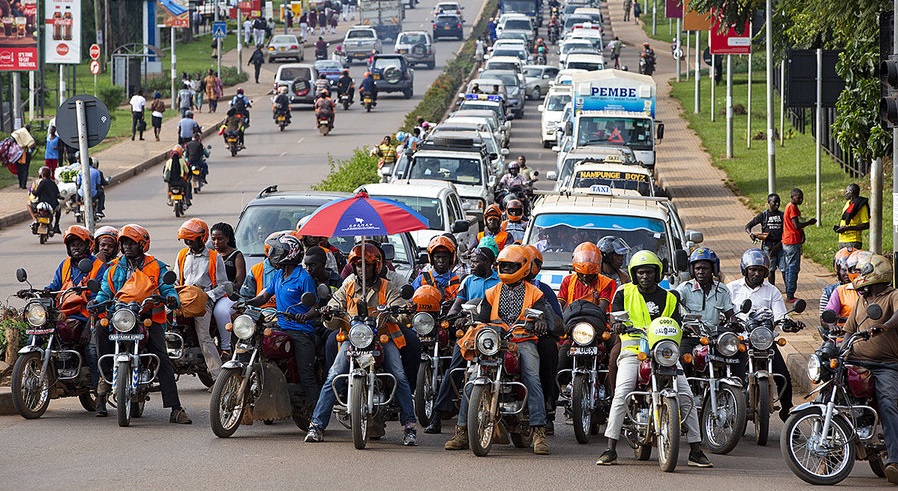
A growing number of boda boda riders are backing the return of Uganda’s Express Penalty System (EPS), arguing that the suspension of the automated traffic enforcement scheme has weakened road discipline at a time when the country is registering an increase in road crashes and fatalities.
Boda boda operators say the system, despite controversy over high fines and implementation concerns, helped restore order on the roads by discouraging speeding, reckless overtaking and habitual traffic violations through camera-based enforcement rather than direct human interaction with traffic officers.
Speaking on behalf of riders in Kampala and other parts of the country, Asuman said operators were increasingly worried about rising accidents involving motorcycles, pedestrians and private vehicles.
“We kindly ask the Uganda Traffic Police and relevant authorities to restart it as soon as possible, as it is a modern system that promotes fairness, reduces human interference, and helps save lives,” Asuman said.
The renewed appeal comes against the backdrop of fresh police statistics showing a rise in road crashes across Uganda in 2025.
According to the Uganda Police Annual Crime Report 2025, the country recorded 26,044 road traffic crashes in 2025, up from 25,107 crashes registered in 2024, representing a 3.7 percent increase.
Fatal crashes increased from 4,434 in 2024 to 4,602 in 2025, while serious crashes rose from 13,134 to 13,563 over the same period.
Motorcycles remained among the vehicles most involved in crashes, second only to motorcars, with police recording 12,084 motorcycle-related crashes during the year.
The report further indicated that motorcyclists and their passengers accounted for 55 percent of all seriously injured road users in Uganda, underscoring the vulnerability of boda boda riders and passengers on the country’s roads.
Pedestrians remained the most affected category in collision-related crashes, accounting for 20 percent of all accidents recorded.
Police identified speeding and careless overtaking as the leading causes of crashes, jointly contributing to more than 40 percent of all accidents in 2025.
Authorities also noted that many crashes occurred on straight sections of roads where drivers and riders tend to speed or attempt risky overtaking maneuvers.
Asuman said boda boda riders, who transport workers, traders, students, patients and families every day, are among those most directly affected by poor road discipline and inconsistent enforcement.
“Since EPS was suspended, road discipline has become weaker. Traffic violations, especially speeding, have increased. Many riders feel that enforcement is not consistent, which puts everyone at risk,” he said.
The Express Penalty System uses road cameras and AI-supported number plate recognition technology to automatically detect traffic offences such as speeding and red-light violations.
The system was introduced to improve road safety, reduce corruption and minimise direct interaction between motorists and traffic officers.
However, it later faced criticism over high fines, short payment timelines and complaints from motorists who questioned the transparency of the enforcement process, prompting government to suspend its implementation pending review.
Government is now reviewing proposed reforms to the system, including reducing penalties, extending payment periods to 28 days and improving transparency mechanisms before the system is fully reinstated.
Despite earlier opposition from sections of motorists and public transport operators, some boda boda riders now argue that automated enforcement may be necessary to reverse the worsening culture of indiscipline on the roads.
“We are not avoiding responsibility. We are asking for a system that helps us all be more responsible. We are ready to cooperate and follow the law,” Asuman said.
Traffic Police have in recent months intensified road safety sensitisation campaigns through radio talk shows, television programmes, school outreach activities and community engagements targeting riders, pedestrians and other vulnerable road users.
