

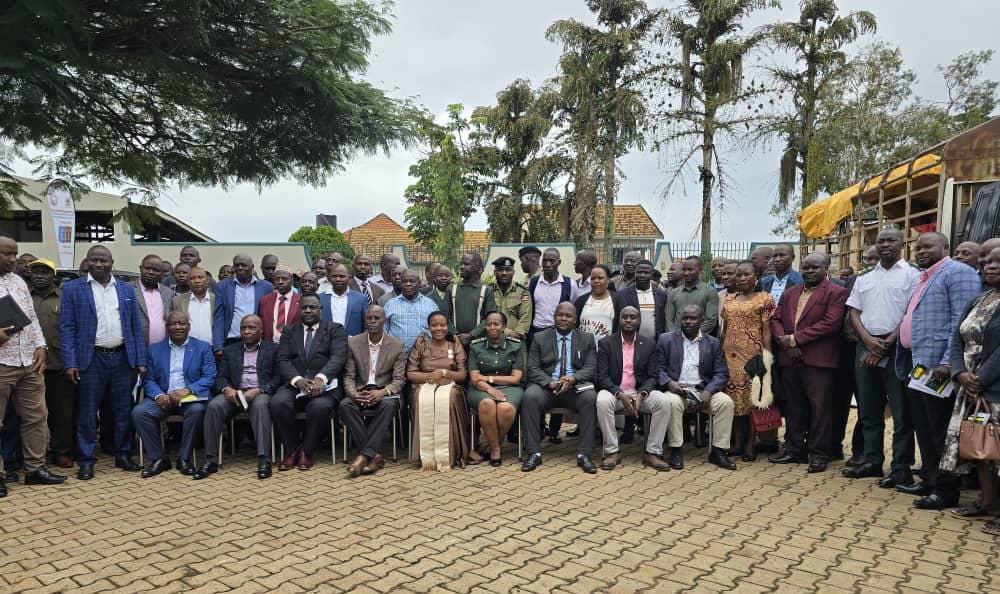
Government agencies responsible for citizenship registration and identification have intensified efforts to strengthen coordination with local leaders and security officials in a bid to improve service delivery and address challenges affecting citizens at the grassroots level.
Officials from the Directorate of Citizenship and Immigration Control, together with the National Identification and Registration Authority, convened a stakeholders’ engagement bringing together police officers, Resident District Commissioners (RDCs), local council chairpersons, and other local government leaders from districts within and around the Wamala region, including Mityana, Kyankwanzi, Mpigi, and Gomba.
The meeting, held in Mityana District, focused on improving collaboration between government structures at the lowest administrative levels to ensure smoother handling of citizenship and national identification services.
Speaking during the engagement, Debra Amanya, Principal Immigration Officer at the Directorate of Citizenship and Immigration Control, said the initiative aims to harmonise operations among stakeholders and address persistent challenges affecting service delivery.
“We are working towards strengthening coordination among all government structures involved in citizenship matters so that services can reach people more effectively,” Amanya said. “There are still challenges in the system, but through cooperation and continuous engagement, we believe these issues can be addressed.”
She emphasized the importance of involving local leaders and security personnel, noting that they play a key role in verifying information, guiding communities, and supporting government programmes related to citizenship and identification.
Officials also noted that improved coordination is essential in addressing challenges such as delays in processing documents, verification of citizenship details, and access to national identification services in rural areas.
Ronald Kamanzi, head of NIRA in Mityana District, said the authority is committed to ensuring that all eligible citizens receive National Identity Cards despite operational challenges.
“We are committed to ensuring that Ugandans access their National IDs because these documents are important for accessing services and participating fully in national programmes,” Kamanzi said. “A large number of people have already received their IDs, and we are continuing to improve the process.”
Stakeholders welcomed the initiative, saying stronger collaboration between government agencies and local leaders would reduce misunderstandings and improve service delivery.
Leaders also called for continued community sensitisation to help residents better understand procedures related to citizenship registration, national identification, and immigration services.
The engagement forms part of ongoing government efforts to strengthen national identification systems, improve inter-agency coordination, and ensure that more Ugandans are properly registered and reflected in official records.
