

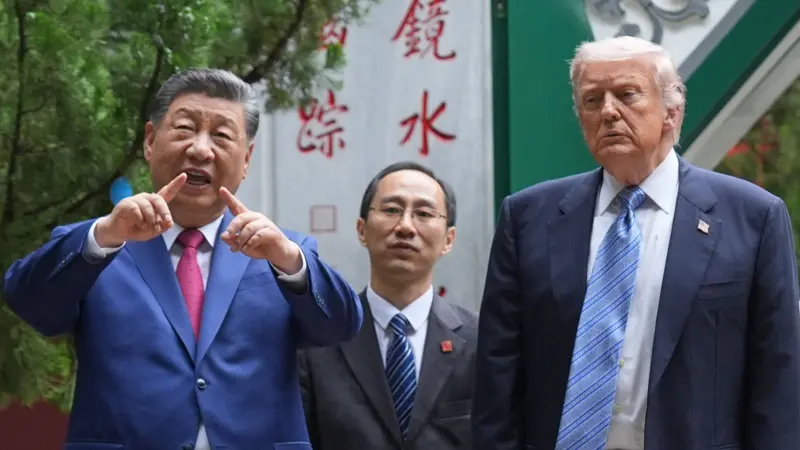
Chinese President Xi Jinping and US President Donald Trump have concluded two days of high-level talks in Beijing, with both leaders projecting optimism over the future of US-China relations amid discussions on trade, Iran, oil supplies and growing tensions over Taiwan.
Trump wrapped up his state visit to China on Friday after holding a second round of talks with Xi at Zhongnanhai, the heavily guarded compound where China’s top leaders live and work.
The US president described the discussions as “extremely positive,” saying the two sides had made progress on several longstanding issues, including trade and regional security.
Speaking after the meeting, Trump said Xi had committed not to provide military equipment to Iran, a key issue for Washington amid ongoing tensions in the Middle East.
“We don’t want them to have nuclear weapons, and we want the Strait open,” Trump said, referring to the Strait of Hormuz, a vital global oil shipping route.
In an earlier interview with Fox News, Trump also claimed China had agreed to purchase US oil and acquire 200 Boeing aircraft as part of broader economic understandings reached during the visit.
While Trump repeatedly highlighted what the United States had gained from the discussions, he declined to publicly state what concessions or commitments China expected in return.
Xi, meanwhile, described US-China ties as the “world’s most important relationship” and said the two countries had agreed on what he called a “new bilateral relationship” built around “constructive strategic stability.”
The Chinese leader also used the talks to reinforce Beijing’s position on Taiwan, calling the self-ruled island the “most important issue” in relations between the two powers.
According to Chinese state media, Xi warned that mishandling the Taiwan issue could push US-China relations into a “highly perilous situation.”
Taiwan later responded through its foreign ministry, saying Beijing remained “the sole risk to regional peace and stability,” while reaffirming continued cooperation with the United States and its allies.
Analysts say the summit reflected China’s growing confidence on the global stage, particularly as Beijing deepens ties with traditional US allies including Britain, Canada and Germany.
In recent months, China has hosted several world leaders seeking trade partnerships, among them British Prime Minister Keir Starmer, Canadian Prime Minister Mark Carney, French President Emmanuel Macron and German Chancellor Friedrich Merz.
John Delury, a senior fellow at the Asia Society’s Center on US-China Relations, said the summit symbolised a broader shift in global influence.
“We are witnessing an historical change,” Delury said. “Beijing is now the second world capital.”
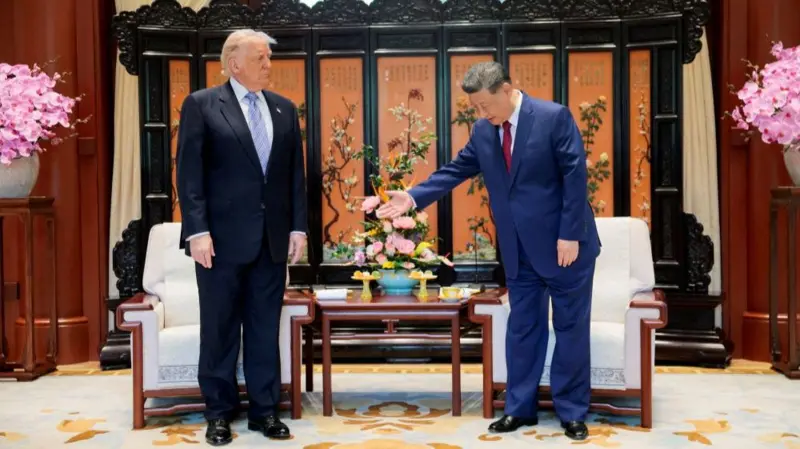
During the visit, Xi hosted Trump at several symbolic venues including the Great Hall of the People and Zhongnanhai. The two leaders also toured historic gardens where Trump praised the Chinese roses and later joked that Xi should send some to the White House Rose Garden.
Xi promised to send Trump rose seeds as a gift and confirmed plans for a reciprocal visit to the United States on September 24.
The summit also underscored China’s increasingly active role in Middle East diplomacy. Beijing said it had been “working tirelessly” to support peace efforts involving Iran and stressed that the ongoing conflict “should never have happened.”
China remains Iran’s largest oil buyer and biggest trading partner, giving Beijing significant leverage in any potential negotiations involving Tehran.
Observers say Xi emerged from the summit seeking to present China as a stable global power and diplomatic counterweight to Washington, particularly at a time when Trump’s tariff policies and shifting foreign policy positions have unsettled some traditional US allies.
