

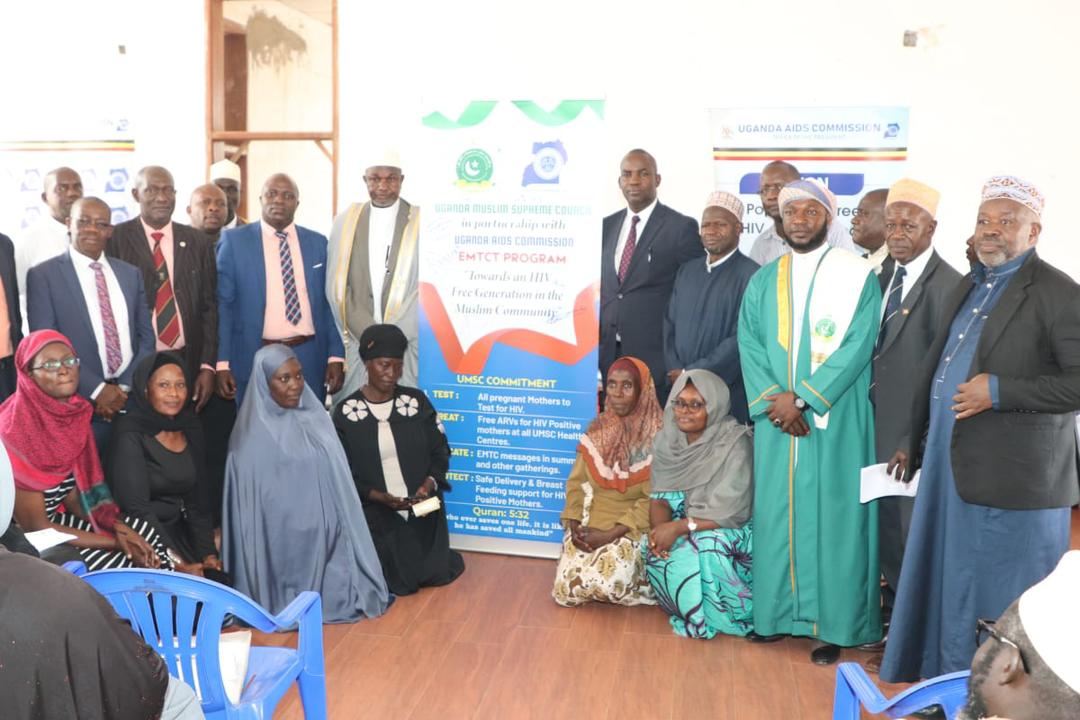
The Wakiso District Khadhi, Sheikh Elias Kigozi, hosted the Deputy Mufti of Uganda, Sheikh Ali Waiswa, alongside leaders from Nansana Municipal Council and officials from the Uganda AIDS Commission in a special sensitization meeting aimed at equipping Imams and Muslim leaders with knowledge and strategies to combat the spread of HIV/AIDS within communities.
The gathering attracted Imams, Sheikhs, youth leaders, and other Muslim community representatives from different parts of Nansana and focused on increasing awareness about HIV/AIDS prevention, fighting stigma and discrimination, and encouraging communities to embrace counseling, testing, and treatment services.
During the meeting, speakers emphasized that religious leaders remain among the most trusted voices in society and therefore carry a major responsibility in influencing positive behavioral change, particularly among young people.
Addressing participants, Sheikh Ali Waiswa urged Muslim leaders to take a frontline role in educating communities about HIV/AIDS and encouraging people to seek accurate information from health professionals instead of relying on myths and misconceptions.
“Religious leaders are respected in society, and many people listen to us more than anyone else. We must use our mosques, sermons, and community gatherings to educate people about HIV/AIDS prevention, moral responsibility, and the importance of caring for those affected,” Sheikh Waiswa said.
He added that the fight against HIV/AIDS requires cooperation among religious institutions, government agencies, parents, and health workers if the country is to protect future generations from infection.
The Deputy Mufti further called upon Muslim leaders to guide young people away from risky behavior, uphold discipline and moral values, and embrace principles that promote healthy and responsible living.
District Khadhi Sheikh Elias Kigozi applauded the Uganda AIDS Commission and Nansana Municipal leaders for partnering with religious institutions in the awareness campaign, noting that faith leaders have direct access to communities and can help break the silence surrounding HIV/AIDS.
“HIV/AIDS remains a challenge that affects families and communities in many ways. As religious leaders, we must stand with the people, guide them spiritually, encourage testing and counseling, and fight the stigma that isolates those living with the virus,” Sheikh Kigozi said.
Officials from the Uganda AIDS Commission used the meeting to educate participants on the current status of HIV/AIDS in Uganda, methods of prevention, and the importance of early testing and treatment.
They warned that stigma, fear, and misinformation continue to undermine efforts to eliminate new infections, especially among young people.
The officials encouraged Imams and Muslim leaders to work closely with health centers, schools, and local government authorities in spreading awareness through mosques, youth engagements, community dialogues, and family counseling sessions.
Leaders from Nansana Municipal Council also pledged continued collaboration with religious institutions in implementing community health programmes, saying partnerships between government and faith-based organizations remain essential in reaching grassroots communities effectively.
Several Muslim leaders who attended the meeting welcomed the initiative and pledged to intensify sensitization efforts in their respective communities through Friday sermons, youth programmes, and outreach activities.
The meeting concluded with a collective appeal to the public to embrace HIV testing, support people living with HIV/AIDS, and work together in building informed, healthy, and stigma-free communities.
Uganda has over the years intensified awareness campaigns and community-based interventions aimed at reducing HIV infections, with religious institutions increasingly playing a central role in public health advocacy and behavior change initiatives.
