

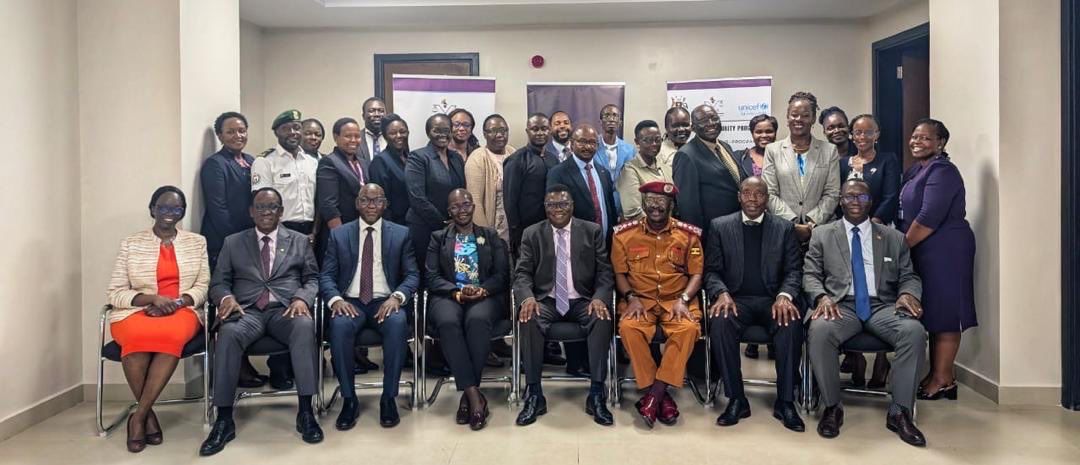
Uganda’s justice sector is set for renewed reform discussions after Justice and Constitutional Affairs Minister Norbert Mao urged a comprehensive overhaul of the country’s juvenile justice system, citing the increasing number of children entering formal criminal processes.
Speaking during a high-level juvenile justice dialogue in Kampala, Mao said the system must move away from punitive approaches and adopt coordinated, rehabilitative strategies that prioritise the welfare and reintegration of child offenders.
“A significant proportion of offenders are children, making juvenile justice a national priority,” Mao said, calling for stronger coordination between justice institutions to close gaps in handling cases involving minors.
The Minister emphasised the need for a balanced approach that considers rehabilitation versus punishment, institutional care versus community-based interventions, and offender rehabilitation alongside victim protection.
The dialogue brought together key justice actors to assess systemic weaknesses and propose reforms aimed at improving how juvenile cases are handled across Uganda’s legal framework.
Principal Judge Lady Justice Jane Frances Abodo called for urgent reforms to make the justice system more responsive to children’s needs, proposing changes to police diversion procedures and plea bargaining systems to ensure better inclusion of parents and probation officers in juvenile cases.
She also advocated for faster case handling, improved access to legal representation, and stronger inter-agency coordination between police, courts, probation services, and correctional institutions.
“Reforms must be supported by enforceable, time-bound actions, backed by reliable data and effective monitoring systems,” Abodo said.
Other proposals included the creation of dedicated juvenile justice focal persons within institutions and the establishment of a multi-sectoral committee to oversee implementation of reforms.
Dr. Howard Ayo, speaking as an expert contributor, warned that the justice system is increasingly handling more child-related cases, but remains constrained by weak diversion mechanisms and inadequate facilities for rehabilitation.
He called for evidence-based policy reforms supported by stronger research and data collection to guide decision-making in juvenile justice.
The meeting was also attended by Minister of State for Youth and Children Affairs Balaam Barugahara Ateenyi, Director of Public Prosecutions Lino Anguzo, and Commissioner General of Prisons Dr. Johnson Byabashaija, among other senior justice sector officials.
Stakeholders concluded the dialogue with a commitment to strengthen rehabilitation systems, enhance coordination, and prioritise child rights within Uganda’s justice framework.
