

Parliament has suspended approval of the Shs8.074 trillion transport and infrastructure budget for the 2026/2027 financial year, after Speaker Anita Annet Among raised concern over stalled road projects, rising debt obligations, and what she described as persistent inefficiencies in the sector.
The decision was taken during deliberations on the national budget estimates for the integrated transport services sector, where legislators were expected to approve allocations but instead agreed to defer the vote pending further clarification from the Ministry of Works and Transport and the Ministry of Finance.
According to the Committee on Infrastructure, the proposed budget represents a 37.7% increase from the previous financial year’s Shs5.693 trillion.
Of this, Shs936 billion is allocated to non-wage recurrent expenditure, while Shs2.686 trillion is earmarked for development spending, supported by external financing amounting to Shs4.394 trillion.
The roads subsector has been allocated Shs4.173 trillion for national, district, and urban roads, while transport services—including rail, air, and water transport—are allocated Shs3.811 trillion.
Deputy Chairperson of the Infrastructure Committee, Tony Awany, told Parliament that the sector is grappling with a debt burden that previously stood at Shs1.4 trillion and has since reduced to Shs948 billion, largely due to halted works on ongoing projects and delayed payments, which continue to attract interest costs.
However, Kira Municipality MP Ibrahim Ssemujju Nganda questioned the figures, citing what he described as conflicting arrears amounting to Shs5 billion.
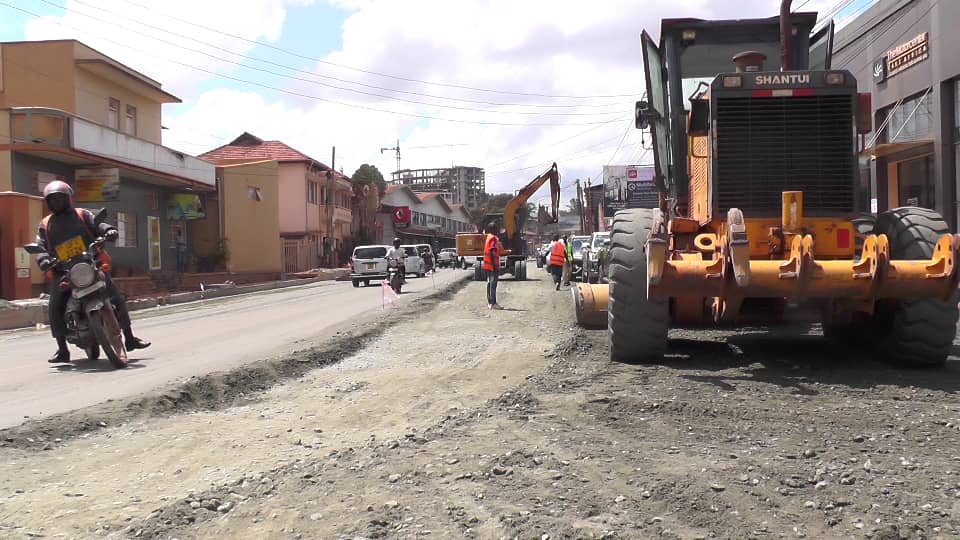
Speaker Among expressed concern that despite significant budget allocations, many roads across the country remain in poor condition, with some districts still lacking tarmacked roads.
She questioned why government continues to incur heavy borrowing costs while projects remain incomplete or stalled.
The report also indicated a 14.8% reduction in funding for the Kampala Capital City Authority (KCCA), attributed to the removal of Shs140 billion earmarked for a UK-funded bridges project.
Lawmakers urged government to reinstate the funding, warning that delays in the Greater Kampala Metropolitan Area Urban Development Project have resulted in sections of road works recording 0% progress.
Following the debate, Speaker Among referred the report back to the Budget Committee, directing that an accountability session be held with the Ministry of Finance and the Ministry of Works and Transport to clarify the status of stalled projects and rising debt exposure before any approval is granted.
Looking ahead, government projections show infrastructure spending rising further to Shs10.5 trillion in FY 2027/28 and Shs11.5 trillion in FY 2028/29, before declining to Shs6.6 trillion in FY 2029/30 as major projects are completed.
Key priorities for FY 2026/27 include maintenance of 11,000 kilometres of district and community access roads, upgrading of 2,460 kilometres of urban roads, tree planting along sealed roads in Northern and North-Eastern Uganda, and the application of Low-Cost Sealing technology on 220 kilometres of district roads in urban centres including Jinja, Masaka, Mbarara, Soroti, Entebbe, and Kira.
