

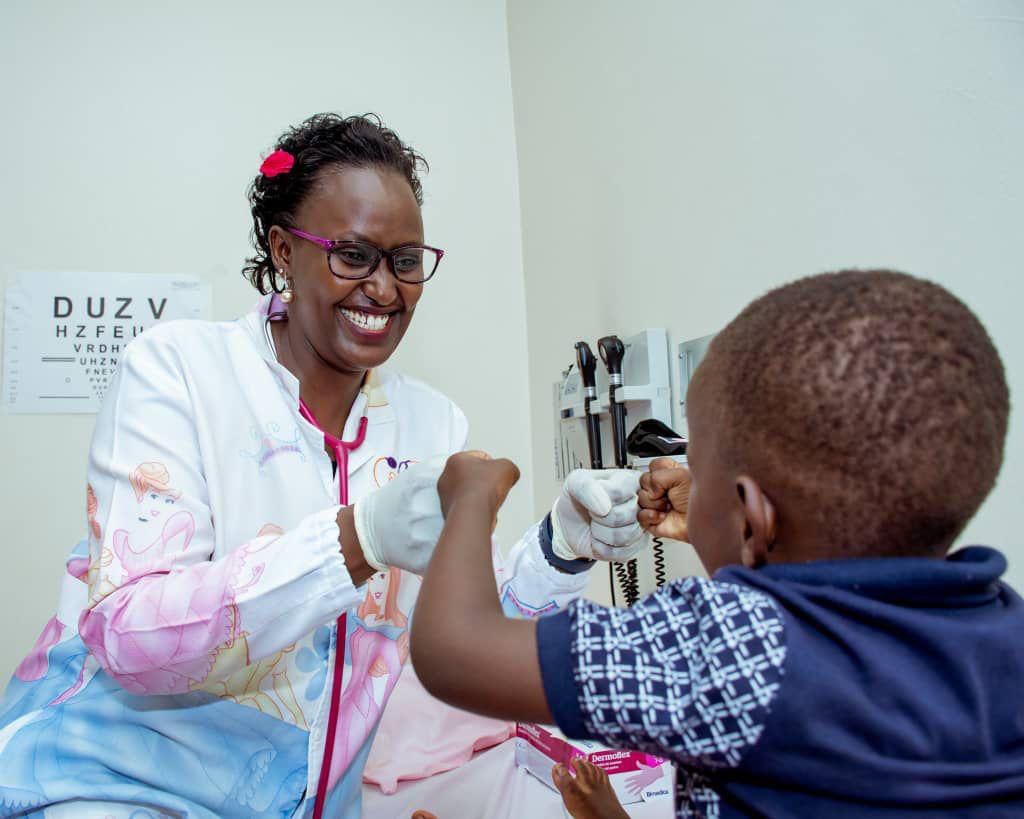
Children don’t simply learn to laugh after birth science shows the roots of laughter begin much earlier. According to Elizabeth Kutamba Akankunda, a paediatrician at Health Haven Clinic, babies can begin showing reflex-like laughter responses as early as 16 to 20 weeks while still in the womb.
After birth, laughter quickly becomes a key developmental milestone. By two months, babies begin recognizing their mother’s face and smiling. At around three to four months, they start laughing in response to social interaction an important sign that the brain is developing and responding to emotional cues.
Laughter is far more than a cute reaction it is deeply rooted in brain function. As babies engage with their surroundings, their brains release endorphins, often referred to as “feel-good” hormones. These chemicals promote relaxation, pleasure, and bonding.
“Laughter in children is a reflex initiated by the brain,” explains Dr. Kutamba. “It is driven by the release of happy hormones that support emotional and physical well-being.”
As children grow, their sense of humor evolves. What begins as a response to tickling or funny faces gradually develops into enjoyment of games, storytelling, and simple jokes.
Experts emphasise that a playful, nurturing environment is key to encouraging laughter. Even during pregnancy, parents can begin bonding through talking to the baby, playing music, and managing stress levels.
After birth, simple interactions can make a big difference making funny faces or sounds, playing peek-a-boo, gentle tickling, and interactive games like hide-and-seek all help stimulate joy and engagement.
From about six months, babies begin smiling at familiar faces, and by one to two years, they actively engage in playful activities, running around and laughing freely.
While every child is biologically wired to laugh, environment plays a crucial role in how often that laughter is expressed.
“All children share the same biological systems, including hormones like cortisol and dopamine,” says Dr. Kutamba. “But if a child grows up in a stressful or overly strict environment, their joyful responses may be suppressed.”
Health professionals stress that laughter is not optional it is essential for healthy development. Betty Nakibuuka Izizinga highlights its wide-ranging benefits, including strengthening the immune system, reducing stress, improving memory and learning ability, enhancing social bonding, and promoting better sleep.
Research suggests children laugh between 300 and 400 times a day, compared to adults who average about 15 laughs daily.
Beyond physical health, laughter also plays a role in mental well-being, especially at a time when cases of childhood anxiety and depression are rising.
“Laughter helps children build self-esteem, optimism, and resilience,” says Izizinga. “A joyful environment allows children to grow and thrive.”
In a world where children face growing emotional and social pressures, laughter remains one of the simplest yet most powerful tools for development. Creating moments of joy through play, connection, and humor can leave a lasting impact on a child’s well-being.
