

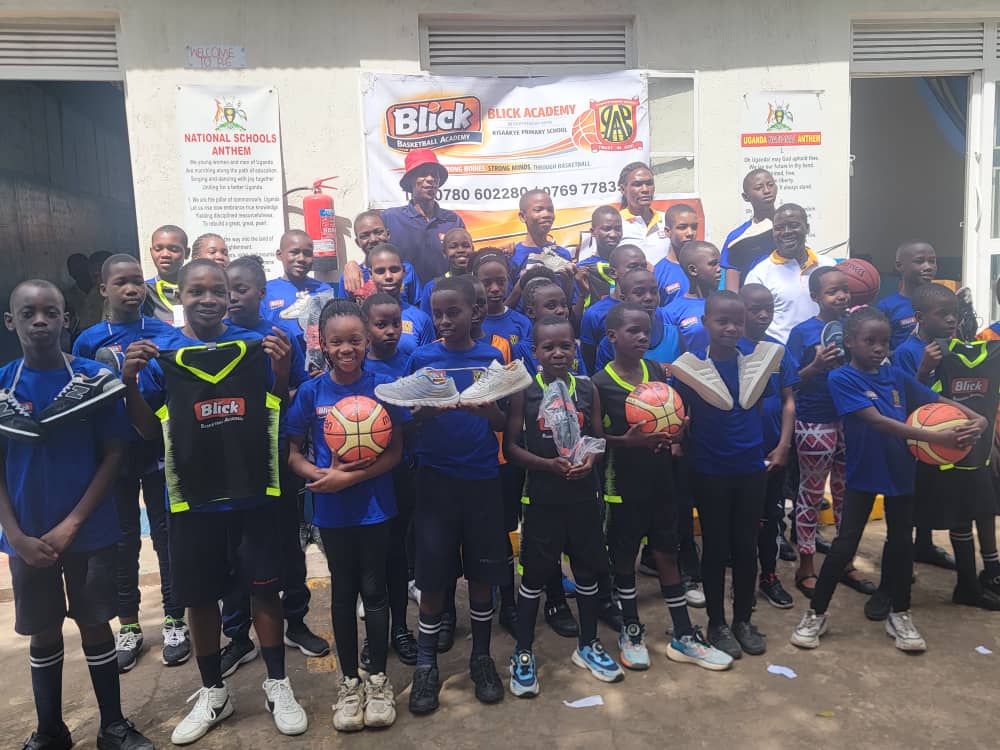
The Blick Basketball Academy, founded by Ugandan basketball legend Norman Blick, has launched an initiative aimed at empowering underprivileged children with the tools, confidence, and support they need to thrive both on the basketball court and in the classroom.
The initiative named 'Be Strong, Strong Bodies, Strong Minds Through Basketball,' was officially launched at Kisaakye Primary School in Mengo, Kampala, where the academy donated 50 pairs of basketball shoes, basketball jerseys and basketballs among others .
Speaking at the launch, Norman Blick said the programme was inspired by his direct experience, coaching children who are passionate about basketball but lack basic equipment such as sports shoes.
“Most of these children have the passion to play, but they don’t have shoes, which hinders them from enjoying the sport. At one point, we even had to consider not allowing those without shoes to train, which was very difficult because they were so willing to play, even in sandals,” Blick said.
He explained that the idea later developed into a broader empowerment drive, including a shoe collection initiative supported by friends in the United Kingdom.
“For my birthday, I thought about what I could do differently. I remembered car boot sales in the UK where people sell items they no longer need. I discussed with my sister, and we started exploring the idea of collecting shoes for children and shipping them over. We want to scale it up and eventually reach schools across the country,” he said.
Blick added that the initiative is not only focused on shoes but also on providing sports equipment to ensure inclusivity for children from low-income backgrounds.
“We want equipment to be inclusive so that every child who has the talent and passion gets a chance to play basketball,” he said.
He noted that the programme started with limited space at the school, where a small court was established and training sessions introduced on different days of the week.
“Even with limited space, we started small, brought in hoops, and organized training sessions. The children are very excited and engaged,” he added.
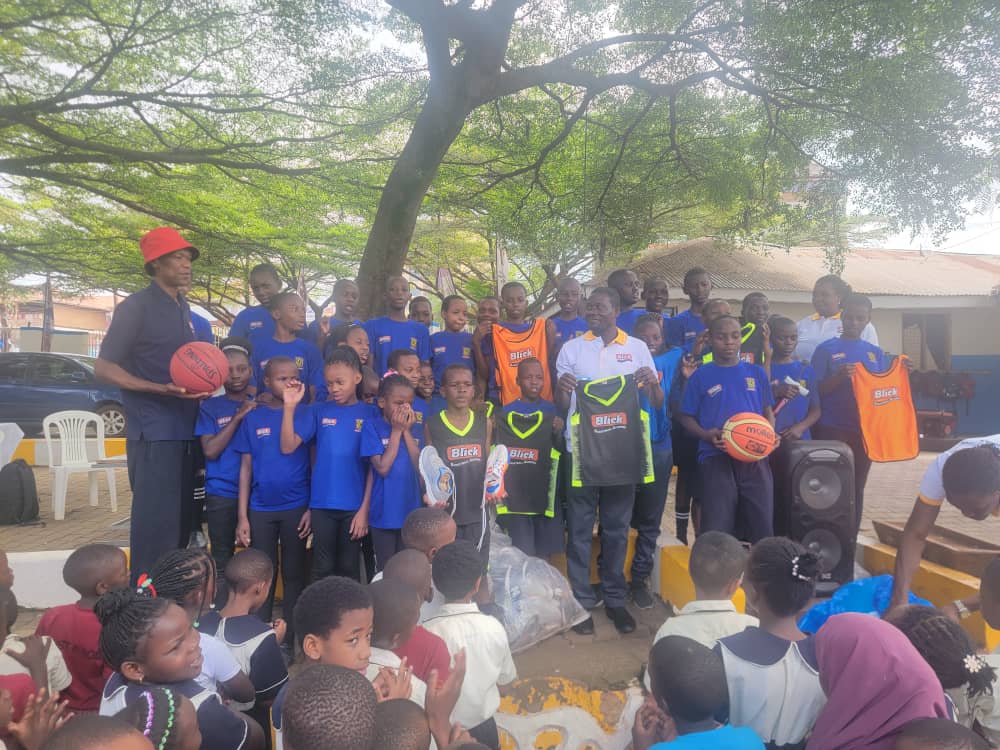
Blick emphasized that basketball plays a critical role in child development beyond sport, contributing to physical health, discipline, and life skills.
“Basketball keeps the body healthy and strengthens the mind. It also teaches teamwork, communication, sharing, and discipline—skills that are important in life and work,” he said.
“If children start playing at a young age, by the time they reach under-15 and under-18 levels, they are already well developed. I would love to see some of these children progress to the national team,” he noted.
The academy chose Kisaakye Primary School after the school’s administration requested support to introduce structured sports activities beyond debating, which had been the main extracurricular activity.
Blick said the learners’ enthusiasm and discipline convinced him to commit to the programme long-term.
“I’ve been here for almost a year now, and I’m really enjoying working with the children. They are vibrant, eager to learn, and very talented,” he said.
The Head of Academics at Kisaakye Primary School, Agnes Nassozi, welcomed the initiative, saying it has contributed positively to both learning and student development.
She said learners have shown improved results in regular assessments, which she attributed to the balance between academics and physical activity.
“We thank the Blick Basketball Academy for the support. The programme has helped us a lot, especially in improving academic performance. Learners now have structured time for physical activity, which helps them stay active and focused in class,” she said.
She added that the school also received donations of basketballs, shoes, and sports attire, which have boosted participation in sports activities.
Before the programme, she noted, learners mainly engaged in debating, which focused on confidence-building but did not include physical development activities.
“We have now added basketball to debating, and it has made a big difference in how learners interact and develop,” she said.
