

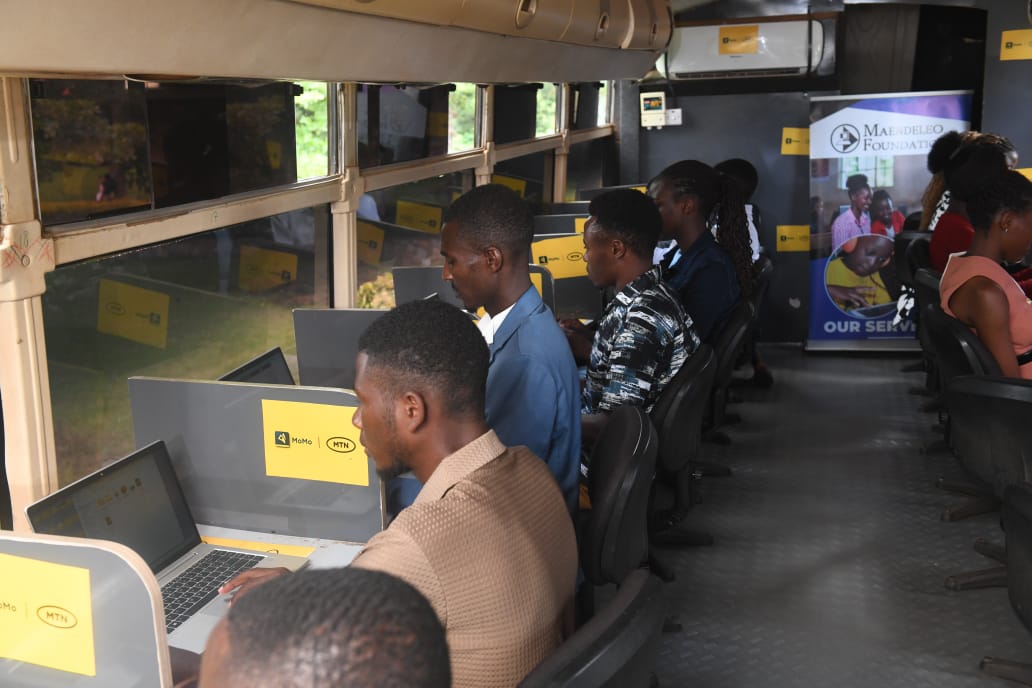
MTN Uganda, through the MTN Foundation, has trained 105 participants in its Digital Literacy Programme in Uganda’s Western region, reinforcing a broader nationwide push to equip citizens with practical digital skills as the country accelerates its transition to a technology-driven economy.
The graduation ceremony, held at Bushenyi District headquarters, marked the completion of a 10-day intensive training covering computer literacy, internet usage, digital communication tools, and online safety.
Participants included youth, women, and university students from institutions such as Kampala International University and Kyambogo University, highlighting strong demand for digital upskilling across different education levels.
Top-performing trainees were awarded laptop computers and Mi-Fi devices, a move MTN says is intended to support continued learning and enable real-world application of newly acquired skills.
“These tools are not just rewards; they are enablers,” said Andrew Tusubira, Commercial Head for MTN Uganda’s Western Region. “They ensure that the skills gained through the programme can translate into opportunities in employment, entrepreneurship, or further education.”
Emmy Ngabirano, the Resident District Commissioner for Bushenyi, commended the initiative, describing it as a critical step in preparing communities for the digital economy.
“By equipping participants with these skills and tools, MTN is investing not only in individuals but in the future development of our district and country,” he said.
One of the graduates, Mary Masika, praised the programme for enhancing learning and research opportunities. “This training has opened doors for us. Receiving laptops and Mi-Fi devices will allow us to continue learning and exploring opportunities online even after the programme ends,” she said.
The Digital Literacy Programme is delivered through the Internet Bus — a mobile, internet-enabled classroom designed to extend digital training to underserved communities by addressing barriers such as cost, distance, and limited infrastructure.
The initiative forms part of the MTN Foundation’s broader strategy to promote digital inclusion and support national development priorities.
Since 2022, MTN says the programme has reached more than 5,900 people across 44 communities in Uganda. In partnership with the Maendeleo Foundation, the initiative is being expanded to reach at least 2,000 additional participants across 10 communities, with a focus on youth and women, by the end of this month.
The effort comes as Uganda deepens the digitisation of both public and private services — from e-government platforms to mobile financial services — increasing the importance of digital literacy as a prerequisite for economic participation.
While internet penetration has improved significantly over the past decade, gaps in digital skills continue to limit many Ugandans’ ability to fully benefit from connectivity.
“Our goal is not just to connect people, but to empower them to use that connectivity meaningfully,” Tusubira added.
Graduates are encouraged to build on their training through platforms such as the MTN Skills Academy and to act as peer educators within their communities.
