

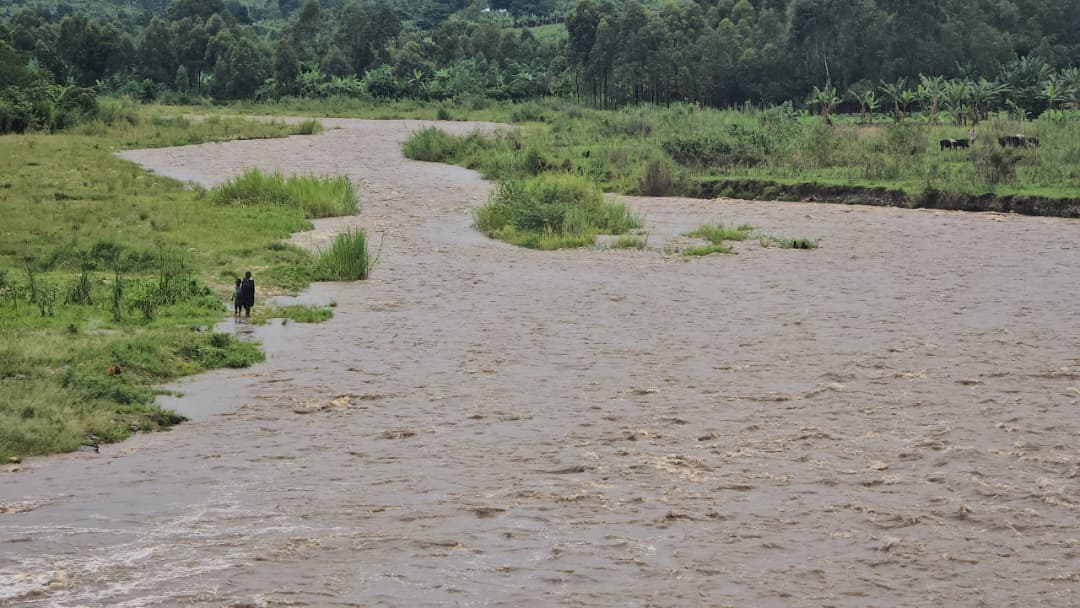
Residents living in disaster-prone areas of Kasese District have been urged to relocate to safer locations as heavy rains continue to batter the region, heightening fears of imminent flooding.
District leaders warn that the persistent downpour is a strong indicator of potential disasters, particularly in low-lying and high-risk communities.
Despite repeated warnings, many residents remain reluctant to leave their homes, citing a lack of alternative shelter and limited support.
Anxiety is rising across communities as dark clouds hang over the district and water levels in River Nyamwamba continue to swell. Areas such as Kanyangeya Ward and surrounding settlements are among the most vulnerable, with waterlogged soils and rising riverbanks signaling increased danger.
Kasese District LCV Chairperson Eriphazi Muhindi said authorities have already issued early warnings and are urging residents to temporarily relocate before the situation worsens.
“We have consistently warned our people living in high-risk areas to move to safer places as a precaution. The rains we are seeing now are a clear sign that floods could occur at any time, and we must act early to save lives,” Muhindi said.
However, some residents say relocation is not feasible without support.
“We understand the danger, but we have nowhere else to go. Leaving our homes without assurance of where to stay is very difficult,” said Mathew Masereka, a resident of Kanyangeya Ward.
Residents are now appealing to government agencies and humanitarian organizations to provide emergency assistance, including temporary resettlement options during the peak rainy season.
“Government should support us with temporary shelters because we cannot manage this situation on our own,” added Juliet Musoki, another resident.
District officials maintain that safeguarding lives must take priority over property and are urging communities to heed evacuation warnings.
Authorities say they are continuing to closely monitor the situation as rains intensify, calling for heightened vigilance and collective responsibility in disaster preparedness.
