

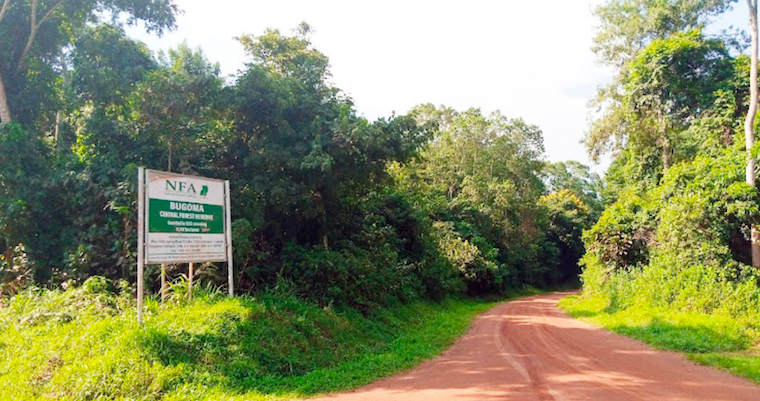
The National Forestry Authority (NFA) has confirmed it will commence boundary opening in Bugoma Forest next week on Wednesday, in a move aimed at curbing encroachment and restoring degraded sections of the reserve.
NFA Communications Manager Aldon Walukamba said the exercise will go ahead as planned but declined to provide further operational details.
“It is true we are going to have boundary opening next week, but I did not want to comment so much because we will be alerting the people in the forest to plan. We want to get them unaware,” he said.
In an exclusive interview, Kikuube Resident District Commissioner Godwin Angalia said the exercise follows months of stakeholder engagements involving Bunyoro Kitara Kingdom, Uganda Wildlife Authority (UWA), the NFA, and Hoima Sugar Limited, among other agencies.
He said the parties had agreed to open the boundaries on Wednesday to clearly demarcate land belonging to Hoima Sugar and the central forest reserve.
According to Angalia, government is keen on safeguarding Hoima Sugar’s 22 square miles of land, citing its contribution to employment and the local economy.
The remaining section, approximately 41,144 hectares (about 158.8 square miles), constitutes the forest reserve.
“We have interest in protecting the investor, Hoima Sugar, because as security and government he gives our people jobs and adds to our economy. People have been encroaching on his land, so we want to open boundaries so that he can use his 22 square miles, then the other forest land is protected,” he said.
Angalia warned individuals currently growing maize or conducting any other activities within the forest without authorization to vacate immediately or face arrest once the demarcation is completed.
“There has been a lot of maize growing there. No one has a document to support them to grow maize there, so they all have to leave or else get arrested once the demarcation is done,” he stated.
Following the boundary opening, the NFA plans to embark on tree replanting, particularly in areas that have been depleted due to timber cutting, farming, and other illegal activities.
