

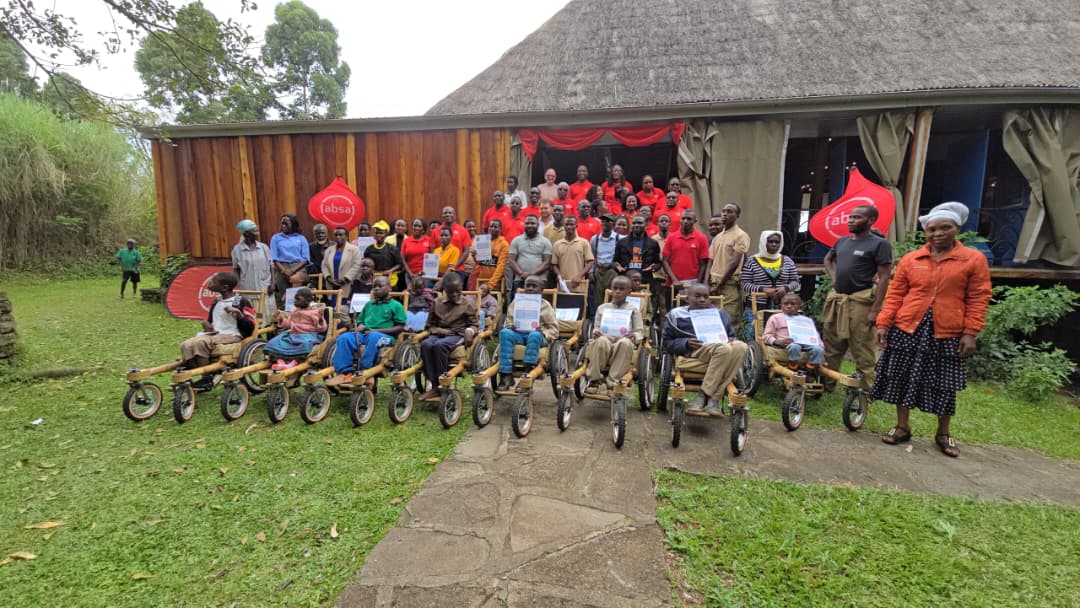
Absa Bank Uganda has donated Shs40 million to the Kyaninga Child Development Centre (KCDC), enhancing therapy, nutrition, and mobility services for children living with disabilities across the Rwenzori region.
The area’s rugged terrain has long limited access to education and healthcare for children with mobility challenges.
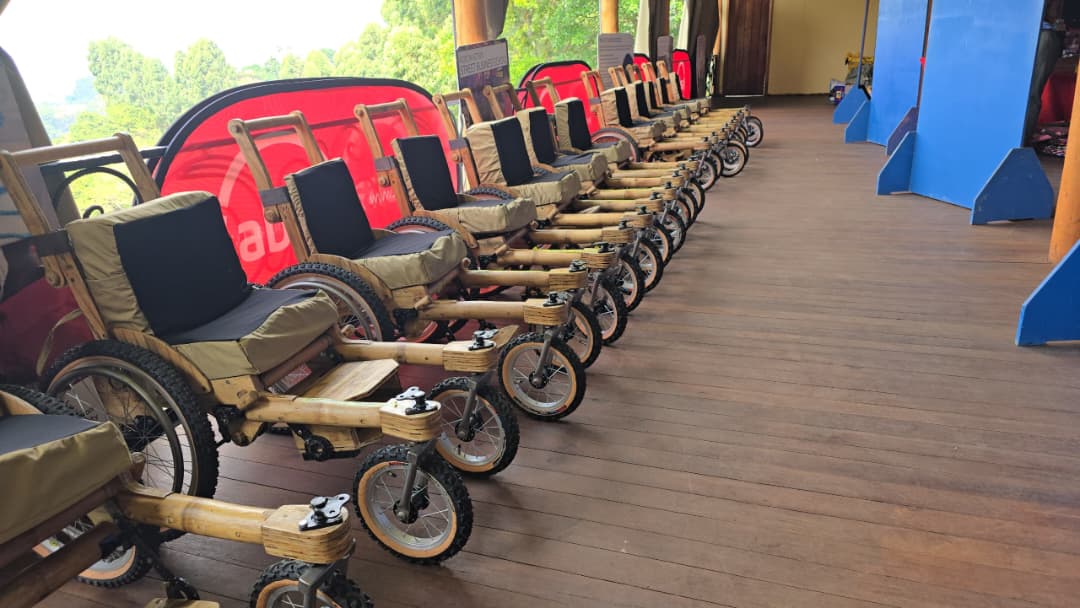
Part of the donation has funded locally made bamboo wheelchairs, specially designed to navigate the region’s hilly landscape.
These wheelchairs provide children with renewed independence, dignity, and the opportunity to attend school and therapy sessions regularly.
The support is set to strengthen KCDC’s capacity to serve over 1,000 children monthly, many of whom face daily challenges reaching basic services due to mobility constraints.
Speaking during the handover, Absa Bank Uganda Managing Director David Wandera highlighted the importance of mobility in unlocking opportunities for children.
“When a child cannot move, everything else stops—education, social interaction, even basic healthcare,” Wandera said.
“This partnership with Kyaninga Child Development Centre is about restoring dignity and opening pathways to learning for children who would otherwise be left behind.”
Wandera added that part of the funding would also support specialized nutritious meals and educational materials, critical for children undergoing intensive therapy and rehabilitation.
“Nutrition is a key part of recovery and development. These children need more than treatment; they need consistent support that allows them to grow, learn and thrive,” he said.
KCDC Founder Steven Leonard Williams welcomed the donation, noting that it would transform the lives of families previously unable to transport their children to school or therapy.
“For many parents, getting a child to therapy or school has been an impossible task,” Williams said.
“These wheelchairs and the added support mean children can now leave their homes, access education and receive the care they deserve.”
Parents also expressed relief and hope. Alex Mulenzi, whose child receives care at KCDC, said the support has eased a long-standing burden.
“Before this, moving my child was very difficult, and sometimes we missed therapy sessions,” Mulenzi said.
“Now there is hope that our children can live more normal lives and even go to school like others.”
KCDC serves children across western Uganda, offering orthopedic surgery, rehabilitation, education, and community outreach.
Stakeholders say partnerships with the private sector are critical in bridging gaps for children with disabilities, particularly in remote rural areas.
