

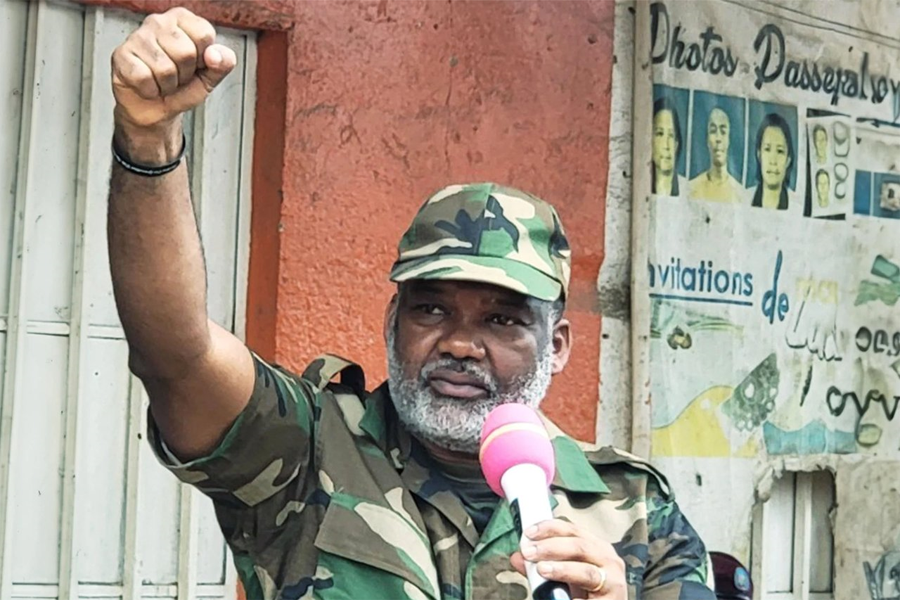
The March 23 Movement (M23) has accused the Congolese government of violating the ceasefire agreement signed on October 14, 2025, in Doha, Qatar, alleging that Kinshasa’s forces launched heavy bombardments on civilian populations and rebel-held areas in the eastern provinces of North and South Kivu.
In a statement released Wednesday morning, M23 spokesperson Lawrence Kanyuka said that “coalition forces of the Kinshasa regime carried out heavy bombardments on densely populated areas and on our positions in South Kivu and North Kivu, just a few hours after the signing of a ceasefire protocol in Doha.”
Kanyuka claimed that government troops also launched ground assaults on M23 positions in Kadasomwa, Lumbishi, and Kasake, among other areas.
He accused Kinshasa of endangering civilian lives and obstructing the peace process.
“The belligerent Kinshasa regime continues to put at risk the lives of civilians and hinder any process toward peace in the region,” Kanyuka said.
The allegations come barely 24 hours after DR Congo and the M23 rebel group signed a ceasefire monitoring and verification mechanism in Doha, a move hailed internationally as a breakthrough in efforts to end hostilities in eastern DRC.
The Doha accord, facilitated by Qatar and backed by the United States, was designed to operationalize the Washington Peace Agreement signed on June 27, 2025, between Rwanda and DR Congo.
The Washington deal marked a turning point in regional diplomacy, committing both sides to end cross-border hostilities, withdraw foreign forces, and establish joint security coordination mechanisms.
Under the new Doha framework, both DR Congo government and the M23 agreed to a ceasefire monitoring body, supported by the United Nations peacekeeping mission, to verify compliance, investigate violations, and build confidence between the parties.
US Senior Advisor for Arab and African Affairs, Massad Boulos, welcomed the signing on Tuesday, saying it “brings DR Congo and AFC/M23 closer to a comprehensive peace accord while advancing implementation of the Washington Peace Agreement.”
“The mechanism will ensure compliance through investigation and verification of any alleged violations, strengthen trust between parties, and reduce tensions on the ground,” Boulos added, commending Qatar for its role in steering the process.
Before the alleged attacks, Kanyuka had described Tuesday’s signing as “a significant step forward,” expressing optimism that it would “create the climate of serenity, peace, and security essential to allow us to finally address the fundamental issues of this conflict.”
M23 controls large parts of North Kivu, including Goma, where it runs parallel administrative structures, taxation systems, and security operations.
Despite repeated peace efforts, sporadic clashes between government forces and the rebels have continued, often displacing thousands of civilians.
The Congolese government has not immediately commented on the latest claims by the M23.
Both the United States and Qatar have repeatedly stressed that the success of the ceasefire mechanism depends on mutual restraint and respect for the agreement’s terms.
If confirmed, the alleged bombings would mark the first serious breach of the truce and raise doubts about the viability of the Doha peace process only hours after it began.
