

The Office of the Director of Public Prosecutions (ODPP) has renewed calls for the long-delayed Witness Protection Bill, citing its critical role in reinforcing Uganda’s criminal justice system as digital-age crimes continue to rise.
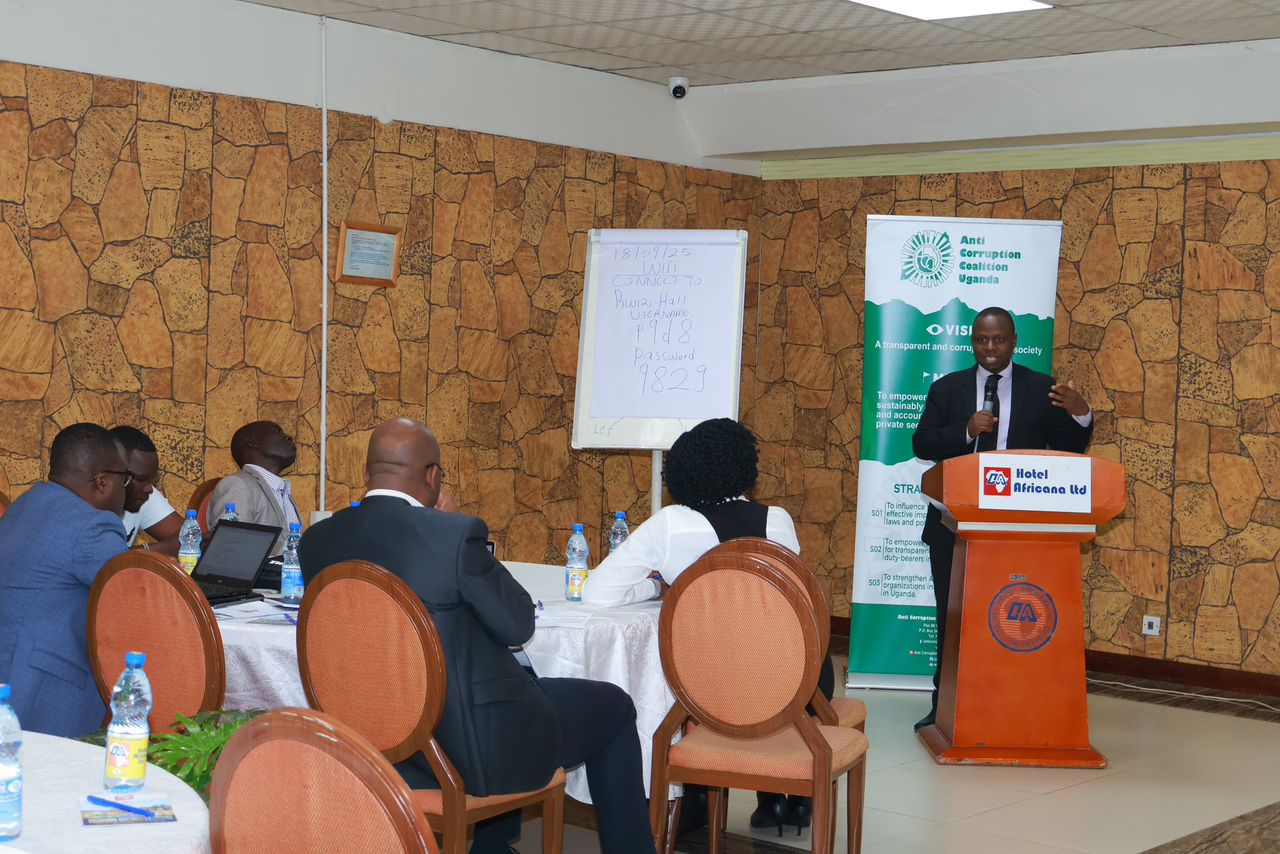
The remarks came during a validation meeting organized by the Anti-Corruption Coalition Uganda (ACCU), which brought together government agencies, media representatives, and civil society to review findings from a study on Uganda’s witness protection framework.
Charles Richard Kamuli, Assistant Director of Public Prosecutions and head of the Witness Protection Department, explained that the first draft of the bill was produced in 2015 by the Uganda Law Reform Commission but stalled.
“The journey in pursuit of the witness protection law has been a long one. Unfortunately, the 2015 draft bill did not go far and somehow stagnated,” Kamuli said.
Momentum was revived in 2023 during the sixth Joan Kagezi Memorial Lecture, when President Museveni directed the Attorney General to follow up on the bill.
The Speaker of Parliament later referred the matter to the Attorney General’s office, which established a working committee chaired by Deputy Solicitor General Charles Ouma to review the legislation.
Kamuli emphasized the urgency of updating the draft to reflect modern crime trends.
“Witnesses form the foundation of our criminal justice system – the eyes, the ears, and the mouthpiece for justice," he said.
"But the draft bill is nearly a decade old. Crime has gone digital, with cyber fraud, identity theft, money laundering, online pornography, and other offenses committed via social media platforms. The law must be reviewed to meet the challenges of our time."
The proposed legislation aims to provide legal safeguards for witnesses against intimidation, threats, and reprisals, enabling prosecutors to secure stronger convictions, particularly in high-profile and organized crime cases.
ACCU Executive Director Marlon Agaba urged the government to expedite enactment, warning that the lack of a legal framework has undermined prosecutions and contributed to the collapse of many cases.
“Current mechanisms for safeguarding witnesses are inadequate, leaving many victims and key informants exposed to intimidation, threats, and reprisals,” Agaba said.
He added that police reports show a surge in commercial and economic crimes worth trillions of shillings, yet only about 20 percent of cases reach conviction because witnesses are unwilling to participate due to weak protection mechanisms.
Agaba outlined that comprehensive legislation would provide clear measures, including police protection, safe houses, relocation across jurisdictions, and, in extreme cases, identity changes for witnesses under threat.
“With a law in place, witnesses would have legal guarantees against physical harm, psychological intimidation, and property damage. This would strengthen prosecutions and ensure justice is delivered,” he said.
Stakeholders at the meeting also reviewed a study mapping Uganda’s current witness protection framework, highlighting gaps, challenges, and proposals for reform. Discussions focused on aligning the law with international standards to ensure effective protection for witnesses in sensitive and high-profile cases.
Civil society organizations and legal experts warn that without robust witness protection, Uganda will continue to record low conviction rates in corruption, economic crimes, and organized crime cases.
