

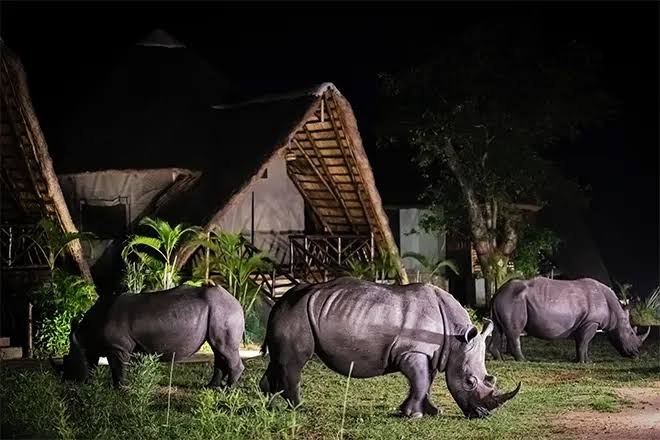
The Uganda Wildlife Authority (UWA) has refuted a circulating press release that falsely claims Ziwa Rhino Sanctuary has been closed to the public.
The misleading statement has been widely shared on social media and other platforms.
In an official release issued on Thursday, UWA clarified that the announcement is fake and not from the organization.
"The management of Uganda Wildlife Authority (UWA) has noted with concern a fake press release circulating on social media and other platforms claiming that Ziwa Rhino Sanctuary has been closed to the public," the statement read.
"We would like to categorically state that this release is false, misleading, and did not originate from UWA," the statement further emphasized.
UWA called on the public, media, tour operators, and stakeholders to ignore the false document.
They assured that Ziwa Rhino Sanctuary remains open, and all tourism activities are continuing as usual.
"The rhino population is safe, well-protected, and continues to play a critical role in Uganda's conservation and tourism agenda," noted UWA spokesperson Bashir Hangi.
He reiterated UWA’s dedication to transparency, urging stakeholders to verify any information concerning Uganda’s protected areas through the authority’s official communication platforms.
Ziwa Rhino Sanctuary is located in Nakasongola District, approximately 176 kilometers north of Kampala, along the Kampala, Gulu highway.
It was established in 2005 through a partnership between the Rhino Fund Uganda and UWA as a secure habitat for reintroducing rhinos to Uganda, which had become extinct in the wild due to poaching and civil unrest.
Covering over 70 square kilometers, the sanctuary is the only place in Uganda where visitors can observe wild rhinos in their natural habitat. It is home to over 30 southern white rhinos, protected within a fenced and patrolled area to ensure their safety.
Ziwa offers guided walking safaris for rhino tracking, as well as opportunities for birdwatching, nature walks, and spotting other wildlife such as antelopes and reptiles.
The sanctuary plays a vital role in Uganda’s rhino conservation efforts and serves as a key eco-tourism destination.
