

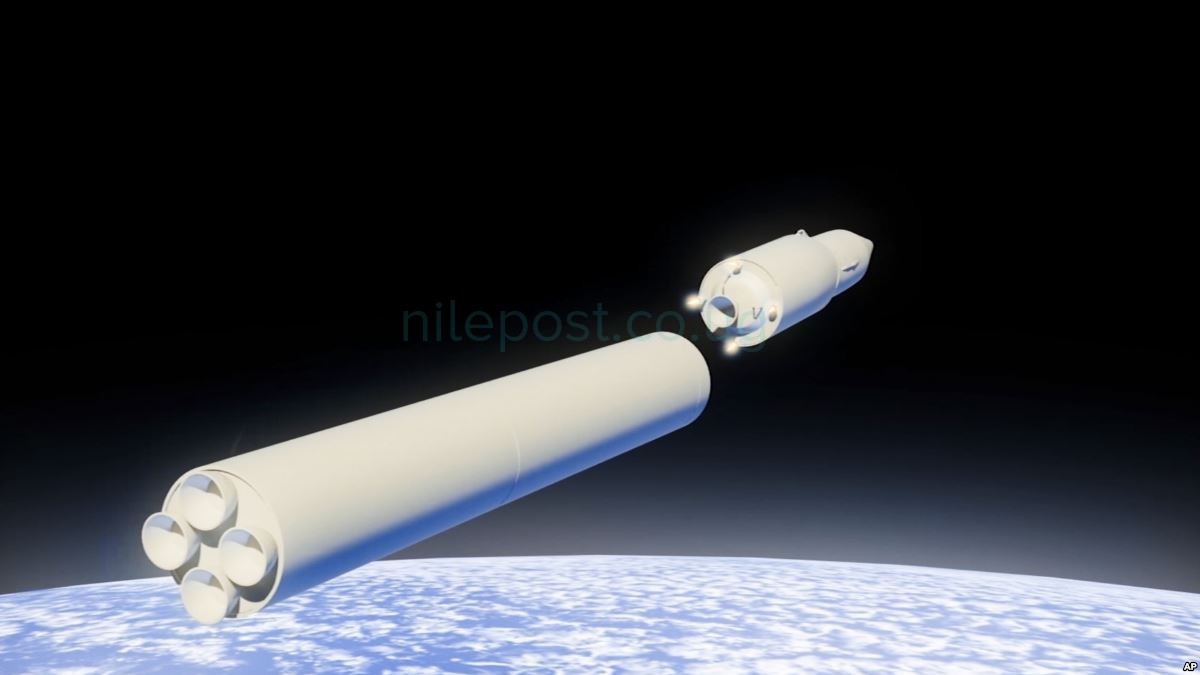
At an upcoming U.N. disarmament conference, the United States vows to push back against Russian and Chinese threats against the peaceful use of outer space. The U.N. General Assembly First Committee on Disarmament and International Security opens Monday in New York and is scheduled to run five weeks.
Ambassador Robert Wood, U.S. permanent representative to the Conference on Disarmament in Geneva, laid out some of Washington’s main priorities in advance of the U.N. disarmament and security meeting.
He said the U.S. delegation plans to actively push against issues that go against U.S. and allied security interests. Foremost among these, he said, was the U.S. determination to counter Russian and Chinese outer space and cyber threats.
He said the U.S. dismisses claims that activities by Moscow and Beijing are aimed at preventing the militarization of outer space.
“What they want to do is to limit the United States’ ability to operate in space by in essence going forward with an initiative that allows them to be able to attack satellites and other peaceful space vehicles through the use of anti-satellite weapons,” Wood said.
In 2014, the Russian and Chinese governments submitted a new version of a draft treaty on the prevention of the Placement of Weapons in Outer Space Treaty (PPWT). When they introduced the draft treaty, they said, “We consider a legally binding ban on placement of weapons in outer space as one of the most important instruments of strengthening global stability and equal and indivisible security for all.”
Ambassador Wood, during a press conference, said the proposed treaty was “not verifiable" and does not deal with the fundamental issue, which is banning anti-satellite weapons - terrestrial based anti-satellite weapons. The treaty does not cover that subject. He said that was one of the major threats to the peaceful use of outer space.
"When we ask the Russians and Chinese why do you not take on this issue in full, they kind of fudge (obfuscate) and do not really address the issue,” he said.
Wood said a second priority is to uphold the norm against chemical weapons use. Over the past year, he noted, Russia has worked to discredit the Organization for the Prohibition of Chemical Weapons (OPCW).
The main function of the OPCW is to ensure the implementation of the Chemical Weapons Convention.
“You have seen many public statements by Russian officials dismissing independent analyses, independent investigations, the work of the OPCW with regard to Syria’s chemical weapons use. So, this, first and foremost, is a major challenge trying to counter this very, very strong Russian propaganda effort,” he said.
Wood said the U.S. and its allies have to push back against Russian claims that Syria never used chemical weapons. He said both Syria and Russia must be held accountable for these crimes.
