

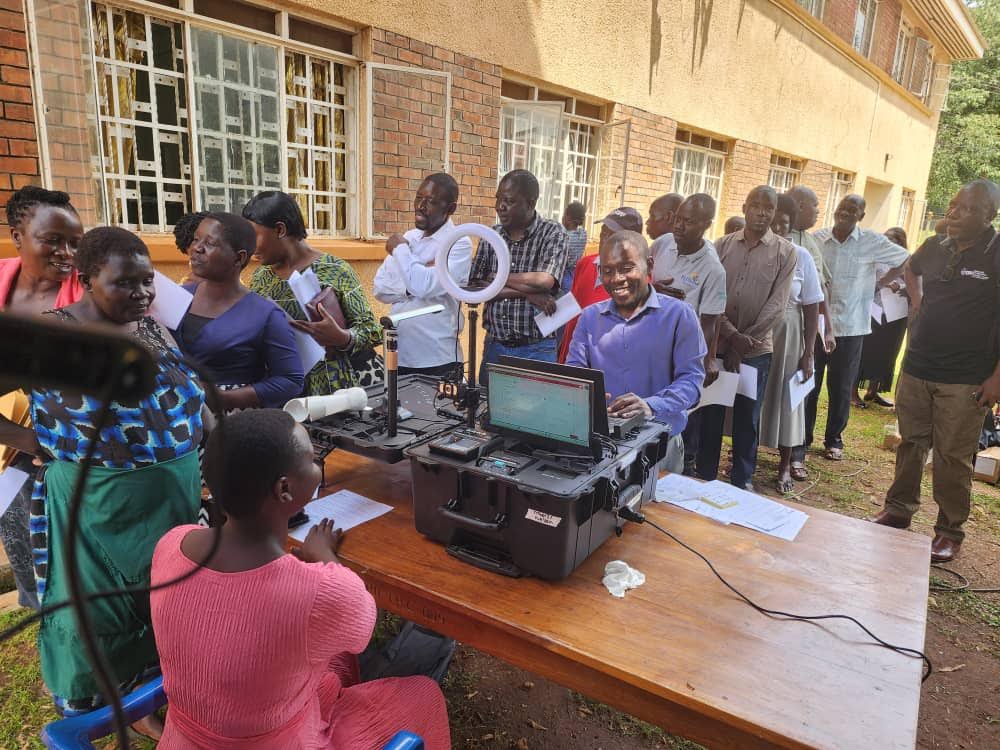
A wave of excitement and urgency swept across Tororo municipality today as residents rushed to participate in the National Identification and Registration Authority (NIRA)'s renewal and mass registration exercise for national identity cards.
The campaign, which officially launched today, is a nationwide initiative aimed at updating the National Register ahead of Uganda’s 2026 general elections.
The exercise comes as many existing national IDs approach expiration, particularly those issued in 2014 during the initial registration drive.
To accommodate the large numbers expected, NIRA has set up three key registration centers in municipality at the RDC's block, Municipal Council grounds, and East FM radio premises.
According to NIRA district registration officer Hildah Nambozo, the registration process will stay in these urban centers for one week before extending to rural areas.
“We want to appeal to the entire population of Tororo to come forward and participate. Those with expired IDs, first-time applicants, children and anyone wishing to correct details on their ID are welcome. The new ID version will come with upgraded digital security features,” she said.
To ensure smooth operations, the authority has deployed 75 registration machines across the district and recruited 150 registration assistants, two per machine to facilitate the exercise.
On visiting the registration centers, we found long queues of eager residents, many of whom had arrived early to ensure they were attended to. The turnout, according to officials, was overwhelming but orderly.
Tororo Resident District Commissioner (RDC), Sadiq Bategana, officiated the launch and emphasized the importance of the exercise.
“We all know how critical national IDs are not only for voting but also for accessing essential services such as banking, healthcare, SIM card registration, and education. I urge every resident not to shun this opportunity. It’s free of charge,” he said.
The upgraded national ID cards will feature advanced biometric data and secure digital elements to improve verification and reduce identity fraud. These enhancements are part of Uganda’s effort to modernize citizen identification and align with regional and global standards.
NIRA’s nationwide exercise is expected to last between six months and one year, and will include registration of new applicants, renewals, replacements for lost or damaged cards, and data updates. The initiative is seen as critical for electoral preparedness, social service access, and national planning.
Residents are advised to carry supporting documents such as expired ID cards, birth certificates, or letters from local authorities to ease the verification process.
