

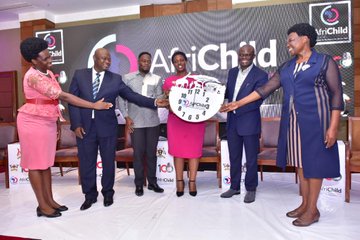
The Gender ministry has together with the Afri-child center of Makerere University launched the National Child Focused Research Agenda 2022-2026 and knowledge portal hub that will guide research data collection for child-related initiatives.
This is hinged on Uganda’s National Child Policy (2020) which provides a framework for addressing issues related to children’s rights and well-being in a holistic and coordinated manner by providing an enabling environment to assure their survival, development, care and protection, participation as well as strengthening of systems for child wellbeing.
The research agenda is hinged on the lessons learnt and challenges encountered during the implementation of the first National Child Focused Research Agenda (2015-2020).
Speaking during the launch, Timothy Opobo, the Executive Director at AfriChild Centre said the document will provide guidance on undertaking child –related research in a bid to help improve the realisation and enjoyment of all children’s rights to survival, development, protection, and participation by all children in Uganda.
“This document is identifying the key research gaps that we have as a country on issues to do with children across different sectors of health, education, systems and structures, and child participation. So, the idea behind this agenda is we want collective efforts instead of people beginning to do research in areas that may not be beneficial for us as a country,”Opobo said.
"The idea is that we want collective research, than a person coming up with research which cannot be beneficial to the country .For example, we want to demonstrate why is it important for the government to invest in a given sector."
The Minister of State in the Office of the Vice President, Diana Mutasingwa Kagyenyi noted that research aimed at improving children’s wellbeing should be supported by everyone.
"Utilize the National Child Focused Research Agenda to narrow the gap between research generation and uptake in programing , policy development and resources allocation by using merging evidence to inform decision making,”Mutasingwa said.
She noted the need to present make research information readily available to communities with children being the mostly affected by the negative cultural practices.
" I can attest to the profound importance of using research to inform policy formulation, policy analysis, policy advocacy and policy implementation for the promotion of child wellbeing in Uganda. From the past and the current policy formation, it is evident that the government recognizes the need to harness the full potential of children as a key strategy of economic transformation leading to the attainment of a middle-income country by 2040.”
According to Mondo Kyateeka, the Commissioner for Youth and Child Affairs at the Gender Ministry, it should be the goal of everyone to ensure children are protected but also to ensure they enjoy their rights.
He noted that in the year 2021, over 150 children got pregnant in the country and that over 200 others were defiled by their own fathers.
"According to the recent analysis , teenage pregnancies alone cost the country 184 million US Dollars (over ssh11 billion) , we all know how we can end this because in most cases we know the perpetrators but we decide to keep silent."
