

The governments of Uganda and Saudi Arabia have committed to establish an efficient joint technical committee to monitor the implementation of the 2017 labour export agreement following complaints of harsh working conditions in the kingdom.
Few weeks ago, the Minister for Gender, labour and social development Betty Amongi led a delegation to the Kingdom of Saudi Arabia.
This visit followed one she had to the United Arab Emirates (UAE) in December 2021 on matters related to externalisation of labour from Uganda to mainly the Middle East.
The main purpose of visit, according to the minister was to assess the status of implementation of the Bilateral Labour Agreements signed between Uganda and Saudi Arabia in 2017.
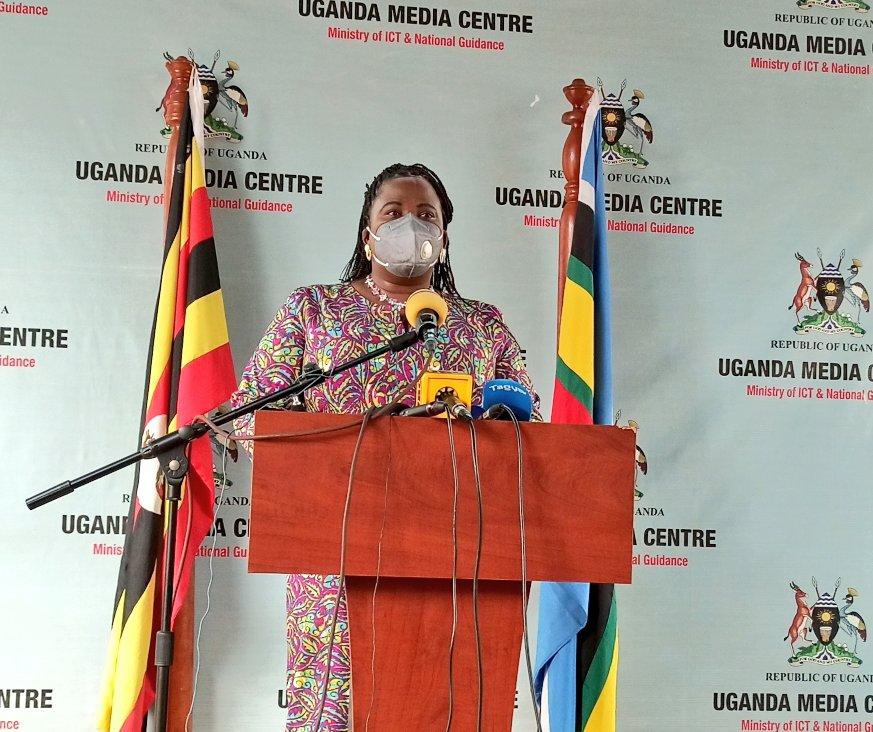
Speaking to the media in Kampala, Amongi said they have agreed that there must be strict enforcement of the signed agreements and contracts in order to protect the migrant workers and also ease the work of the gin following up cases arising from contractual breach.
"The Joint Technical Committee (JTC) will be established to thoroughly review and consolidate the existing agreements before their expiry in December 2022. It is this Committee that will support the two governments to monitor implementation of and compliance with the agreements/contracts to ensure safe and decent labour externalisation," she said.
Through the committee, Amongi said an elaborate joint reporting, complaints and case management system/procedure should be established.
For effective monitoring and follow up of deployed migrant workers, she said there will be periodic (quarterly) status reports on each deployed worker submitted online and in copy to the embassy by the Saudi recruitment agency and to the ministry by the Ugandan recruitment companies.
She said the ministry is following up all reported cases of abuse and non-compliance with contractual obligations and in addition to imposition of strict sanctions against companies/individuals involved in violation of the rights of migrant workers
“The ministry will explore ways for strengthening and empowering the Uganda Association of External Recruitment Agencies (UAERA) to be able to regulate its membership and comply with the requirements and standards of labour externalisation, ”she said.
She said that the foreign agencies must also employ Ugandan translators to respond to distress calls raised by migrant workers.
