

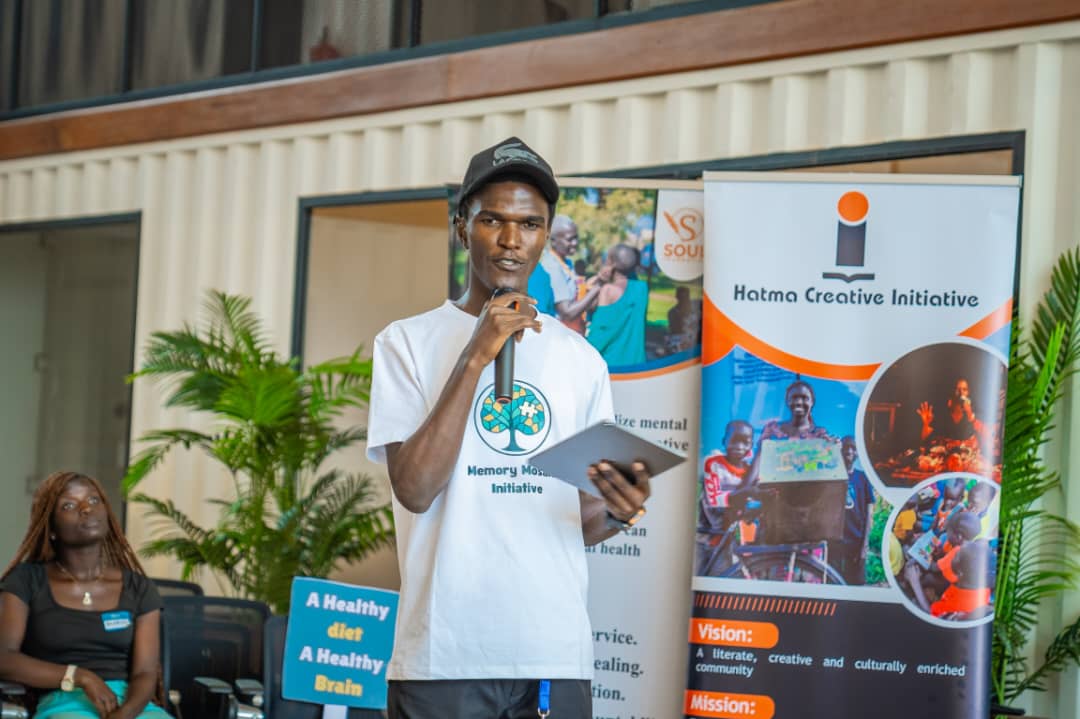
Mental health advocates and creatives have called for stronger investment in brain health awareness, with renewed demands for mental health education to be introduced in schools and communities across Uganda.
The calls were made during the Art & Memory Café held at Era92Hub in Lungujja, an interactive gathering that brought together artists, psychologists, health advocates, and young people to discuss the connection between creativity, memory, and emotional wellbeing.
The event was part of the Global Brain Health Institute 10-year milestone celebrations and one of five global sites hosting the “Leadership in Action: Global Brain Health Satellite Sessions” in May 2026.
It was organised by Rodney Kiggundu through Kiggundu Art Studio and Memory Mosaics Initiative alongside partners including Ruby Hospital Kampala, Nabu Network and Thrive Therapy and Wellness Centre.
Speakers at the event warned that despite rising cases of stress, anxiety, social isolation, and memory-related conditions, conversations around mental wellness remain under-prioritised, particularly among young people.
Kiggundu said Uganda still lacks sufficient collaboration between the arts, health sector, and communities in advancing brain health awareness.
“One of the challenges has been bringing people together. Everyone tends to work in isolation. A doctor wants to work in isolation, an artist wants to work in isolation, yet these conversations require collaboration,” he said.
Drawing from his experience as an Atlantic Fellow for Equity in Brain Health and his work with communities in Uganda and San Francisco, Kiggundu argued that creativity should be recognised as part of preventive mental healthcare.
“Art is storytelling, community, identity and resilience. These are things that help us preserve memories and navigate different environments,” he said.
He also urged young people to take brain health seriously through healthy lifestyles, social engagement, sleep, and continuous learning.
“How you age is based on how you have been taking care of yourself throughout your life course,” Kiggundu noted.
Clinical psychologist and mental health advocate Elizabeth Kasujja called for mental health awareness to move beyond occasional campaigns and become part of everyday learning and public policy.
“I think there should also be mental health education in schools. Start them early, even at primary school level, so that by the time young people enter the real world, they already understand mental health,” she said.
Kasujja said many people continue to struggle silently because mental wellness is often treated as secondary despite affecting productivity, relationships, finances, and physical health.
“The reason it is important to talk about mental health over and over again is because mental health affects the whole human being, how we think, how we feel, how we act, and how we show up in society,” she said.
She further encouraged young people to embrace creativity as a practical tool for self-expression and emotional wellbeing.
“Many people think creativity is a luxury, but it is actually one of the best ways you can maintain your brain health,” she said.
Organisers said the Art & Memory Café was designed to create community-driven conversations around memory care, dementia awareness, and emotional wellness while encouraging collaboration between artists, health workers, and educators.
