

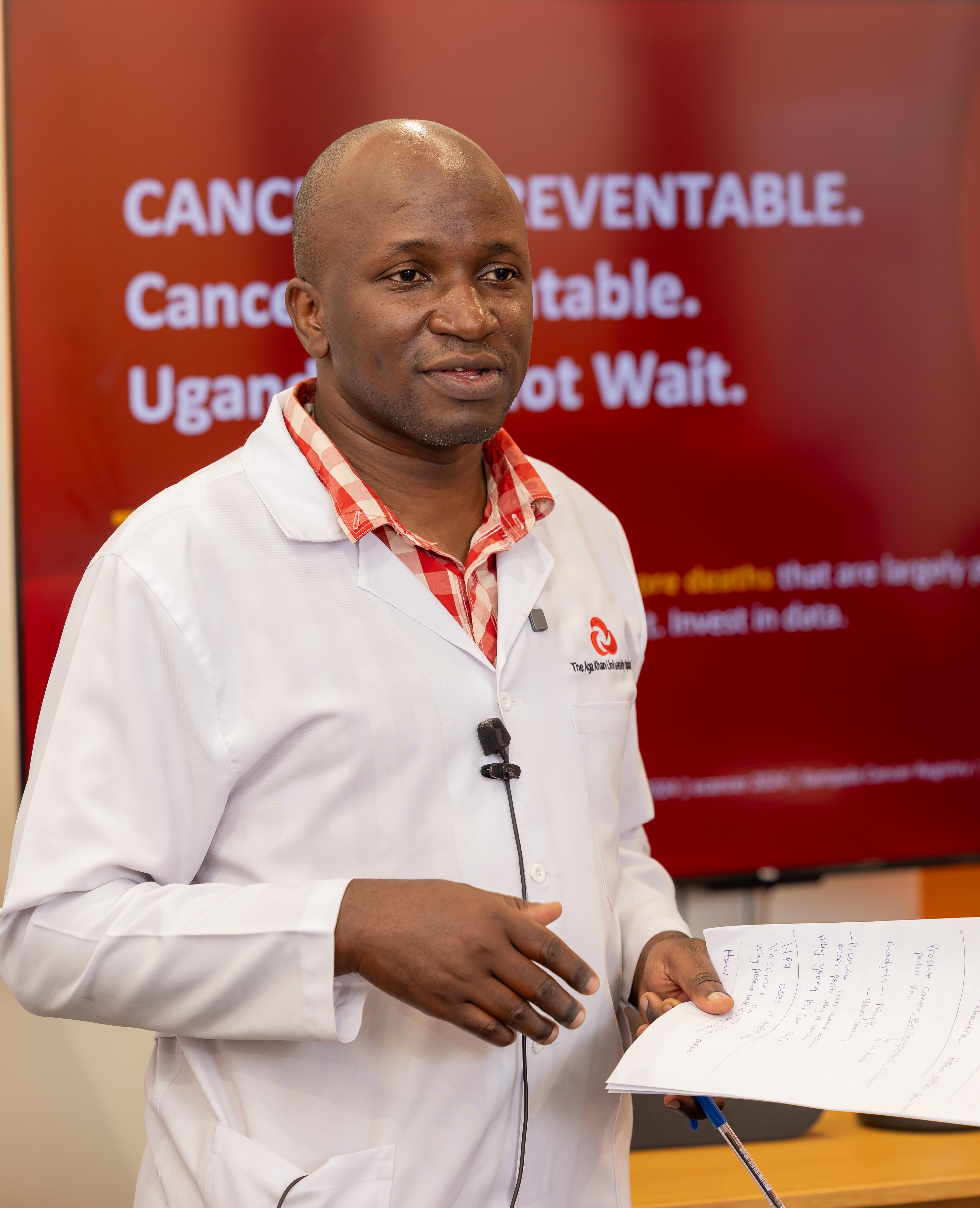
Health experts have called for stronger collaboration between government and private health facilities to address the growing burden of cancer in Uganda.
Speaking during an interview, Dr. Deogratius Ssenkumba, a medical officer at Aga Khan Specialty Centre in Kampala, said public–private partnerships are becoming essential in expanding access to cancer prevention, screening, and treatment services.
He noted that while government has made progress through institutions such as the Uganda Cancer Institute, the scale of the disease requires broader involvement from private healthcare providers.
“Cancer remains a major health burden in the country. Every year, approximately 35,000 new cases are recorded, and this requires stronger collaboration to manage effectively,” he said.
Dr. Ssenkumba highlighted that most cancer patients in Uganda are diagnosed at late stages, often stage 3 or stage 4, when treatment is largely focused on managing symptoms, prolonging life, or providing palliative care.
He emphasized that early detection significantly improves outcomes and increases the chances of cure.
“If cancer is detected at stage 1 or stage 2, it can be cured. That is why screening and early diagnosis are very important,” he said.
He further pointed to lifestyle-related cancers, noting that conditions such as obesity contribute to increased cancer risk, while preventive health practices can help reduce cases.
On prevention, Dr. Ssenkumba cited cervical cancer as a key area where progress is possible through vaccination, particularly the HPV vaccine, which is administered to children before they become sexually active.
“The good thing is that nowadays the government has a single-dose vaccine, so one shot can prevent cervical cancer,” he said.
He stressed that awareness campaigns and screening programmes remain critical in addressing misconceptions about cancer and improving early diagnosis rates.
At Aga Khan, he said, health education, outreach programmes, screening services, and cancer treatment are being offered in support of national efforts to combat the disease.
However, he noted that demand continues to grow beyond existing capacity.
To further strengthen cancer care, he said Aga Khan is expanding its infrastructure with the construction of a new hospital in Kampala, which will enhance diagnostic and treatment capabilities.
“This facility will provide chemotherapy, dialysis and diagnostic imaging. The upcoming facility is expected to include advanced diagnostic equipment such as PET-CT scanners, which help detect the spread of cancer and assess treatment effectiveness. While basic cancer diagnosis and chemotherapy services are currently available, more advanced treatment options, including radiotherapy, are still limited locally, and many patients travel abroad for such services and therefore at the Aga Khan we will plug this gap to ensure these services are provided locally,” Dr.Ssenkumba said.
The new facility, expected to be operational by 2028, he said aims to bridge this gap and improve access to specialized cancer care within Uganda.
Dr.Ssenkumba said such investments, combined with government efforts, will be critical in building a more resilient and accessible cancer care system across the country.
