

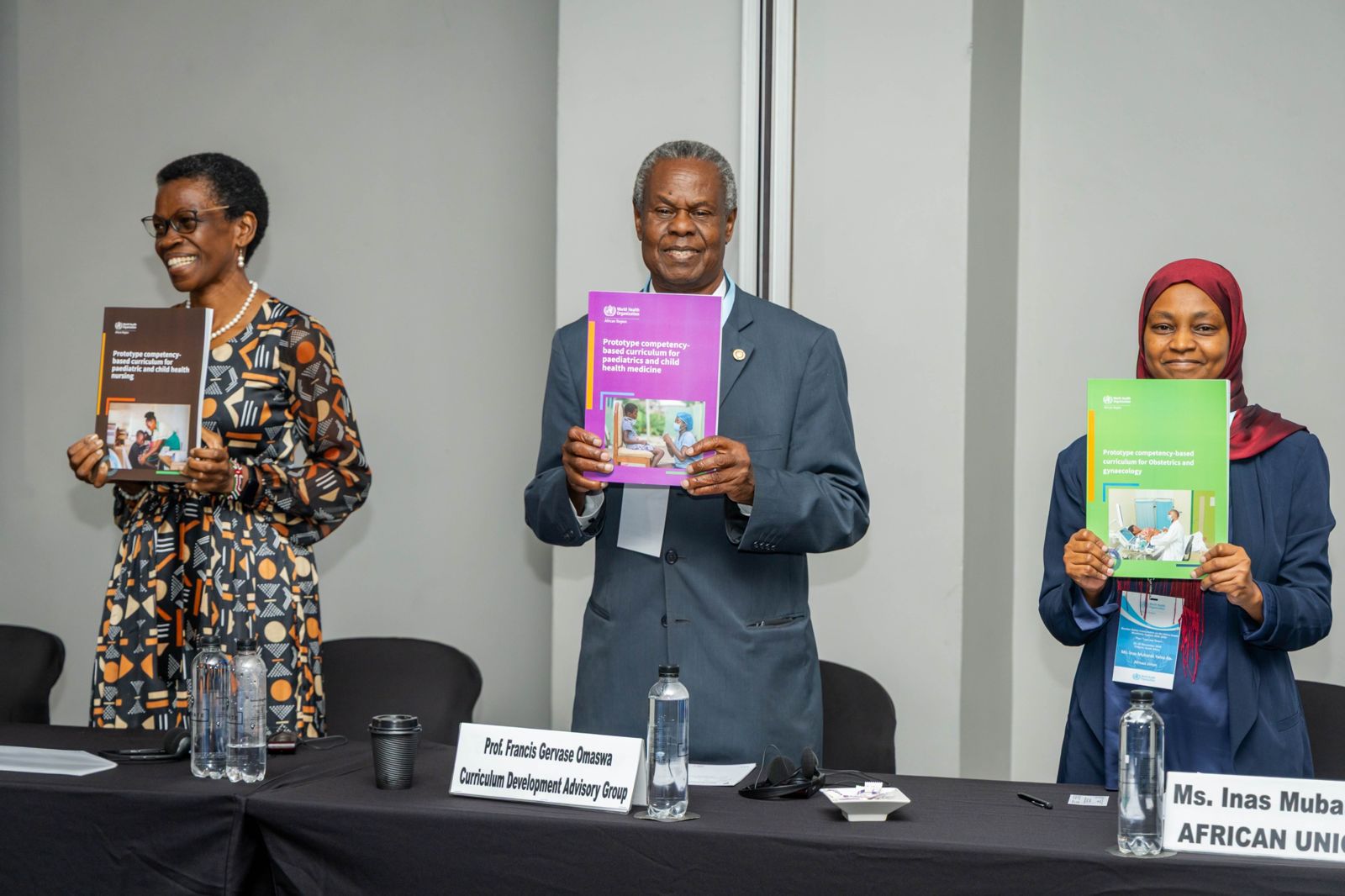
The World Health Organization Regional Office for Africa (WHO AFRO) has unveiled the continent’s first-ever Prototype Competency-Based Curricula for 10 key health professions, a move aimed at transforming health worker training and accelerating progress toward Universal Health Coverage (UHC).
The curricula, co-created with African health education experts, were presented during a high-level meeting of Member States convened to build consensus on the Africa Health Workforce Agenda 2026–2035: Plan, Train & Retain.
The agenda is a roadmap to boost the quality, quantity, and equitable distribution of health workers across Africa.
According to WHO AFRO, the new model modernizes health training by aligning it more closely with the actual needs of health systems.
The approach prioritizes practical skills, professional readiness, and strong clinical competence, ensuring that graduates enter the workforce equipped to deliver high-quality care from day one.
“The launch of these prototype curricula is a game-changing investment in Africa’s future,” WHO AFRO said in a statement.
“It is a bold step toward producing confident, competent, and job-ready health workers who can respond to evolving population health needs.”
Health experts note that Africa has long faced challenges including health worker shortages, outdated training methods, and skills gaps—particularly in rural and underserved areas.
The standardized competency-based model is expected to improve training quality across countries, support stronger regulation of health professions, and facilitate workforce mobility within the region.
The initiative also addresses persistent workforce challenges such as uneven training quality and limited practical exposure, supporting Member States in meeting both regional and global health targets.
The launch coincides with ongoing high-level discussions on the Africa Health Workforce Agenda, where governments are expected to reaffirm commitments to long-term workforce planning, sustained investment in training, and strategies to retain skilled health professionals within national systems.
